



Runway to Nowhere
U.S. President Donald Trump’s recent demand that the Taliban hand Bagram Airbase back to the United States comes with a mix of nostalgia, nationalism, and geopolitical theater
Read more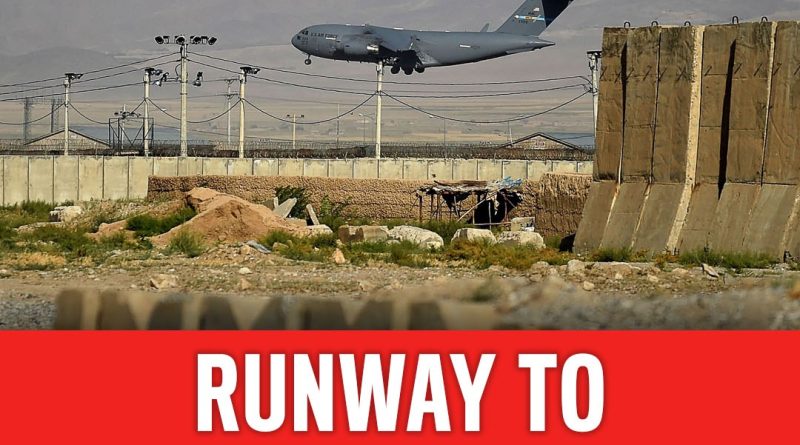
U.S. President Donald Trump’s recent demand that the Taliban hand Bagram Airbase back to the United States comes with a mix of nostalgia, nationalism, and geopolitical theater
Read more
The 26th Amendment, which had put the executive at the vanguard, has led to the pruning of the judiciary’s independence.
Read more
The proposition of new federal units in Pakistan reflects the perverse and unquenchable thirst of the privileged ruling class for absolute control over the federation.
Read more
The Sovereign Citizen Movement, a global campaign mainly concentrated in the West, can manifest itself in Pakistan, too, as the country’s underlying conditions resonate deeply with this rebellious ideology
Read more
Pakistan must focus on clearing natural waterways and strengthening its drainage systems, instead of reviving controversial dams.
Read more
In this exclusive interview, Shabbar Zaidi, Pakistan’s leading economist and former FBR chairman, talks to SouthAsia Magazine.
Read more
Marketed as a reform for transparency, the 130th Amendment seeks to disqualify convicted politicians, sparking debate over ethics, justice, and political power.
Read more
Can Washington afford to push India entirely into Russia’s embrace, undoing over two decades of American diplomatic investment?
Read more
Pakistan must build a robust climate resilience framework informed by international best practices, tailored to its unique socio-economic and environmental context.
Read more
The ban on the Awami League seems to be a decisive end to an era, but it is more likely the beginning of a new chapter in Bangladesh’s endless political drama.
Read more
The Gen Z revolution in Nepal is best understood as rejecting the old order and testing what comes next.
Read more

The federal capital these days is ripe with rumours, and something is being cooked somewhere.
Read more
Privatization efforts in Pakistan have historically failed or stalled due to political resistance, institutional weakness, and procedural inefficiencies.
Read more
In this exclusive interview, Dr. Miftah Ismail, Pakistan’s former two-time finance minister, talks to SouthAsia Magazine.
Read more
Unfortunately, the coalition government in Islamabad believes in political confrontation rather than reconciliation.
Read more
Pakistan’s sugar crisis is orchestrated by a powerful cartel of political elites, mill owners, and bureaucrats who manipulate supply, prices, and policies for their selfish motives, ignoring public welfare.
Read more
The Indus River Treaty must be revised and renegotiated between Pakistan and India, given the challenges of climate change, political stress, and rapid groundwater depletion.
Read more
The narrative of “Shining India,” once heralded as an emerging economic and military powerhouse, is now overshadowed by concerns about governance and international reliability.
Read more
Delhi’s underworld, ruled by 95 active criminal gangs, operates a multi-billion-dollar criminal economy, thanks to political patronage, weak law enforcement, and widening socio-economic gaps in the Indian capital.
Read more
As the Rashtriya Swayamsevak Sangh (RSS) approaches its 100th anniversary, it stands as one of the most influential forces shaping modern India’s political, social, and cultural trajectory.
Read more
As Bangladesh prepares for its most consequential election in February 2026, the caretaker government’s new political slogan hangs in the air.
Read more
Sri Lanka’s Tamil question is not a historical artifact but an evolving problem of the post-war state.
Read more