



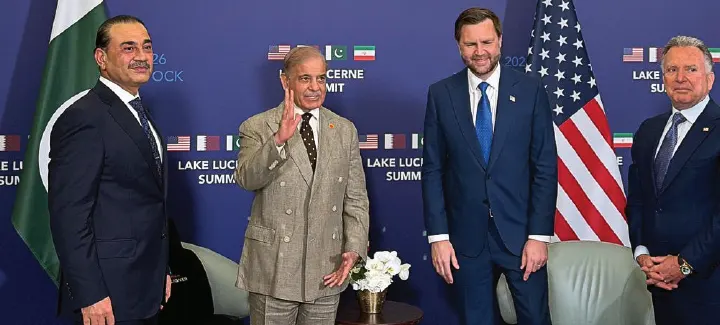
Pakistan has emerged as an exceptional advocate of peace and has earned international recognition for its mediation efforts on the global stage. Bringing the United States of America and the Islamic Republic of Iran to the negotiating table after decades of hostility, culminating in a mutually agreed Memorandum of Understanding (MoU), was a remarkable diplomatic achievement for Islamabad. It fostered optimism and raised expectations that the agreement could pave the way for a secure, comprehensive, and lasting peace accord, ultimately bringing an end to the conflict between the two nations.
Pakistan’s role in this affair demonstrated its commitment to promoting peace through diplomacy. The country has a longstanding tradition of pursuing diplomatic engagement and has cultivated cordial relations not only with its neighboring countries in South Asia but also with many other nations around the world. It is actively engaged in bilateral trade with several Asian states and continues to maintain strong diplomatic ties with countries across the Middle East.
In 2025, Pakistan strengthened its regional and international partnerships by signing a bilateral defence agreement with Saudi Arabia, deepening strategic ties with Türkiye and Egypt, and proposing a quadrilateral security framework aimed at promoting cooperation in defence industrial production. Over the years, it has also maintained close relations with China and Russia. Pakistan’s strategic geographical location has further enhanced its importance, making it a key actor in regional and international affairs.
Although its relations with the United States have fluctuated over various issues, recent developments suggest renewed efforts by both countries to strengthen diplomatic engagement. Consequently, Pakistan has sought to position itself as an increasingly significant player on the global stage, with senior government officials receiving recognition and appreciation in various international forums.
While the people of Pakistan take pride in their government’s commitment to fostering peace and reconciliation abroad, many are equally disheartened by the apparent neglect of pressing domestic challenges. Within the country’s own borders, an atmosphere of distress, anguish, and despair continues to prevail, seemingly without adequate recognition or response.
Despite these accomplishments abroad, the country’s internal situation appears to be precarious, suggesting a troubling disconnect from the realities on the ground. Nearly every sector of society is facing serious challenges, raising concerns about the country’s overall stability. As the saying goes, the darkest place is under the candlestick—or, more commonly in English, the darkest place is directly beneath the lamp—implying that pressing problems at home are often overlooked while attention is directed elsewhere.
Pakistan continues to grapple with severe economic instability, political turmoil, human rights concerns, militancy, and terrorism. These interconnected challenges have had a profound impact on the daily lives of its citizens. Numerous international organizations have expressed concern over the country’s internal situation and have called for greater efforts to address these persistent issues. Many observers argue that the government’s response has been insufficient to effectively resolve domestic unrest and restore public confidence. Consequently, there is a growing perception that stronger and more decisive measures are needed to foster stability, peace, and sustainable development within the country.
While Pakistan’s diplomatic efforts were receiving international recognition, events unfolding within Azad Jammu and Kashmir drew significant criticism. The controversy began over the demand concerning the twelve seats in the region’s Legislative Assembly reserved for refugees who have since settled in Pakistan. According to the Joint Awami Action Committee (JAAC), these reserved seats have been used by Pakistani political parties to influence the political affairs of the region.
The constitutional question of how the dispute over the twelve reserved seats should be resolved remains a separate matter. However, the government’s response has attracted considerable scrutiny from human rights advocates and political observers. Critics contend that such coercive measures undermine Pakistan’s commitment to democratic principles and peaceful conflict resolution. At the same time, Balochistan has continued to experience a significant militant insurgency, resulting in the loss of numerous civilian and security personnel lives. The province has long been affected by conflict, instability, and recurring security challenges. Among the key grievances frequently cited by local communities are the perceived inequitable distribution of resources, limited economic opportunities, and longstanding concerns over political and economic marginalization.


The writer is a freelance columnist based in Chicago, United States. She covers a range of subjects related to international relations and social development and can be reached at ymozaffar@hotmail.com
Leave a Reply