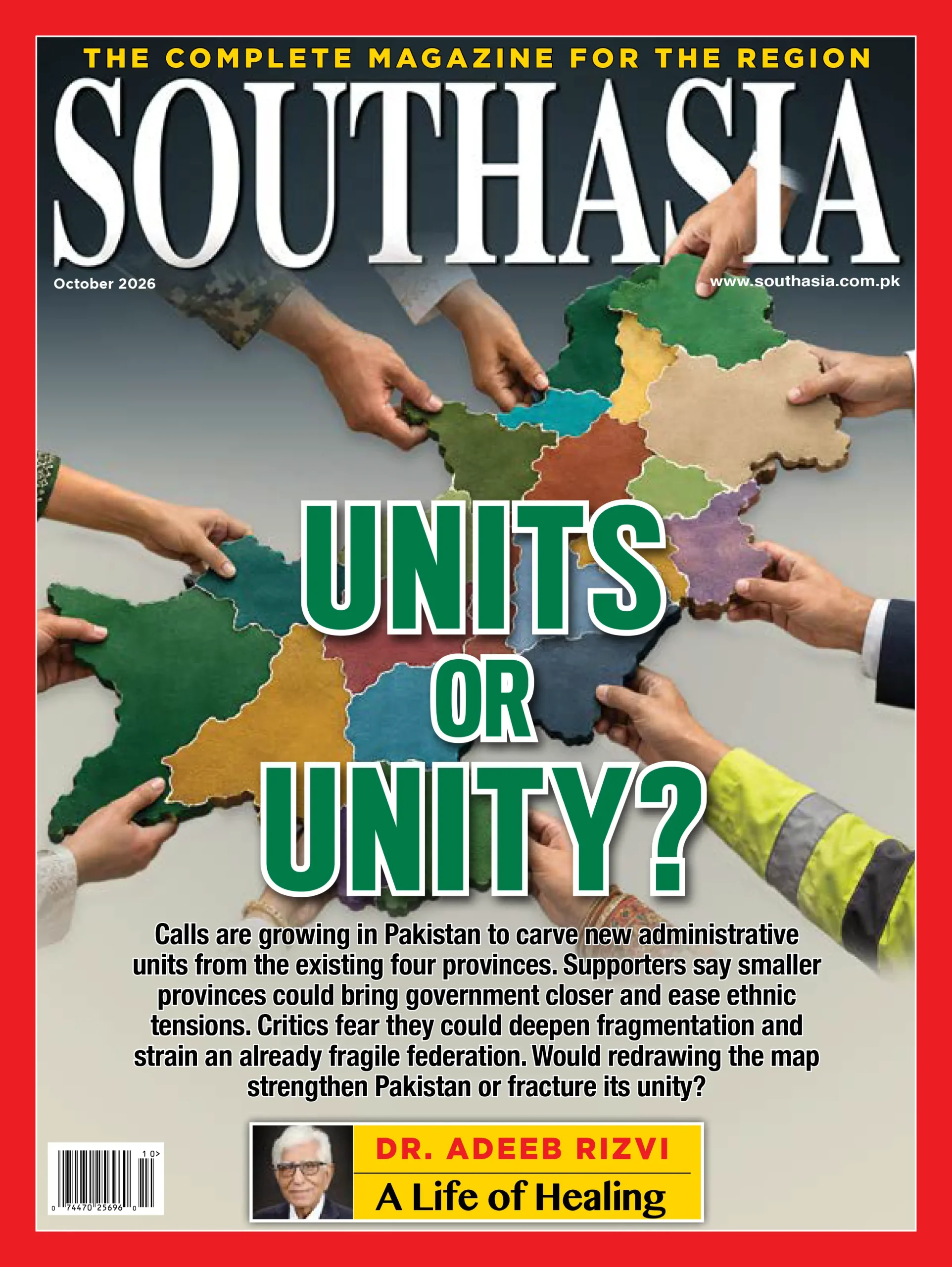




Units or Unity?
This is with reference to the cover story titled “Units or Unity?” published in the October 2026 edition of SouthAsia Magazine. Almost all the articles on the subject were well written and presented valid arguments both for and against creating more provinces out of the existing four. However, if implemented against the will of the people, any such move could prove disastrous. Pakistan’s provincial landscape suggests that a significant section of its population remains influenced by tribal loyalties. Creating more provinces or administrative units could, therefore, deepen divisions and fuel resentment between the new and existing provinces. While small may be beautiful, it would be wiser to explore alternative solutions than pursue a potentially dangerous fragmentation of the country’s provincial structure. Ultimately, strengthening national unity is far more important than creating more administrative units or provinces.
Anjum Fayyaz,
Ontario, Canada.
Dividing Sindh
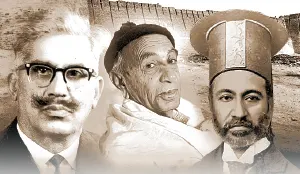
This refers to Ambassador M. Alam Brohi’s cover story article, “Sons of the Soil”. Although well written, the article lacks a clear rationale to support the author’s main argument. Personally, I am not in favour of dividing Sindh into multiple provinces. However, Sindh was, in effect, divided when the quota system was introduced along the rural-urban divide. This was a gross injustice perpetrated under Z. A. Bhutto’s leadership, when only Karachi, Hyderabad and Sukkur were classified as urban areas, despite Sindh having 23 major cities. The policy primarily deprived Urdu-speaking residents of these three cities of their due share of government jobs by placing them in the urban quota category. The quota system remains in place, as does this systemic injustice, while the PPP has shown no willingness to revisit a policy that continues to deepen divisions. If Sindh is eventually divided into more provinces or administrative units, the PPP leadership will bear more responsibility than any other political party.
Shahid Siddiqui,
Karachi, Pakistan.
Rohingya’s Unresolved Future
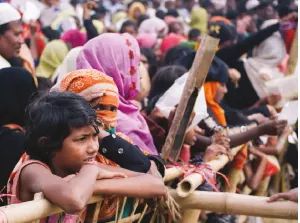
Just like the Palestinian cause, the Rohingya issue also appears to be a similar case of international apathy. Millions of the displaced Rohingya have been living in camps for years in Bangladesh. Yet the world still has no clear, workable answer to what their permanent political and human future will be. Aid is necessary, but it is not a permanent solution. Tents can protect people from rain, but they cannot give them a homeland. Rations can satisfy hunger, but they cannot give them identity. Medical facilities can save a life, but they cannot give them confidence in the future. The international community should not view this issue merely as a humanitarian relief crisis, but should take serious steps to resolve it as a political, legal, and human rights issue.
Salamat Mehboob,
Dhaka, Bangladesh.
Governor’s Rule in KP
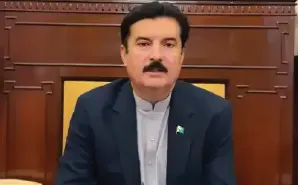
Agreat deal has been written about the merits and demerits of imposing emergency rule and governor’s rule in Khyber Pakhtunkhwa (KP). However, imposing governor’s rule would be one of the most drastic measures taken by the current hybrid regime, led by Prime Minister Shehbaz Sharif, who was democratically elected. The responsibility also rests with the leadership of the ousted KP government and the PTI leadership, both of which should demonstrate the political maturity needed to find a middle ground with the federation. Unfortunately, both the federal and KP governments adopted extreme positions, leaving matters in a political morass that seems to be deepening. Depriving the electorate of its chosen political representatives is a bad omen for a country that upholds democratic values. Although the federation seems determined to take further drastic measures along similar lines, rational voices must come forward to find a middle ground that leads to stability rather than chaos. Pakistan is already fighting a multipronged war along three of its borders. An internal confrontation could further aggravate the country’s security challenges.
Arshia Naveed,
Lahore, Pakistan.

CJP vs. BJP
The steady rise of the Cockroach Janata Party (CJP) in India is emerging as a formidable challenge to the BJP-led government of Prime Minister Narendra Modi. Although India has never witnessed a phenomenon quite like this, it also represents a new manifestation of the rise of youth, redefining the political contours of Indian politics, traditionally characterised by dynastic politics and Hindu-dominated ideological leanings. This trend suggests that ominous developments may lie ahead for the world’s largest democracy, and the BJP leadership appears unprepared for them. More than a clash between CJP stalwarts and BJP-led Hindutva activists, this could develop into a tussle between veteran leaders and young guns who appear determined, focused and prepared for the long haul in politics, as vested interests bring old rivals together in a single alliance.
Pratap S. Mukherjee,
Nainital, India.
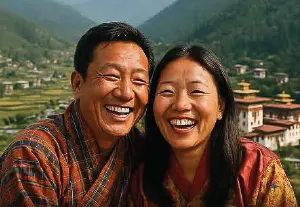
Shallow Happiness Ideology
Bhutan is known for incorporating its happiness index into state policy and using it as a yardstick for development. In marked contrast, however, many people in the country, particularly young people, are seeking to leave their so-called land of happiness in pursuit of employment and better livelihoods. This situation is not only ironic but also exposes the limitations of the happiness philosophy, which appears increasingly disconnected from the ground realities of the Himalayan nation. Despite its rhetoric and grandiose claims, the Bhutanese government seems to be doing little to address the situation, as the current leadership appears to focus less on the socio-economic development of its youth and more on symbolic governance. As things stand, many young Bhutanese feel hopeless and frustrated. However, the country’s leaders seem to have no clear idea of how to provide them with the growth opportunities they desperately need. Beyond unemployment, young people appear to have lost their sense of purpose and self-worth, a development that is even more detrimental and tragic for the future of the nation. The need of the hour is to address both their immediate and long-term needs rather than effectively pushing them towards foreign shores.
Tshering Sonam,
Thimphu, Bhutan.
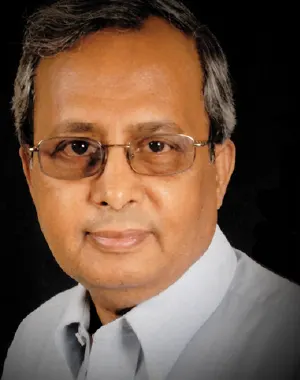
In Loving Memory of Javed Ansari
November 2026 marks the fourth death anniversary of Javed Ansari, editor of SouthAsia Magazine. Throughout his career, Javed Ansari shunned the trappings of the journalistic world and remained devoted to his profession, dedicating himself wholeheartedly to his work until his last breath. He was one of those rare, truly dedicated journalists who worked with honesty, upheld linguistic integrity, and helped young journalists grow professionally. A consummate professional, the late Javed Ansari was a true mentor and a strict disciplinarian who never compromised on editorial or writing standards. People of his calibre are hard to find, and his passing in 2022 dealt a severe blow to Pakistani journalism. Rest in peace, Javed Ansari. We owe you a great debt of gratitude.
Faizan Usmani,
Karachi, Pakistan.
First Pakistani astronaut to undertake space mission
PPakistan’s first astronaut will undertake a space mission from a Chinese space centre on November 25, Planning Minister Ahsan Iqbal said.
The minister made the announcement while addressing the concluding ceremony of World Space Week in Narowal, held in collaboration with the Pakistan Space and Upper Atmosphere Research Commission (Suparco).
The planning minister also said the country was aiming to achieve a lunar landing by 2035, expressing hope that Pakistan’s cooperation with China would help it “reach new heights in space exploration”.
In his address at the ceremony, the planning minister highlighted the importance of space technology in agriculture, communications, climate monitoring, education and national security.
Iqbal stressed that scientific research and space exploration were essential for technological advancement, the ministry’s statement said.
The astronaut will be one of two pilots, Zeeshan Ali and Khurram Daud, whom China selected in April this year as candidates for its manned space programme and who have been undergoing intensive training in Beijing.
Faizan Usmani,
Karachi, Pakistan.