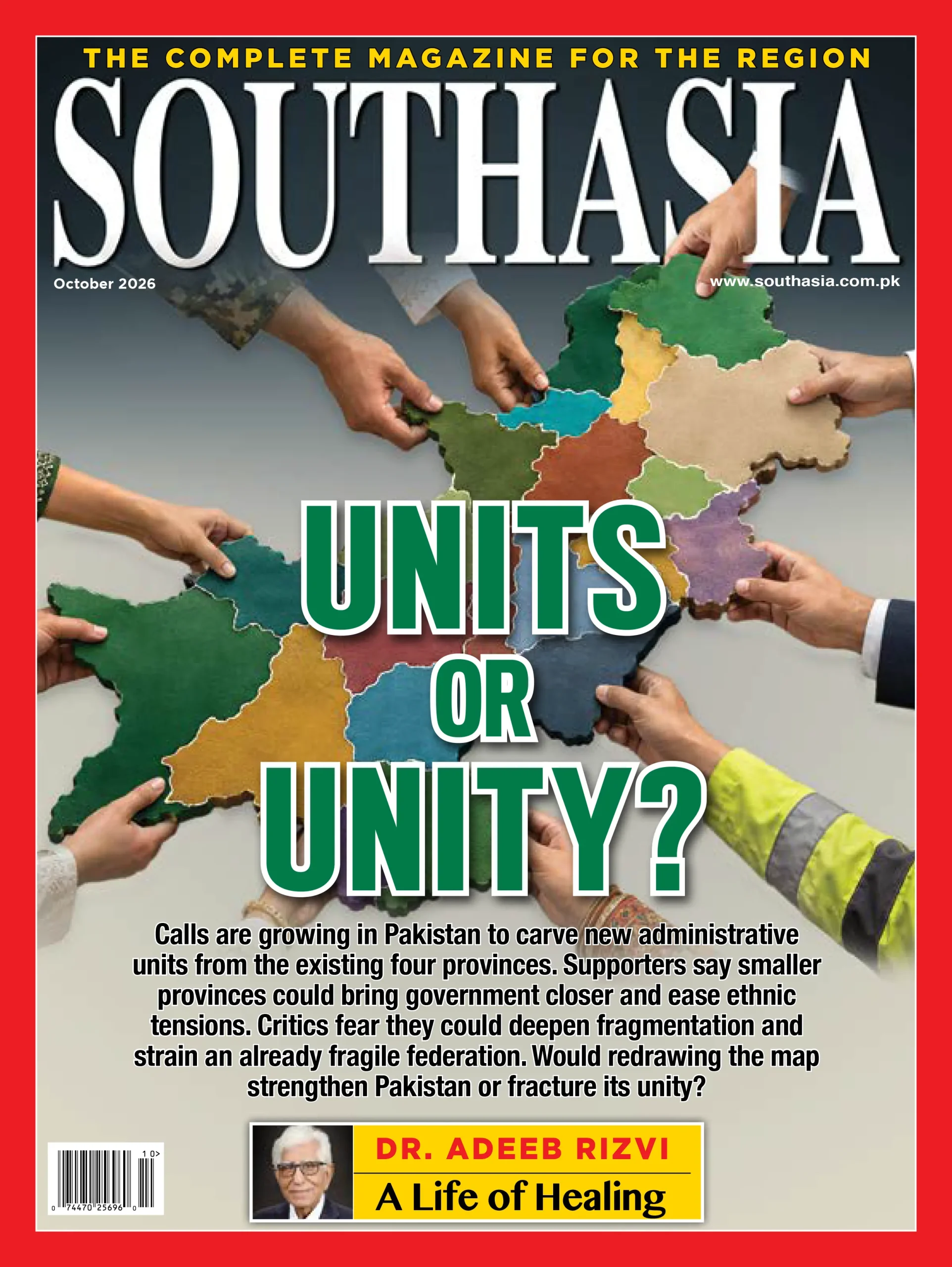



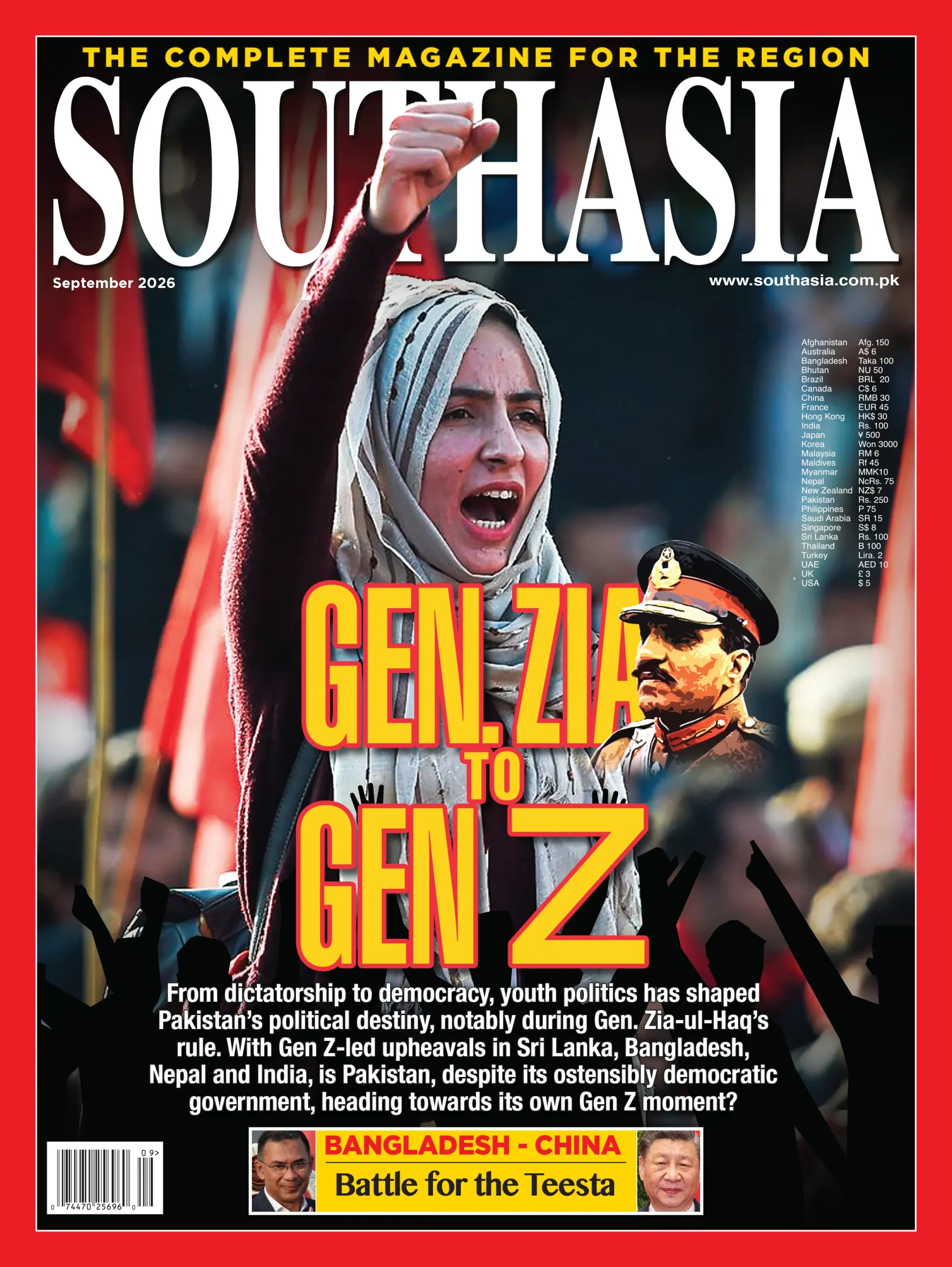
Gen. Zia to Gen Z
This is with reference to the cover story titled ‘Gen. Zia to Gen Z’ that appeared ‘Gen. Zia to Gen Z’ that appeared in the September 2026 edition of SouthAsia Magazine. In my opinion, a Gen Z revolution in Pakistan is unlikely. Many young Pakistanis channel frustration into emigration or individual survival rather than collective revolt. Here, youth are fragmented along ethnic, linguistic, sectarian, and class lines. Also, decades of political dynastism and patronage networks have co-opted potential young leaders into established parties, while economic hardship forces most young people to focus on survival rather than activism. The state’s tight control over media, internet shutdowns, and restrictions on assembly suppress organized dissent, and widespread disillusionment has bred apathy, not rebellion, making a Gen Z uprising improbable in the near term.
Rashida Siddiqui,
Toronto, Canada.

Survival of Political Parties
In Pakistan’s current political landscape, marked by widespread disillusionment with mainstream parties, allegations of corruption, dynastic politics, and a growing disconnect between the ruling elite and the common citizen, political leadership should become more sensitive and accountable regarding its moral standards. In marked contrast, political parties face an existential challenge. Their public support is steadily shrinking. The political leadership must understand that the true strength of political parties lies in the people, and that public endorsement is tied to the moral strength of the leadership. Only morally strong individuals can promote a stable political culture.
Fahad Ali Baig,
Chãrsadda, Pakistan.
A New Middle East Order
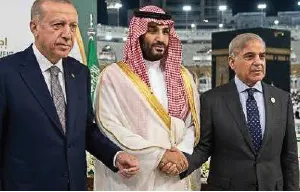
The Mecca Joint Defence Agreement, a trilateral collective security pact signed by Saudi Arabia, Türkiye, and Pakistan, is not merely a Middle Eastern affair but also a symptom of a broader global realignment that will inevitably reshape Pakistan’s strategic calculus. How Pakistan’s political and military leadership responds to these changes will determine its relevance and stability in the coming decade. For now, this agreement is a consequence of the situation created by the US-Iran war, because previously the Gulf countries, including Saudi Arabia, relied entirely on the United States for their defense. In fact, Trump had said during his first term that without us, Saudi Arabia could not survive even a week, and in his second term he issued orders for Saudi Arabia, the UAE, and Qatar to invest one trillion dollars each in the United States. But the US-Iran war shattered all these dreams. Now these countries are inevitably searching for alternatives, and the Mecca Agreement is one possible manifestation of this.
Dr. Muhammad Jawed,
Karachi, Pakistan.

More Balochistan, Please!
This is with reference to the article “Beat ’Em, or Join ’Em?” by Fathima Sheikh, published in the September 2026 issue of SouthAsia magazine as part of its cover story, “Gen. Zia to Gen Z.” I must say that Fathima Sheikh’s article was an excellent piece, for which she deserves many accolades and praise. Over time, SouthAsia has radically improved and become more relevant and interesting. However, you should seek to increase circulation and publish more articles on Balochistan. I realise the potential risks involved in doing so, but you have the intelligence and skills to overcome the obstacles.
Shahpur Channa,
Comment received through email.

A Thought-Provoking Analysis
I enjoyed reading the article “New Muslim Power Balance” by Aftab Qureshi, which appeared in the September 2026 issue of SouthAsia. It is an in-depth, well-researched and comprehensive analysis of the factors shaping developments in the Middle East, with a particular focus on Iran. It provides a sound and factually grounded account of the recently concluded defence pact among Saudi Arabia, Türkiye and Pakistan. The writer has rightly highlighted the Iranian strategy of supporting proxies to intervene where necessary while avoiding direct involvement. Many states adopt similar strategies. The article was highly informative, precise and thought-provoking.
Salim Abbas Jilani,
Pakistan’s Former Chief Secretary and Caretaker Minister.

Bab el-Mandeb Flashpoint
As things are rapidly deteriorating in the Middle East, the Yemen crisis is no longer merely a matter of Sana’a, Riyadh, or Tehran. The real test is whether regional and global powers can prevent Yemen from being turned into yet another permanent battlefield. If diplomacy fails and Bab el-Mandeb also becomes a front line like other contested waterways in the region, the consequences could be extremely grave—not only for Yemen but for the entire global economy. Therefore, peace in Yemen is not really the peace of one country; it is a question of the future of the Red Sea, the Gulf of Aden, the Persian Gulf, and indeed of all global trade.
Ashraf Ali Syed,
Mumbai, India.

Pakistan-Afghanistan Relations
 Pakistan-Afghanistan relations once again stand at a juncture where, on one hand, prospects of a thaw appear visible. At the same time, deep layers of mutual mistrust remain firmly in place. The latest proposal by Afghan Taliban Deputy Amir and Interior Minister Sirajuddin Haqqani to establish liaison committees between Pakistan and Afghanistan has certainly opened a new window in this diplomatic deadlock. However, it would be premature to say that this proposal will prove to be real progress towards resolving the fundamental differences between the two countries.
Jamal Ahmed,
New Jersey, United States.

Revenue or Burden?
In Pakistan today, the Petroleum Development Levy (PDL) has become a central topic of political and economic debate. Although the petroleum levy earns millions of rupees and serves only the interests of the government, it is nothing short of a curse for the ordinary people of the country. The PDL is charged on a per-litre basis on petroleum products, including petrol and diesel. It has evolved into one of the most significant revenue-generating tools for the federal government, and its collection, adjustment, and utilisation are deeply embedded in the national fiscal framework and the annual federal budget. In a country where a large segment of the population relies on public transport and where goods are moved primarily by road, higher petroleum prices affect everyone. The PDL, therefore, is not just a tax on fuel; it is a tax on mobility, food, and survival for millions.
Bushra Tirmizi,
Lahore, Pakistan.