
Cover Story
Eternal Triangle
Khan can survive by remaining a problem. The state cannot indefinitely succeed merely by containing one.

“Between the horses of love and lust we are trampled underfoot.
Oh, love, to stay with you I’d be a fool.
Oh, sweetheart, you’re so cruel.”
(So Cruel — song by the Irish rock band U2)
Perhaps neither Imran Khan nor the Establishment need claim these lines exclusively. They belong equally well to both — former companions now standing on opposite banks, each nursing the conviction that it was the other who first broke faith.
For theirs is not merely a quarrel over power. It carries all the bitterness of a love gone wrong: remembered intimacy, wounded pride, accusations of betrayal and, somewhere beneath the anger, the inconvenient memory of a time when each found the other useful, perhaps even indispensable. In Pakistan, political romances rarely end quietly. This one threatens to leave the country paying the alimony.
The confrontation has now acquired a more ominous dimension. The imposition of emergency and governor’s rule in Khyber Pakhtunkhwa — PTI’s principal political stronghold — has suspended its provincial government and brought the province under federal control. Islamabad says deteriorating militancy and inadequate provincial cooperation on counterterrorism made the intervention necessary; PTI calls it an unconstitutional political assault on its last major institutional base. Parliament has since endorsed the arrangement.
The KP emergency may prove to be the Rubicon of this confrontation: the moment when a bitter political quarrel ceased to remain merely political and entered the architecture of the federation itself. Arrests can be reversed, marches dispersed and barricades eventually removed. But once a confrontation between a political party and the power structure reaches the constitutional relationship between the federation and a province, the stakes become larger than either protagonist.
This is now the eternal triangle: Khan, the Establishment and Pakistan itself — the neglected third party caught between two former partners absorbed in their quarrel.
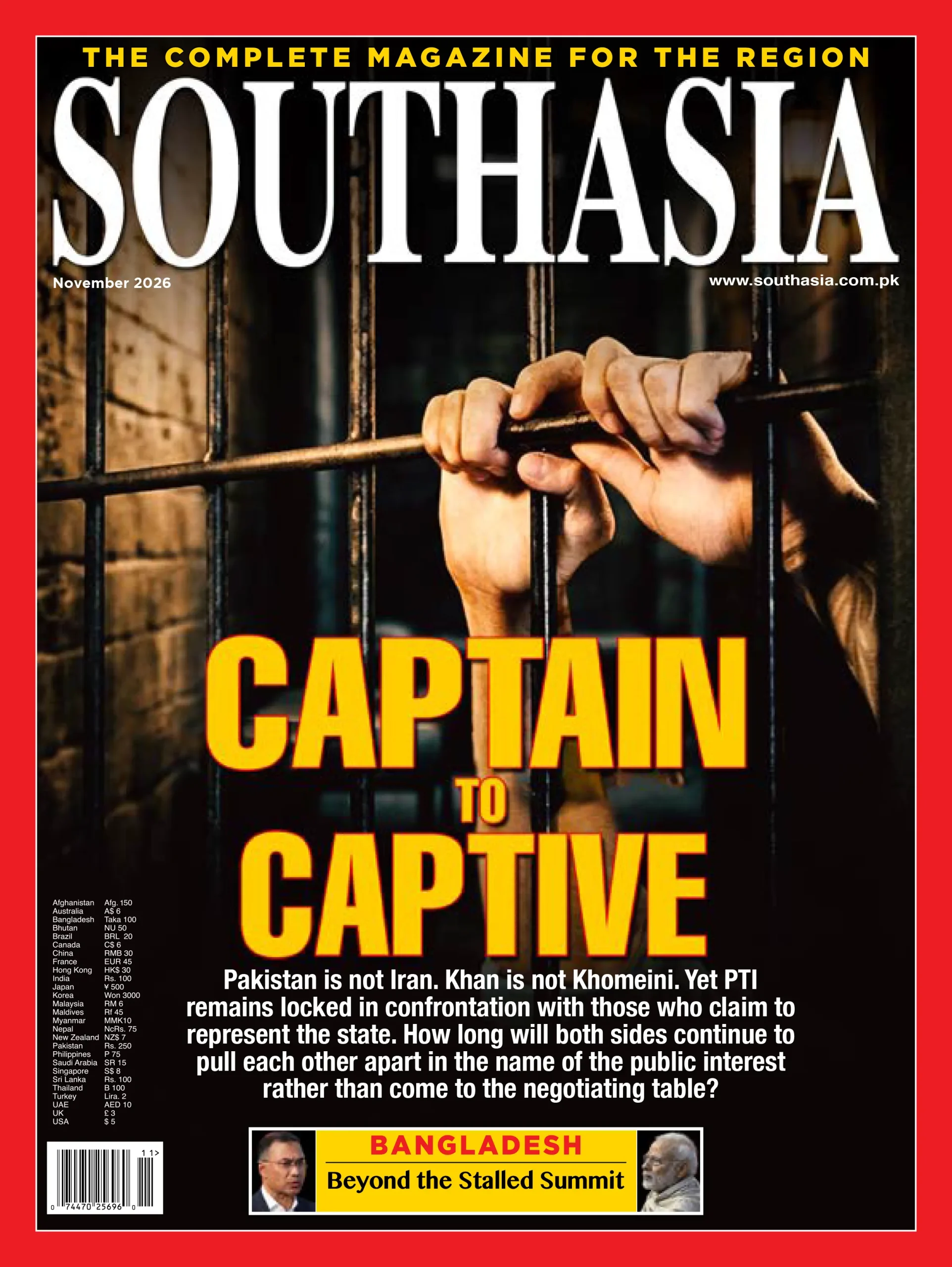
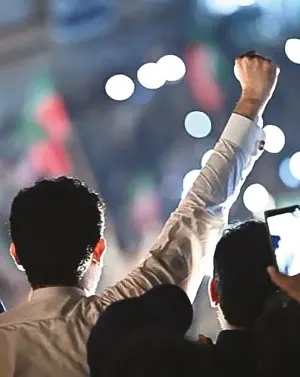
Khan remains incarcerated. PTI remains mobilised. The state continues to meet political pressure through law, administration and coercive authority. Neither side appears inclined to retreat; each seems persuaded that time, fatigue or circumstance will eventually force the other to blink. That may be precisely where the danger lies.
Khan’s predicament is formidable but comparatively simple. He must endure: keep his party intact, his constituency engaged and the belief alive that imprisonment has diminished neither his legitimacy nor his relevance. The Establishment carries a wider burden. The greater its perceived influence over the political order, the harder it becomes to distance itself from the condition of that order. Power, after all, carries an inconvenient companion: responsibility.
Pakistan today is hardly short of problems demanding attention. To the east, India’s post-May 2025 doctrine has established what Narendra Modi calls a “new normal”, leaving an already combustible frontier vulnerable to sudden escalation. To the west, relations with Afghanistan have deteriorated sharply, with cross-border violence, the TTP question and Pakistani strikes increasingly allowing coercion to outrun diplomacy.
Beneath these pressures lies an economy that has stabilised without becoming secure. Pakistan has reached another staff-level agreement with the IMF, but fiscal space remains narrow and external shocks — particularly regional conflict and energy prices — can quickly erode hard-won gains.
The KP emergency may prove to be the Rubicon of this confrontation: the moment when a bitter political quarrel ceased to remain merely political and entered the architecture of the federation itself
Against this wider canvas, sustaining an avoidable domestic front looks increasingly peculiar. Pakistan cannot determine India’s calculations. It cannot command the Afghan Taliban to behave as Islamabad wishes. It cannot extinguish terrorism by decree, nor isolate itself from a turbulent region.
But domestic political confrontation is different. It is one front over which Pakistan possesses considerably greater agency. That may ultimately provide the strongest argument for accommodation with Khan — not sympathy for Khan, nor capitulation to PTI, but elementary strategic husbandry. When the eastern frontier is potentially combustible and the western frontier already burning, deliberately keeping the political centre ablaze begins to look less like strength and more like extravagance.
There is also an important difference from the Musharraf years. Khan confronts a far less accommodating institutional environment. The judiciary no longer occupies quite the autonomous space that helped transform Chief Justice Iftikhar Chaudhry’s removal in 2007 into a nationwide movement; the media environment is tighter and political opposition fragmented. Recent constitutional restructuring of the judiciary has itself drawn strong criticism from international jurists over judicial independence.
There is therefore no obvious pressure point capable of forcing a rapid settlement. Yet overwhelming power and strategic freedom are not the same thing. Indeed, the paradox of accumulated power is that the more authority one exercises, the fewer failures one can convincingly attribute to others. Governor’s rule in KP sharpens that paradox. Once the centre assumes responsibility for the province, responsibility for security and governance there moves correspondingly closer to Islamabad.
Khan operates under a different calculus. His political survival does not require him to administer Pakistan. He need only remain politically relevant. Khan can survive by remaining a problem. The state cannot indefinitely succeed merely by containing one. This is where confrontation begins to resemble mutual attrition rather than strategy. Khan may believe endurance will exhaust the system’s ability to exclude him. The Establishment may believe imprisonment, institutional pressure and political fatigue will eventually exhaust Khan.
Both may be right in part. Both may also be catastrophically wrong. For time does not necessarily solve political conflicts; sometimes it merely deepens them.
The obstacle may now be as psychological as political. Both sides regard themselves as the injured party. Khan sees betrayal in the collapse of an arrangement that once worked to his advantage. The Establishment may equally believe that a political project it once accommodated ultimately turned upon the institution itself. Each approaches compromise carrying not only political demands, but wounded pride.
That makes a grand reconciliation improbable. But a grand reconciliation may not be necessary. What Pakistan needs may simply be an undeclared détente: predictable legal processes, gradual normalisation of political activity, restraint in street confrontation, restored parliamentary engagement and a deliberate lowering of rhetorical temperature. Nobody need embrace anybody. Nobody need confess error. Neither side need announce surrender.
The art of political settlement often lies in allowing adversaries to leave the room believing they have preserved their dignity.
Pakistan is not Iran and Imran Khan is not Khomeini. Khan is his own man — headstrong, hurried and scarcely a doctrinaire revolutionary; driven less by ideology than by a visceral anguish at seeing a country repeatedly sink into the same political morass.
Khan cannot wish away the Establishment; nor can the Establishment wish away an electorate that continues to identify with him and his party. And if the objective is to politically incapacitate the country’s largest opposition force, the harder question remains: what becomes of the millions whose political allegiance does not disappear with the suspension of a government, the imprisonment of a leader or the dispersal of a march?
The choice, therefore, is no longer between victory and extinction. It is between prolonged confrontation and political accommodation before circumstances impose a far less orderly outcome.
A state cannot choose every front imposed upon it. It can choose which ones it unnecessarily keeps open. Strategic strength is not measured by how many confrontations a country can sustain simultaneously, but by how many it has the wisdom to prevent. At what point, then, does refusing accommodation cease to demonstrate resolve and begin merely to consume it?
For two jilted lovers still arguing over who walked away first, that may be the hardest question of all. Unfortunately, Pakistan — the third member of this unhappy ménage — continues to pay the alimony.
The writer is the author of the book ‘Honour-bound to Pakistan in Duty, Destiny and Death. Iskander Mirza. Pakistan’s First Elected President’s Memoirs from Exile.’ He can be reached at syedkhawarmehdi1812@gmail.com


Leave a Reply