




When word spread that Bangladeshi Prime Minister Tarique Rahman’s first official state visit to India had been placed on hold, diplomatic channels in Bangladesh and India responded with characteristic caution, offering assurances of routine scheduling conflicts and busy legislative calendars. However, behind the carefully worded press releases lies a far more consequential development: a quiet but profound turning point in South Asian geopolitics.
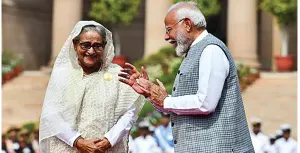
For over fifteen years, during the Sheikh Hasina regime, relations between Bangladesh and India operated under an unwritten agreement of automatic deference, based on the close alignment and personal rapport between India’s leadership and the former Bangladeshi Prime Minister. That was then; this is now. Currently, the postponement of this high-level summit serves as a stark reminder of a relationship undergoing a sharp and much-needed recalibration.
The delay does not suggest an imminent diplomatic rupture or a complete collapse of bilateral ties. Rather, the stalled trip exposes the friction that inevitably occurs when a key neighbour shifts away from predictable alignment towards a foreign policy dictated strictly by national interest. Following the electoral victory of the Bangladesh Nationalist Party (BNP), the administration in Dhaka is pursuing an explicit “Bangladesh First” doctrine—a complete sea change from the dynamics that Bangladesh had with India during the Sheikh Hasina era. Within this updated framework, high-level summits are no longer treated by Bangladesh as mere diplomatic formalities, but as pragmatic transactions that must lead to clear, tangible, and demonstrably balanced gains for the Bangladeshi people.
Undoubtedly, there are clear reasons why the summit has been stalled. Within Bangladesh, the ongoing exile of Sheikh Hasina in India remains a sensitive and highly charged political issue. For the leadership in Dhaka, it is not feasible to engage in warm, high-visibility diplomacy in New Delhi without addressing public demands for legal accountability and the extradition of Sheikh Hasina. On the other hand, India finds itself managing a delicate balancing act: protecting its vast long-term strategic investments while attempting to build a functional working relationship with a BNP-led government—a political movement with which historical ties have frequently been complex and rife with mistrust.
This political tension is aggravated by structural grievances based on profound, unresolved issues. Foremost among these is transboundary water-sharing. Decades of delayed negotiations regarding the Teesta River, combined with upcoming reviews of critical hydrological agreements such as the Ganges Water Sharing Treaty, have fostered a widespread perception among the Bangladeshi public that past diplomacy yielded asymmetrical benefits. They are not wrong in thinking this.
Adding to these concerns are persistent security issues along the world’s fifth-longest land border, where casualties and aggressive enforcement by India’s Border Security Force (BSF) continue to provoke sharp domestic criticism. Underlying these historic grievances lies a political climate centred on Bangladesh’s national dignity and sovereignty.
Furthermore, the delayed trip highlights a broader and crucial strategic reality shaping the Asia-Pacific region: Bangladesh’s deliberate effort to diversify its international partnerships. Rather than viewing its global standing through a single regional lens, Bangladesh is actively deepening economic and strategic relations with Japan, China, the United States, and the nations of the Gulf Cooperation Council (GCC). China’s substantial investments in Bangladesh’s infrastructure under the Belt and Road Initiative (BRI), alongside Japan’s development of the Matarbari deep-sea port, provide Bangladesh with structural alternatives that strengthen its negotiating edge. This diversified foreign policy demonstrates that while India remains a primary geographic partner, Bangladesh’s priorities have changed, and it is now determined to build a more resilient framework for its economic and security engagement across Asia.
 Non-interference in State-to-State Matters: India must shift away from supporting a single political party (i.e., Sheikh Hasina’s Awami League) and respect Bangladesh’s political sovereignty. In essence, India needs to develop a relationship with the nation of Bangladesh as a whole.


Based in Houston, United States, the writer is the executive director of a US-based human rights organization. She can be reached at scballand@thechrd.org
Leave a Reply