



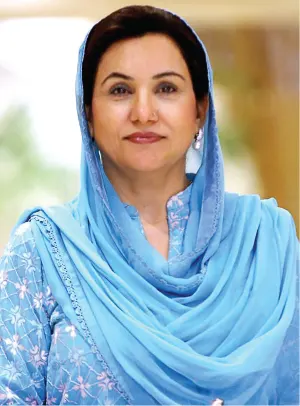
Dr Fouzia Hameed, MPA, Sindh Assembly, is a BDS-qualified dentist by profession and currently serves as a member of various standing committees, including the Standing Committee on Population Welfare; the Standing Committee on Women Development, Primary Health (BHUs, HRC and Vertical Programmes) and Secondary Health (Rest of Health); and the Sindh Parliamentary Caucus on Child Rights. Below are her views on creating new administrative units in Pakistan.
SouthAsia: Given MQM’s historical role in Sindh politics, do you see demands for new units as a practical step toward better local governance, or as a move that risks weakening Sindh’s territorial and political cohesion within the federation?
Dr Fouzia Hameed: I do not see the demand for new administrative units as a demand against Sindh or Pakistan. The main issue is effective governance. Sindh is diverse, and its cities and rural areas have different needs. If new administrative units are created through the Constitution, following democratic debate and with public consent, they can bring government closer to the people. They can also improve public services and accountability. But this process must be handled with care. No community should feel threatened or excluded. MQM’s focus has always been on fair representation, strong local governments and the devolution of power. Any change in administrative boundaries should be based on public interest, not political revenge. We need solutions that reduce mistrust and strengthen the federation.
SouthAsia: From MQM’s perspective, would new units ultimately undermine the unity within the country, or could carefully designed devolution reinforce it?
Dr Fouzia Hameed: MQM believes that new administrative units will not weaken Pakistan. In fact, greater devolution can strengthen the country. Unity is not created by keeping all power in one place; it comes from giving people a voice and addressing their problems. When citizens receive better services and equal representation, their trust in the state grows. MQM has always supported strong and empowered local governments. Karachi is a huge city with complex needs and requires institutions that can make decisions locally and respond quickly. Any new administrative structure must comply with the Constitution and be based on consultation and consensus. The goal should not be to divide Pakistan, but to improve governance in the country. A federation becomes stronger when its citizens feel represented, respected and included.
SouthAsia: In the context of Sindh’s complex ethnic and urban-rural politics, would the creation of new administrative units help address long-standing grievances of communities in Karachi and other urban centres, or further polarise the province?
Dr Fouzia Hameed: New administrative units could help address some long-standing problems, but this must be done carefully. Karachi faces serious challenges in transport, water, sanitation, housing and infrastructure. These problems require strong local institutions with adequate resources. At the same time, Sindh has a sensitive urban-rural and ethnic political history. Any proposal perceived as targeting one community could create further division. We should therefore focus on constitutional and democratic solutions. Karachi’s needs should not be presented as being against rural Sindh. Karachi is an important part of Sindh and Pakistan’s economy, and its progress benefits everyone. What we need is fair representation, empowered local governments, transparent resource sharing and better public services. The purpose should be better governance, not ethnic or political division.
Leave a Reply