
Cover Story
Khan of Convenience?
The confrontation between Pakistan Tehreek-e-Insaf (PTI) and Pakistan’s political and military establishment is the latest manifestation of this institutional malaise. Yet to view it merely as a power struggle between Khan and his adversaries is to mistake the symptoms for the underlying disease.

A peculiar cruelty lies in watching a nation grow older without ever being permitted to mature. Pakistan has spent nearly eight decades pursuing the promise of political renewal, only to discover, with each successive dispensation, the familiar contours of an older betrayal. Governments change, generals retire, political adversaries exchange places, and the vocabulary of national salvation is dutifully refurbished. Yet beneath this procession of purported reformers lies an enduring arrangement: the appropriation of the state by those entrusted with its stewardship.
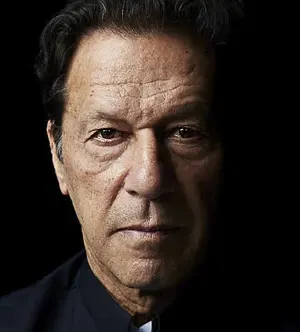
The confrontation between Imran Khan’s Pakistan Tehreek-e-Insaf (PTI) and Pakistan’s political and military establishment is the latest manifestation of this institutional malaise. But to regard it merely as a contest between Khan and his adversaries would be to mistake the symptoms for the disease. Pakistan’s predicament is more fundamental: a political economy in which authority has too often become a means of private enrichment, and public office an instrument of partisan preservation.
The roots of this arrangement predate Khan by decades. General Zia-ul-Haq’s seizure of power in 1977 did more than interrupt Pakistan’s democratic trajectory. His Islamisation programme furnished military rule with a vocabulary of moral legitimacy, while the Soviet invasion of Afghanistan transformed Pakistan into a major beneficiary of American strategic patronage. Foreign assistance strengthened the security establishment, but the political and ideological consequences of the Afghan jihad would burden subsequent generations. Religion, security and geopolitical expediency became mutually reinforcing instruments of statecraft.
The restoration of civilian rule in 1988 offered little structural reprieve. Benazir Bhutto and Nawaz Sharif spent the following decade alternating between government and opposition, their rivalry repeatedly facilitating interventions by unelected authorities. Bhutto’s administrations were dismissed in 1990 and 1996 amid allegations of corruption and maladministration; Sharif’s first government was dismissed in 1993, reinstated by the judiciary and subsequently brought to an end. The cycle culminated in General Pervez Musharraf’s coup in 1999. Four elected administrations had fallen within eleven years, each political rupture presented as an indispensable corrective to the failures of its predecessor.
The tragedy was not simply that civilian governments were destabilised. It was that their own antagonisms helped create the conditions for their displacement. Political parties treated their rivals’ exclusion as an opportunity rather than a warning, abandoning the principle of civilian supremacy whenever its suspension promised an immediate advantage.
Musharraf subsequently perfected another familiar expedient: the selective rehabilitation of political adversaries. His 2007 National Reconciliation Ordinance (NRO) offered relief from specified criminal proceedings, including cases involving corruption allegations, as part of an effort to secure political accommodation. Accountability, ostensibly a universal obligation, became negotiable in the interests of regime survival. The episode exposed how readily the language of national reconciliation could be appropriated for political expediency.
Nor did the return to civilian government dissolve the entanglement of political authority and private wealth. The 2016 Panama Papers disclosures revealed offshore companies linked to Nawaz Sharif’s children, prompting investigations and Sharif’s eventual disqualification from office in 2017, although subsequent acquittals complicated the original narrative of criminal culpability. Asif Ali Zardari’s political career has likewise been marked by recurring corruption allegations, prosecutions and contested legal proceedings. These histories cannot be reduced to presumptions of guilt; nevertheless, they illuminate a political culture in which questions of wealth, patronage and accountability remain inseparable from contests for office.
The relationship between institutional authority and economic influence constitutes another important dimension of Pakistan’s political economy. Over successive decades, non-commercial public institutions have developed substantial interests in property, industry and commercial enterprise. While these institutions have contributed to welfare provision, employment and economic development, their expanding commercial presence raises broader questions about the relationship between public institutions and market participation. As with civilian enterprises operating within the orbit of political power, the challenge lies in ensuring that economic activity is governed by consistent standards of transparency, competition and institutional accountability.
Questions surrounding the accumulation of private wealth and access to economic opportunity are hardly confined to any single institution. Pakistan’s political and administrative history reveals a recurring intersection of public authority, commercial influence and personal advancement, often compounded by uneven regulatory oversight and selective enforcement. Allegations of financial impropriety, whether directed at political figures, public officials or influential business interests, have frequently become entangled in broader power struggles. Such controversies underscore the importance of independent institutions capable of distinguishing legitimate enterprise from conflicts of interest, while ensuring that accountability remains a matter of due process rather than political convenience.
More recently, the establishment of the Special Investment Facilitation Council (SIFC) in 2023 has reflected an effort to coordinate economic decision-making across different arms of the state. Designed to facilitate investment in agriculture, minerals, energy, and other strategic sectors, the council represents an attempt to address bureaucratic fragmentation and restore investor confidence. Its long-term effectiveness, however, will depend on the clarity of institutional responsibilities, the consistency of economic policy and the capacity of civilian and military stakeholders to operate within a coherent governance framework. Economic revival requires not merely the mobilisation of institutional resources but also durable mechanisms to ensure that policy decisions remain transparent, predictable and subject to appropriate oversight.

The tragedy was not simply that civilian governments were destabilised. It was that their own antagonisms helped create the conditions for their displacement.
Pakistan’s present political circumstances have further underscored the importance of cooperation between civilian leadership and the country’s security institutions. At a time of mounting economic pressures, regional uncertainty and persistent domestic instability, effective coordination is undoubtedly necessary. Yet the durability of such arrangements ultimately depends on the strength of the institutions through which decisions are made. The central challenge, therefore, is not to diminish any particular institution’s contribution, but to ensure that national policymaking is anchored in constitutional continuity, clearly defined responsibilities and a shared commitment to the public interest.
Khan himself cannot be exempted from this indictment of political opportunism. His ascent to power in 2018 was overshadowed by allegations of establishment patronage, while his government frequently approached opposition politics through the punitive vocabulary of accountability. PTI’s subsequent invocation of constitutional supremacy is legitimate, but its credibility requires acknowledging the very institutional practices from which it once benefited.

Khan himself cannot be exempted from this indictment of political opportunism
Yet Pakistan is not Iran, and Khan is not Khomeini. His political movement, notwithstanding its populist excesses, remains an electoral force rather than a revolutionary project seeking to dismantle the state. The imposition of emergency rule and the suspension of PTI’s provincial government in Khyber Pakhtunkhwa on 11 October 2026, justified by the federal government on security grounds and condemned by PTI as politically motivated, illustrate the dangers of allowing constitutional exceptionalism to substitute for political engagement.
Reconciliation cannot simply mean persuading Khan to acquiesce, nor can it mean restoring another civilian dispensation contingent on establishment approval. It must entail credible elections, impartial accountability, parliamentary oversight of economic and security policy, and an enforceable distinction between public authority and private enrichment. Otherwise, negotiations will merely redistribute the privileges that generated the confrontation.
For ordinary Pakistanis, the cost is measured not only in political instability but also in the progressive estrangement of citizenship from governance. The state begins to resemble an enterprise whose liabilities are socialised while its benefits are concentrated disproportionately among those with access to power. Each incoming custodian inherits not merely the machinery of government but also the opportunity to enlarge its discretionary rewards.
Perhaps Pakistan’s gravest affliction is not the absence of patriotic declarations but the persistent failure to translate professed patriotism into institutional restraint. A nation cannot be reconciled through agreements among its powerful while the structures that reward their excesses remain inviolate. Unless the very fabric of political authority is reconstituted, today’s antagonists will become tomorrow’s allies, today’s reformers tomorrow’s beneficiaries, and each promised deliverance another instalment of the same historical disappointment.
Pakistan’s tragedy, then, is not simply that history repeats itself. It is that those who inherit the power to change its course so often discover a greater interest in keeping it unchanged.
Based in Islamabad, the writer holds an undergraduate degree in Literary Studies from Eugene Lang College of Liberal Arts at The New School and an MPhil in South Asian Studies from the University of Cambridge. She can be reached at fathimahsheikh@gmail.com


Leave a Reply