



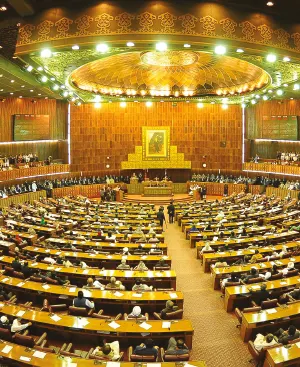
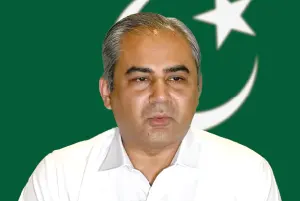
The sudden declaration, which was not an answer to a question, astonished many. Federal Interior Minister Mohsin Naqvi delivered an honest and blunt speech at the Pakistan Economic Summit 2026 in Islamabad on July 30, 2026, declaring that the present system had collapsed and was incapable of solving structural crises without major national consensus. In the same speech, he urged all political parties to sit together and build a consensus on creating new administrative units and provinces to decentralize power. These remarks by the minister, who, as a member of the government, has triggered an intense political, legal and constitutional debate across media platforms, have drawn cautious pushback from coalition partners such as the PPP regarding the redrawing of provincial boundaries. Rumours on social media, commentaries by renowned anchors, and comments in talk shows now suggest that Provinces or Administrative Units could be carved out.
The idea of creating new provinces in Pakistan is not new and has been debated many times. Given the country’s growing population, governing large expanses of geography has become challenging. This issue is not merely about creating Provinces or Administrative Units; it goes much further and strikes at the very basis and foundation of the Constitution. Pakistan is a country comprising four federating units. The Constitution clearly states that it is a “Federal Republic”. Though a federation, the power and authority under the 1973 Constitution were divided between the Centre and the Provinces in a manner that left the Provinces without the required autonomy to manage their internal affairs independently.

In 2010, the Federal Parliament promulgated the 18th Constitutional Amendment, under which the law-making power of the Parliament was curtailed and limited to the Fourth Schedule, while the Concurrent List, under which both the Province and the Centre were allowed to promulgate laws, was done away with. This truly introduced the concept of “Federalism”.
The Provinces constituting Pakistan, after the 18th Amendment, could work with some degree of autonomy. This autonomy was achieved through an amendment to the Constitution. Any action intended to interfere with the autonomy of the Provinces and their boundaries by modifying provisions of the Constitution through means other than those provided by the Constitution would violate its command. Any action to create Administrative Units by the Federation through Parliament would amount to a violation of the Constitution, as such authority is not contained in the Fourth Schedule of the Constitution.
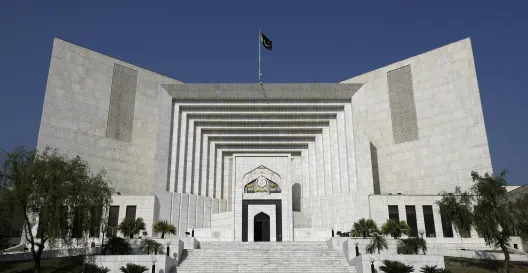
 The Preamble categorically states that it is the will of the people of Pakistan to establish an order, and further states that it is for the preservation of democracy that the people say: “give to ourselves the Constitution”. Altering the same would be by acceptance by the people as provided in the Constitution. The Constitution is a sacred document, where we have, in the 26th and 27th Amendments, seen tinkering therein for political gains. Those Constitutional Amendments were made under Article 239(1) to (3) by a two-thirds majority of both Houses, and thus may be termed lawful amendments, though motivated. The Constitution, however, by Article 239(4), commands that the boundaries of a Province cannot be changed, nor can Administrative Units be created without the express resolution of the Provincial Assembly, as discussed above. Any change caused by means other than those provided would amount to violating the Constitution and the authority of the federating Province, contrary to the principles on which Federalism stands and, obliquely, violating the basic feature of the Constitution.

The writer, who is based in Karachi, is a Senior Advocate of the Supreme Court of Pakistan and has also served as the Attorney General of Pakistan.
Leave a Reply