
International
New Muslim Power Balance
For decades, Iran has exploited divisions among its regional competitors and cultivated relationships with individual states and non-state actors. The recent Pakistan–Saudi Arabia–Türkiye defence agreement potentially reverses that advantage.

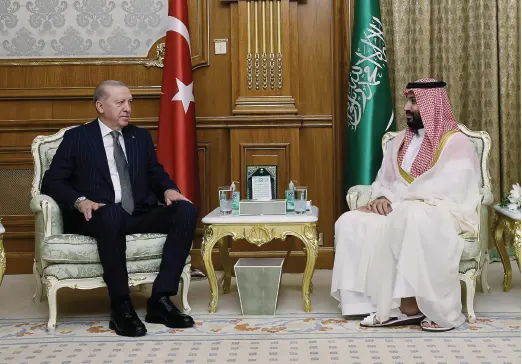
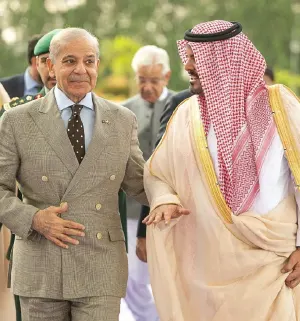
The Middle East is entering a new phase in its strategic history. The recent Pakistan–Saudi Arabia–Türkiye defence agreement, signed in Makkah, is significant because it represents an attempt by three major Muslim states to develop a collective security framework as the regional balance undergoes profound change. The agreement provides for mutual defence.
Although its signatories have emphasised that it is defensive and not directed against any particular country, its emergence cannot be separated from the insecurity felt by Gulf states and other regional powers following years of Iranian regional expansion and, more recently, direct Iranian attacks on Gulf targets. The central question, therefore, is why these three Muslim states have moved towards collective security at this particular moment.
Iran after 1979: Revolution as Foreign Policy
The Iranian Revolution fundamentally changed Iran’s relationship with the surrounding Muslim world. The Islamic Republic did not simply establish a new domestic political order; it also developed a revolutionary foreign-policy doctrine.
One important element was projecting Iranian influence beyond its borders. Iran developed relationships with Shia communities and movements throughout the Middle East, creating a network of state and non-state actors across the region.
From the Iranian perspective, this has often been described as an “axis of resistance” against Israel and Western influence. For many Arab Sunni states, however, it has appeared as an instrument to establish strategic depth and extend Iranian influence into the Arab world. Iran’s rivalry with Israel is longstanding, but its competition with Saudi Arabia, the Gulf monarchies, Türkiye and others has its own history and logic.
The Sectarian Dimension
The Iranian Revolution also introduced a powerful sectarian dimension into regional politics.
This does not mean that every Shia Muslim movement is an Iranian proxy, nor that Iran’s foreign policy can be reduced to sectarianism. Nevertheless, Iran has repeatedly developed relationships with Shia political and military organisations where sectarian divisions already existed.
Hezbollah in Lebanon became one of the Middle East’s most powerful non-state military organisations with extensive Iranian support. In Iraq, Iran developed influence through political parties and armed groups. In Yemen, its relationship with the Houthis became intertwined with the Iranian–Saudi rivalry. Bahrain, with a Shia-majority population but ruled by a Sunni monarchy, illustrates the sensitivity of Gulf sectarian politics.
The issue is whether a foreign power can mobilise domestic sectarian divisions for geopolitical ends.
Iran’s Proxies and the Strategy of Strategic Depth
Iran’s regional strategy has rarely depended exclusively on direct military intervention. Tehran has instead built relationships with organisations capable of fighting, influencing politics and creating pressure without requiring Iran itself to occupy territory. Hezbollah, Shia militias in Iraq, the Houthis and other aligned organisations have provided strategic depth.
This allows Iran to confront adversaries at multiple points. Israel can be pressured from Lebanon, Syria, Iraq and Yemen. Saudi Arabia can be threatened from Yemen, while American military installations can face pressure from groups in Iraq and Syria. The Gulf can be threatened through missiles, drones and attacks on energy infrastructure.
The advantage for Iran is clear: the battlefield can be moved away from its own territory. For neighbouring states, conflict can rapidly spread across borders.
Yemen and the Houthi Question
The Houthi movement illustrates this strategy particularly clearly. Major Houthi attacks directed at Israel in connection with the Gaza conflict began in October 2023, following the Hamas attack and the subsequent Israeli military campaign in Gaza. The Houthis declared that they were acting in support of the Palestinians and subsequently attacked Israel and shipping in the Red Sea.
One may reasonably ask whether Iran benefited strategically by supporting the Houthis while avoiding the same degree of direct exposure. The Houthis confronted Israel and faced American and other military responses, while Iran retained strategic distance.
Iran has also directly confronted Israel, launching a major missile and drone attack in April 2024. The argument, therefore, is not that it has avoided direct confrontation, but that it has often relied on indirect warfare and imposed greater immediate costs on neighbouring Muslim states.
Gaza and the Question of Iran’s Real Priorities
The tragedy in Gaza has understandably generated enormous anger throughout the Muslim world. Israel’s military operations and the suffering of Palestinian civilians have produced a profound humanitarian and political crisis. Israel bears major responsibility for the devastation caused by its military campaign, and the Palestinian question cannot be ignored.
From Pakistan’s perspective, Iran’s relationship with India creates an additional concern
But a separate question must be asked about Iran.

If Iran presents itself as the principal defender of the Palestinian cause, one must examine whether its policies have actually reduced Palestinian suffering, or whether the Palestinian issue has also become an instrument of Iranian regional strategy.
Iran has supported Hamas and Islamic Jihad, as well as the broader “resistance” network, and used the Gaza conflict to reinforce its regional narrative. The question remains whether its confrontation with Israel is primarily about the liberation of Palestine, or whether Palestine has become part of a much larger struggle for regional influence. This is a question of strategic behaviour, not simply rhetoric.
Iran and Pakistan
For Pakistan, the Iranian question is particularly sensitive. Pakistan shares a long border with Iran and deep cultural, historical and religious links with its neighbour. Islamabad has sought cordial relations with Tehran, yet security tensions remain, particularly in Balochistan.
Both countries have experienced separatist and militant violence in their Baloch regions. In January 2024, they exchanged missile strikes across the border, an extraordinary development between two neighbouring Muslim states. Pakistan subsequently struck militant targets inside Iran.
Pakistan has legitimate concerns about militant organisations operating across the Iranian border, just as Iran has security concerns about militants operating from Pakistani territory. But because Balochistan is strategically vital to Pakistan, any perception of external interference there becomes a matter of national security.
The late General Qassem Soleimani, commander of Iran’s Quds Force, symbolised Tehran’s regional security doctrine. In 2019, following the killing of Iranian Revolutionary Guard personnel near Zahedan, Soleimani warned Pakistan about cross-border attacks and called for action against militants. His significance lies in the doctrine he represented: Iran’s security interests were understood in regional rather than merely territorial terms.
For Pakistan, this creates an important dilemma. It cannot afford hostility with Iran, but neither can it permit Balochistan to become a theatre for another country’s strategic competition.
Iran and India
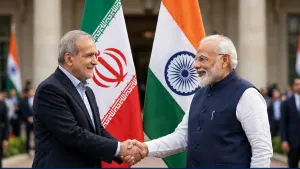
India’s relationship with Iran presents another concern for Pakistan. India has invested heavily in the development of Iran’s Chabahar Port, which provides an alternative route to Afghanistan and Central Asia that bypasses Pakistan.
From Pakistan’s perspective, Iran’s relationship with India creates an additional concern. This does not mean they are formal allies against Pakistan; their interests do not always coincide. But Pakistan must assess the relationship from the standpoint of its own national interests.
The Sunni Gulf States and Iran
For decades, Saudi Arabia and Iran competed for regional influence. The rivalry was not purely religious; it involved energy, geography, political influence, military power and competing visions of the Middle East. Saudi Arabia represented one model of Sunni Arab leadership, while Iran represented a revolutionary Shia political model with ambitions extending beyond its Persian borders.
The Gulf monarchies consequently became increasingly concerned about Iranian influence. Iran argued that it needed allies because it faced Israel, the United States and hostile Arab governments. Its opponents argued that Iran was destabilising the region by supporting armed groups and exploiting sectarian divisions. Both narratives contain elements of truth. The result has been unmistakable: the Middle East has become increasingly militarised and divided.
The New Pakistan–Saudi Arabia–Türkiye Equation
It is against this historical background that the recent Pakistan–Saudi Arabia–Türkiye defence agreement must be understood. These three states possess complementary strategic strengths.
Pakistan has one of the region’s largest conventional military forces and is a nuclear-armed state. Türkiye is a major NATO military power with a substantial defence industry. Saudi Arabia possesses enormous economic resources and an increasingly sophisticated military infrastructure.
Collectively, they represent a formidable potential strategic bloc. The agreement has been described as defensive rather than directed against Iran. Turkish Foreign Minister Hakan Fidan has said that it is not aimed at Iran or any other specific country.
Nevertheless, its timing is significant. Saudi Arabia has faced years of Iranian and Houthi pressure, while Pakistan has experienced security incidents involving Iran and Türkiye has its own regional interests. The three countries therefore have substantial reasons to cooperate.
What Does This Mean for Iran?
Iran has publicly sought to downplay the threat posed by the new arrangement. Tehran has said there is no reason for Iran to fear the Pakistan–Türkiye–Saudi agreement. But its very existence should nevertheless be understood as a strategic warning.
For decades, Iran has been able to exploit divisions among its regional competitors and cultivate relationships with individual states and non-state actors. The new arrangement potentially reverses that advantage. Instead of confronting Saudi Arabia separately, Iran may now have to consider that an attack on Saudi Arabia could involve Pakistan and Türkiye. Tehran must also consider their growing coordination with Riyadh.
This creates a different strategic environment.
Who Will Shape the Muslim World?
The deeper question is who will shape the political and strategic future of the Muslim world. Iran has pursued one model: revolutionary ideology, strategic depth, non-state armed organisations and influence through regional networks. Saudi Arabia has increasingly pursued another: economic transformation, diplomacy, modernisation and regional stability.
Türkiye seeks strategic autonomy and military influence extending from the Middle East into Central Asia. Pakistan possesses military strength, nuclear deterrence and a unique geographical position connecting South Asia, Central Asia and the Middle East.
Cooperation among these three states may therefore represent more than a temporary response to the present crisis. It may mark the beginning of a new regional architecture.
The writer is a retired civil servant based in Karachi, and can be contacted at aftab4825@hotmail.com.


Leave a Reply