





The inauguration of a Biomass Steam Plant at its Sheikhupura site by Punjab Chief Minister Maryam Nawaz Sharif marks another step in Nestlé Pakistan’s efforts to create shared value, support the UN Sustainable Development Goals and advance its net-zero ambitions through cleaner energy and regenerative food systems.
From agricultural residue to cleaner steam
On 31st July’26, the stone laying and inauguration of the Sheikhupura Biomass Steam Plant by Chief Minister Maryam Nawaz Sharif, alongside Nestlé Pakistan’s leadership including CEO and Managing Director Jason Avanceña, Head of Corporate Affairs & Sustainability Sheikh Waqar Ahmad and Head of Technical Faisal Nadeem, marked an important step in advancing cleaner manufacturing in Pakistan. The occasion reflected Nestlé Pakistan’s Creating Shared Value approach, where business growth is aligned with positive outcomes for communities, farmers and the environment. The USD 4.5 million investment will use 72,000 tons of agricultural residue annually to generate 30 tons of steam per hour, reducing approximately 24,345 tons of carbon emissions each year. It is also expected to generate estimated annual fuel cost savings of around USD 2.15 million, while supporting cleaner operations, reducing reliance on fossil fuels and contributing to Pakistan’s climate action priorities.
 Cleaner energy, Regenerative farming practices
For Nestlé, Creating Shared Value means delivering long-term value for society while ensuring the sustainability of its business. This approach is reflected in actions that support a regenerative food system and strengthen resource efficiency across the value chain. Guided by its sustainability priorities of climate action, regenerative agriculture and circularity, Nestlé Pakistan continues to connect cleaner energy with responsible resource use and stronger farming practices. Alongside investments such as the Sheikhupura Biomass Steam Plant, the company is working with farmers to promote regenerative agriculture practices that help strengthen soil health, improve water efficiency and support biodiversity. To date, Nestlé Pakistan has initiated the implementation of regenerative agriculture practices on over 125 farms of maize, alfalfa, oats, sorghum and wheat across Punjab to promote soil health and conserve water.
Supporting climate action at scale
Linked to the United Nations Sustainable Development Goals, including SDG 7 on Affordable and Clean Energy and SDG 13 on Climate Action, the plant supports Nestlé’s Net Zero Roadmap. Under this roadmap, Nestlé aims to reduce greenhouse gas emissions by 50% by 2030 from a 2018 baseline and reach net zero by 2050 at the latest. By 2025, Nestlé had achieved more than a 45% reduction in greenhouse gas emissions compared to the 2018 baseline, demonstrating continued progress toward responsible operations and long-term environmental stewardship.
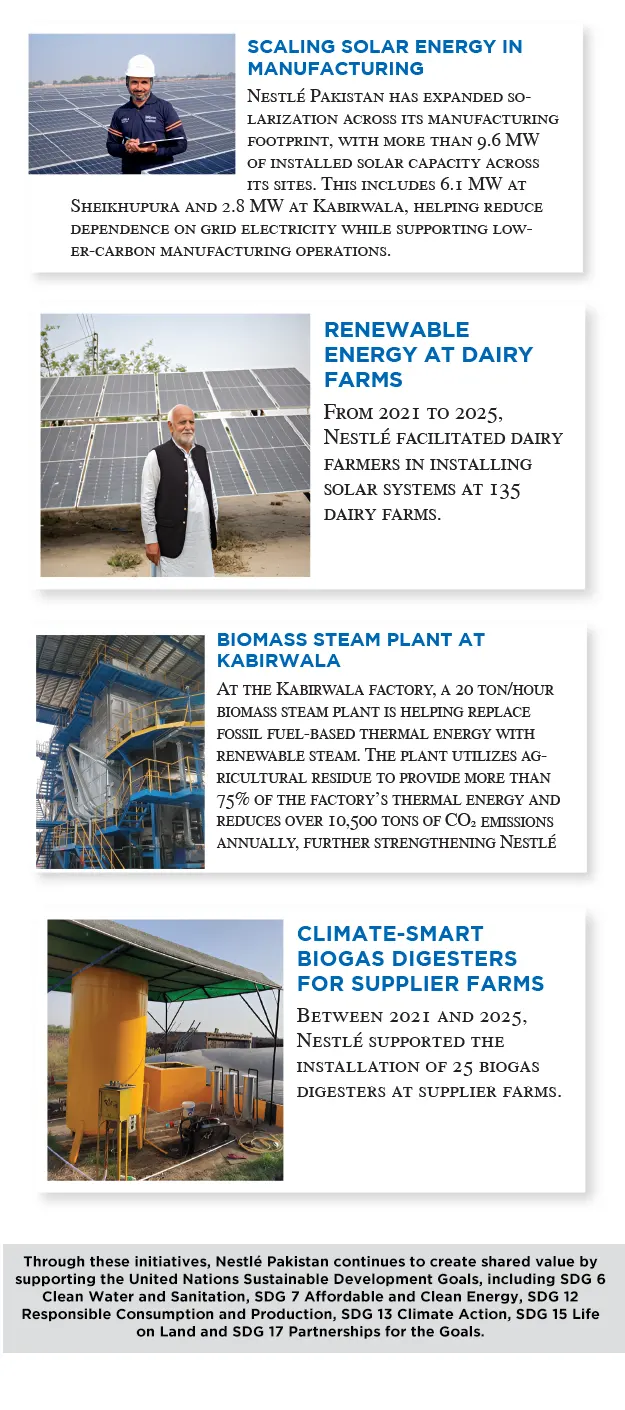
Beyond Sheikhupura, Nestlé Pakistan continues to advance renewable energy across its operations through site-specific solarization and biomass initiatives. Together, these projects reflect the company’s commitment to reducing greenhouse gas emissions, improving energy efficiency and supporting a just transition toward cleaner energy across manufacturing sites and supplier networks.
Leave a Reply