



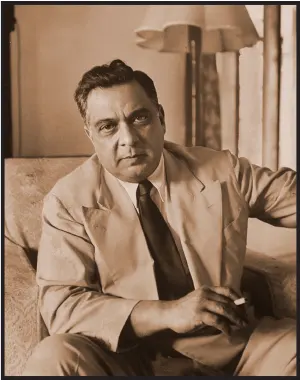
Few figures in Pakistan’s political history have been so persistently defined by a single episode as Iskander Ali Mirza. In popular discourse, he is remembered primarily as the President who abrogated the Constitution of 1956, imposed martial law in October 1958, and opened the door to military intervention in politics. That verdict is so deeply embedded that it often serves as both the beginning and end of the conversation about his legacy.
Yet history rarely conforms to such simplicity. While Iskander Mirza’s role in the constitutional crisis of 1958 deserves scrutiny and criticism, reducing his career to that episode obscures his contributions to Pakistan’s formative years. A balanced assessment reveals a complex statesman whose achievements in state-building, strategic planning, diplomacy, and national consolidation have been overshadowed by his political downfall.
The challenge is not to rehabilitate Iskander Mirza uncritically, nor to excuse his mistakes, but to examine whether the prevailing perception corresponds to historical reality.
Iskander Mirza belonged to the generation tasked with constructing a viable state after Partition. As Joint Secretary of Defence at Partition, later Defence Secretary, Governor-General, and ultimately Pakistan’s first President, he occupied positions at the centre of major national challenges during the country’s first decade.
Pakistan in the late 1940s and 1950s was not merely a young democracy; it was a fragile state confronting refugees, disputes with India and Afghanistan, institutional shortages, provincial tensions, economic weakness, and constitutional uncertainty. Iskander Mirza’s political instincts were shaped by these realities rather than by an abstract preference for authoritarian governance. Whether one agrees with him or not, he was engaged with preserving state cohesion in exceptionally difficult circumstances.
One overlooked aspect of his legacy is his contribution to Pakistan’s strategic development. As Defence Secretary, he helped establish the country’s security architecture and strengthen coordination between civilian and military institutions when administrative continuity was essential. His understanding of geopolitics informed Pakistan’s early foreign policy orientation. While portrayed as pro-Western, his approach was pragmatic. Security partnerships with Western powers were viewed as instruments for securing military assistance and economic support, not as expressions of ideological alignment.
Equally noteworthy was his diplomatic flexibility. Long before strategic diversification became a hallmark of Pakistani foreign policy, Iskander Mirza recognized the value of engaging multiple centres of power. His efforts to reach out to China while preserving Western alliances reflected an appreciation of emerging geopolitical realities and the need for balance rather than rigid alignment.
Perhaps no achievement better illustrates Iskander Mirza’s strategic foresight than the acquisition of Gwadar in 1958. Concerned that British influence might obstruct Pakistan’s bid, he reportedly conveyed to London that any decision regarding Gwadar must respect Pakistan’s national interests, failing which Pakistan would be compelled to reconsider its association with the Commonwealth. At the time, its significance was not fully appreciated. Today, as Gwadar occupies a central place in Pakistan’s maritime strategy and regional connectivity ambitions, the decision appears remarkably consequential. What was once viewed as peripheral is now recognized as one of the most important strategic acquisitions in Pakistan’s history.


The writer is the author of the book ‘Honour-bound to Pakistan in Duty, Destiny and Death. Iskander Mirza. Pakistan’s First Elected President’s Memoirs from Exile.’ He can be reached at syedkhawarmehdi1812@gmail.com
Leave a Reply