



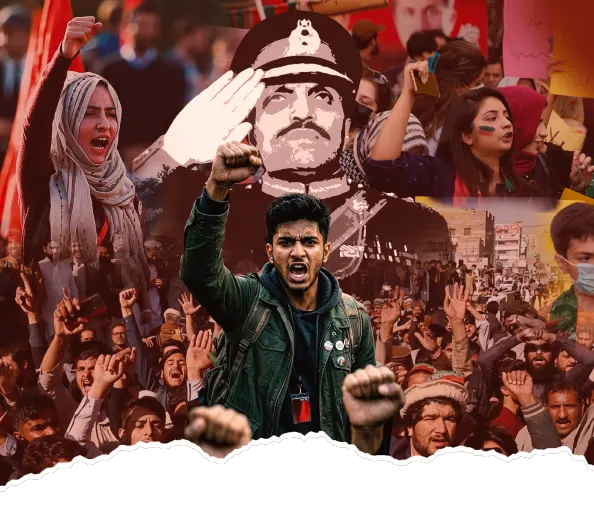
Youth are a crucial segment of a population. Economic progress, national cohesion, social peace, and political stability depend, to a substantial measure, on success in providing opportunities to young people, with the ultimate goal of drawing youth positively into national life. The global discourse on youth highlights the great importance of educating them and providing them with employment opportunities, along with political freedom, for peace and development in society.
In this respect, an important theme is the demographic youth bulge—usually defined as a high proportion of young people relative to the total population—which arises when a country has experienced high fertility in the recent past. More recently, the term Gen Z has been used for those born between 1997 and 2012, who in 2026 are between the ages of 14 and 29. A youth bulge is prominent in several Asian countries in general and Muslim-majority countries in particular.
For example, according to UN estimates, in 2026, Gen Z constitutes 30.5% of the population in Pakistan. The proportion is the same or higher in Afghanistan, where 31.8% of the population falls within this age group. The percentage of youth ranges from 27.5% to 30% in India, Egypt, Bhutan, Jordan, Bangladesh, Yemen, and Nepal; from 25.3% to 26.5% in Morocco, Indonesia, Malaysia, and Saudi Arabia; from 21.5% to 23.5% in Iran, the Maldives, Algeria, Tunisia, Azerbaijan, Türkiye, and Sri Lanka; and from 15.5% to 18.5% in Japan, South Korea, and China.
Thus, across many developing countries in the region with a high percentage of young people, there is concern about the impact of very rapid social change on youth, associated with globalization in general and wider access to social media in particular. Both have positive and negative impacts on the way young people think. In the latter situation, concerns center around conflicting values, which could lead to the political radicalization of youth.
Although scholars have argued for over five decades that youth bulges may contribute to violent conflict and political instability, the importance of the youth bulge has received increasing attention since the beginning of the 21st century. For example, it has been argued by Jack Goldstone, a political demographer, that “youth have played a prominent role in influencing the political process throughout recorded history, and the existence of a ‘youth bulge’ has historically been associated with times of political crisis.”
Thus, large youth groups can bring about change because they are more easily attracted to new ideas and thereby challenge traditional forms of authority. Indeed, youth were the backbone of the French Revolution of 1789, the Russian Revolution of 1917, and the Chinese Revolution of 1949, when each country had a high percentage of youth in its population due to high fertility in the preceding period.


Based in Karachi, the author has a PhD in Demography. Currently, he serves as President of the Population Association of Pakistan and is also a Professor Emeritus at the Aga Khan University in Karachi. He has also worked with the United Nations in New York and is the author of three books. He can be reached at mehtab.karim@gmail.com.
Leave a Reply