


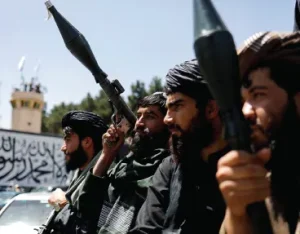
Afghanistan is trying to project itself as a normal country with its own distinctive ideology. Had it been a rich country and its government had not sought diplomatic recognition, it might have ignored international protests and condemnation while reforming its internal governance. Since the Afghan government urgently requires international recognition and funding, it must respond to the legitimate concerns of the global community and to its previous commitments, which it is not prepared to accept.
The United Nations acknowledges that Afghanistan has become more stable since the takeover by the Taliban five years ago, in 2021. In the same breath, it warns that lasting stability cannot be possible unless the Taliban lift restrictions on women and girls, protect the basic rights of all minorities and address terrorism concerns.
In the international coverage of the Taliban’s fifth anniversary on August 15, 2026, the same two dominant and seemingly contradictory narratives emerged. The first is the security dividend. The second narrative is that security has been achieved at the cost of exclusion, repression and discrimination, going beyond gender and movement restrictions and affecting ethnic and religious minorities, former government officials, journalists and civil-society actors. Both observations can be true simultaneously. The fifth anniversary thus presents Afghanistan with a paradox.
The Taliban may have succeeded in ending much of Afghanistan’s prolonged armed conflict, but they have failed to create an inclusive peace. Indeed, their record over the past five years suggests something more disturbing: they have deliberately pushed women and girls out of public life and sought to redefine their place in Afghan society as one largely confined to the home.
On returning to power in August 2021, the Taliban initially sought to reassure Afghans and the international community that their rule would be different from the experience of the 1990s and that women’s rights would be respected within their interpretation of Islam. Five years later, those assurances have proved hollow. Instead of gradually relaxing restrictions, the Taliban have progressively tightened them, despite repeated appeals from the United Nations, Muslim countries and the wider international community.
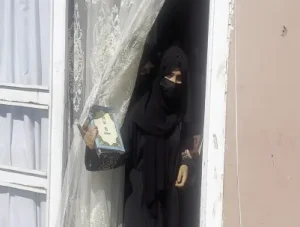
Women have also been banned from entering gyms, parks and public baths, from taking part in sports, and from travelling to distant locations without a “mahram,” or male guardian. In 2024, the Taliban prohibited women from speaking audibly in public, and in 2025 a brutal new marriage law perpetuated domestic violence and child abuse by effectively recognising child marriage and making it much harder for women to seek divorce. The UN and human rights organisations have described the systematic dismantling of women’s rights as gender apartheid.
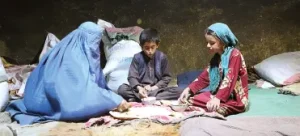
The consequences are particularly devastating for women and girls. Afghanistan has become the only country in the world where girls and women are formally barred from secondary and higher education. The result is that an entire generation of Afghan girls is being denied the education necessary to become teachers, doctors, lawyers, administrators, entrepreneurs and political leaders.
The tragedy is especially acute for those women who spent the previous two decades acquiring education and entering professional life. With the Taliban takeover, many suddenly found the doors of the institutions they had helped build slammed shut. They did not merely lose jobs. They lost a future.
When girls are denied education today, Afghanistan loses teachers, doctors, nurses, engineers and professionals tomorrow. When women are excluded from the workforce, the country’s already fragile economy loses a significant reservoir of human capital. If the present has become a narrowing space of existence for Afghan women and girls, the future looks even more uncertain. Unwittingly, the Taliban regime is effectively impoverishing its own future. The victims are not merely today’s women and girls. They are tomorrow’s Afghanistan.
Can International Justice Finally Hold the Taliban Accountable?
Only if international justice moves from condemnation to enforcement.
The decisive development came on July 8 2025, when the International Criminal Court (ICC) issued arrest warrants for Taliban Supreme Leader Haibatullah Akhundzada and Chief Justice Abdul Hakim Haqqani. The judges found reasonable grounds to believe that both had committed the crime against humanity of persecution on gender grounds, including systematic deprivation of women’s and girls’ rights to education, movement, expression, family life and physical autonomy. Afghanistan is a party to the Rome Statute, giving the ICC territorial jurisdiction over crimes committed there.
 But the ICC has no police force. Arrest depends on States Parties executing the warrants when suspects enter their territory. This is the weakest link, often further weakened by a lack of political will.
 Third, broadening prosecution beyond the two leaders. For this, evidence should establish chains of command and identify provincial governors, morality-police commanders, prison officials and other individuals responsible for torture, enforced disappearance, persecution and other international crimes.

The writer, based in Rawalpindi, is a former ambassador and can be contacted at mian.sana@gmail.com.
Leave a Reply