Despite the widening internal fault lines, Pakistan’s ruling elite appear to lack the commitment, capability and vision required to steer the country out of its multiple crises
ByDr. Moonis Ahmar | August 2026
Unless Pakistan is able to address its domestic challenges, its so-called ‘internal fault lines,’ the country risks slipping from a fragile state towards a failing, or even failed, state. This, arguably, is the trajectory Pakistan is currently facing. Issues ranging from the insurgency in Balochistan and terrorism in Khyber Pakhtunkhwa (KP) to unrest in Azad Jammu and Kashmir (AJK), instability in Gilgit-Baltistan, and the resurgence of Sindhi and Mohajir nationalism pose serious challenges to Pakistan’s stability and national cohesion.
Despite the deepening of these internal fault lines, the ruling elite appear to lack the commitment, capability and vision needed to steer the country out of its multiple crises. Alongside growing insecurity, Pakistan continues to grapple with economic hardship and increasing public frustration, particularly among its youth. Ironically, at a time when the country faces mounting domestic challenges, its leadership has devoted considerable attention to diplomacy and mediation aimed at promoting peace in the Persian Gulf and West Asia. Critics argue that, instead of concentrating on the deteriorating security situation in Balochistan and unrest in Azad Jammu and Kashmir, Pakistan’s Federal Interior Minister spent two weeks abroad, reflecting what they view as a lack of urgency in addressing pressing domestic concerns.
How do Pakistan’s growing domestic challenges threaten the country’s very survival? More importantly, how can a nation of over 250 million people, already grappling with mounting economic challenges, address these crises? What is the way forward, and what obstacles stand in the way of resolving Pakistan’s internal structural weaknesses? Answering these questions requires an objective analysis supported by critical thinking.
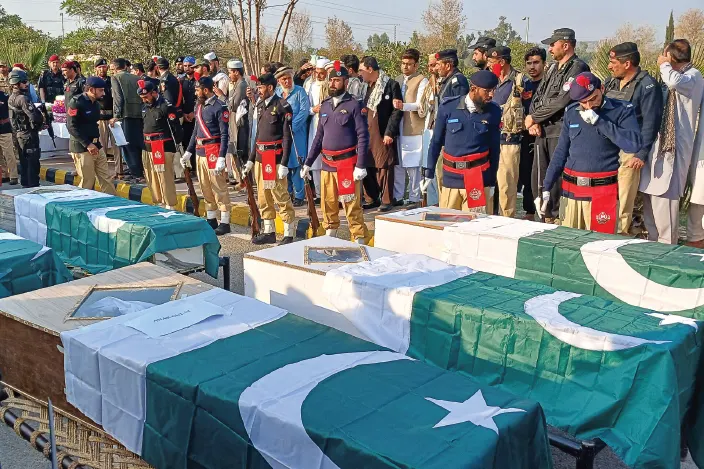
Addressing a sit-in on 1 July 2026 organised by the families of police personnel martyred in the Ziarat attack, Balochistan National Party-Mengal (BNP-M) chief Akhtar Mengal argued that dialogue and negotiations were essential to ending the cycle of violence in the province.
Questioning the state’s handling of the security situation, Mengal said: “If a functional justice system existed in the province, why has there been no independent and transparent investigation into the Ziarat attack and similar incidents?”
He further remarked: “The state’s lack of confidence in its own institutions and decisions is one of the country’s greatest tragedies. Several experiments have been carried out in Balochistan, including the abolition of the Levies Force and its subsequent merger with the police. However, all such measures have failed. Governments continue to mislead the public by forming committees and sending representatives instead of providing lasting solutions.”
Mengal also urged protesters to remain steadfast in their peaceful campaign for their rights, asking: “If the situation in Balochistan were truly normal, why would people be compelled to stage sit-ins? A state where speaking the truth is considered a crime and demanding one’s rights is treated as an offence cannot survive for long.”
Violent incidents continue to occur almost daily in Balochistan, targeting security personnel as well as non-local residents, particularly those from Punjab. These recurring attacks raise serious questions about the state’s ability to maintain law and order in Pakistan’s largest and most restive province.
By most assessments, Balochistan represents Pakistan’s most significant internal fault line. Owing to its strategic location and vast natural resources—estimated by some to be worth more than one trillion US dollars—the province has long been viewed as an arena of regional and international geopolitical competition. Mengal argued that unless issues such as enforced disappearances and the continued deployment of security forces are addressed through political dialogue, Balochistan is likely to remain trapped in a cycle of instability.
Beyond Balochistan, Pakistan continues to face serious security and political challenges in other regions. Terrorist violence remains a persistent concern in Khyber Pakhtunkhwa (KP), while political unrest has intensified in Azad Jammu and Kashmir (AJK). In Rawalakot, thousands of protesters staged a sit-in against rising electricity tariffs and food prices while also demanding the abolition of twelve reserved seats for Kashmiri refugees in the AJK Legislative Assembly. Critics argue that, rather than engaging the protesters through dialogue, the authorities have relied primarily on coercive measures, a strategy they contend risks deepening public resentment towards Islamabad.
Alongside AJK, Gilgit-Baltistan represents another regional grievance. The recent elections in the region, criticised by sections of the opposition and some observers over alleged irregularities, have fuelled public resentment and renewed debate about governance and political representation.
Karachi remains another major flashpoint. Pakistan’s commercial capital continues to grapple with allegations of poor governance, corruption, nepotism and deteriorating infrastructure. Critics argue that these long-standing problems have undermined public confidence in provincial and local institutions while adversely affecting the city’s economic potential.
Pakistan’s fragile economy constitutes another significant fault line. Persistently high inflation, repeated increases in electricity, gas and fuel prices, rising unemployment and declining purchasing power have intensified public hardship and raised serious concerns about economic management. Weak governance, deficiencies in the justice system and growing frustration among young people have further compounded these challenges. Adding to these pressures is deepening political polarisation between the government and the opposition, alongside an expanding role of the security establishment in national affairs following the passage of the 27th Amendment.
The prolonged foreign visits of senior government officials have further fuelled debate over whether domestic challenges are receiving the urgency they require
Addressing Pakistan’s internal vulnerabilities requires a comprehensive and sustained national strategy. The first priority should be to initiate meaningful dialogue in Balochistan, Khyber Pakhtunkhwa (KP), Azad Jammu and Kashmir (AJK), Gilgit-Baltistan and Karachi by engaging all relevant stakeholders. Political grievances cannot be resolved solely through administrative or security measures; they require negotiation, consultation and confidence-building.
The long-standing rhetoric that equates dissent with disloyalty also needs to be reconsidered. Branding communities or political groups from these regions as unpatriotic or associating them indiscriminately with insurgency risks deepening alienation rather than strengthening national cohesion. Pakistan’s history, particularly the events that culminated in the separation of East Pakistan in 1971, illustrates the consequences of failing to address legitimate political grievances through democratic and constitutional means.
Unless the state’s priority shifts towards political engagement, human development and social progress, there is little prospect of addressing Pakistan’s regional fault lines. Simply attributing the country’s internal challenges to external actors will not resolve the factors that continue to fuel violence and instability in various parts of the country. Tackling corruption and nepotism, strengthening accountability, improving governance and upholding the rule of law are essential prerequisites for sustainable peace and stability.
Equally important is the strengthening of democratic institutions. Political pluralism, a free and responsible media, an independent judiciary and respect for constitutional freedoms can play a vital role in addressing the underlying crises threatening Pakistan’s cohesion. However, instead of addressing governance deficits, institutional weaknesses and regional grievances through dialogue and reform, the state has increasingly relied on coercive measures to respond to political dissent.
At a time when Pakistan’s internal challenges appear to be intensifying, many observers believe that greater attention should be devoted to domestic priorities. With Balochistan continuing to experience insurgent violence, terrorism remaining a serious concern in Khyber Pakhtunkhwa (KP), and political unrest persisting in Azad Jammu and Kashmir (AJK), critics have questioned whether sufficient political attention is being directed towards these issues. The prolonged foreign visits of senior government officials, including the Federal Interior Minister, have further fuelled debate over whether domestic challenges are receiving the urgency they require.
This raises an important policy question: can Pakistan afford to devote significant diplomatic effort abroad while many of its internal challenges remain unresolved? At the same time, relations with both India and Afghanistan continue to present complex strategic challenges. India’s decision to place the Indus Waters Treaty in abeyance since May 2025, together with continuing tensions along Pakistan’s western frontier, has further complicated the country’s security environment. Many analysts therefore argue that strengthening domestic stability should remain the government’s foremost priority, since effective foreign policy ultimately depends upon internal political and economic resilience.
At a time when Pakistan’s internal challenges appear to be intensifying, many observers believe that greater attention should be devoted to domestic priorities
Civil society, the media and academia also have an important role to play in encouraging informed public debate and safeguarding constitutional freedoms. Protecting press freedom, judicial independence and political rights strengthens democratic governance and provides peaceful avenues for resolving differences.
Pakistan’s economic challenges further reinforce the urgency of reform. Rising inflation, increasing living costs, youth unemployment and the continuing migration of skilled professionals abroad have intensified public frustration. At the same time, millions of children remain out of school, poverty continues to affect a significant proportion of the population, and economic indicators, including growth, exports and foreign exchange reserves, remain under considerable pressure. Unless meaningful reforms are undertaken, these structural weaknesses could further undermine social stability and public confidence in state institutions.
Ultimately, Pakistan’s future will depend upon the willingness of its political and institutional leadership to place national interests above short-term political considerations. The combined efforts of elected governments, the security establishment, the judiciary, Parliament, civil society and the private sector are essential if the country is to address its internal sources of instability effectively. The choices Pakistan makes today will determine whether it emerges stronger and more cohesive or faces deeper political and economic instability. In many respects, this is Pakistan’s moment of truth.
Based in Karachi, the writer is a Meritorious Professor of International Relations and former Dean of the Faculty of Social Sciences at the University of Karachi. He can be reached at amoonis@hotmail.com







Leave a Reply