



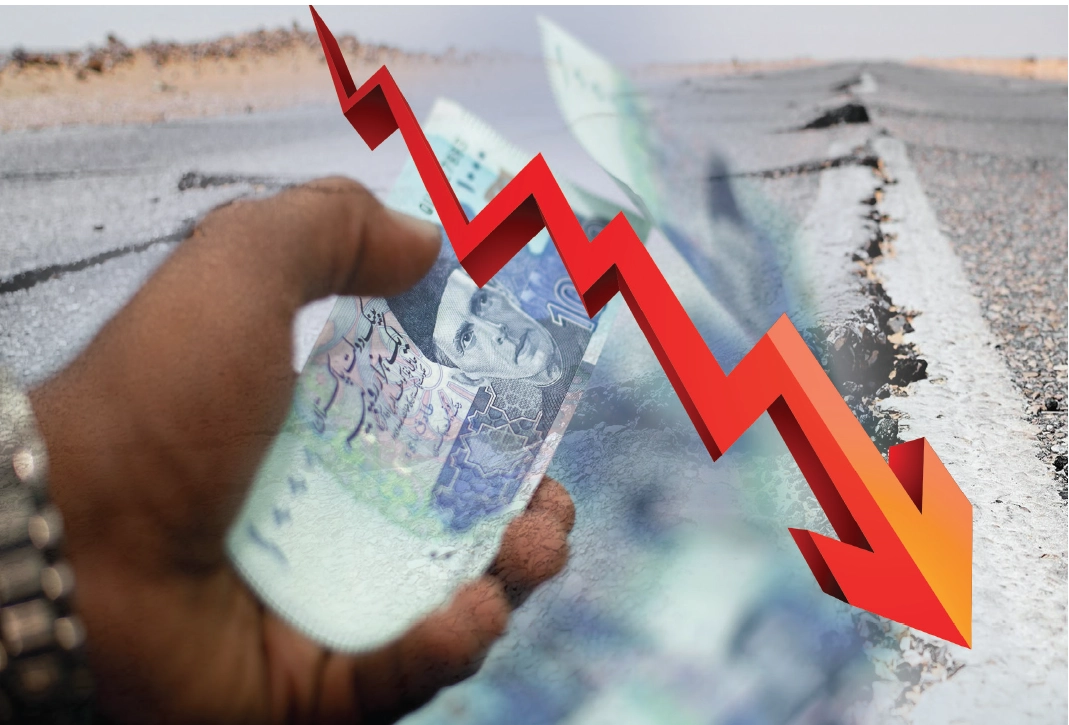
PThe economy in Pakistan is showing tentative signs of recovery. This period of economic stabilization is marked by low levels of inflation, an expected increase in economic activity, and bolstering of foreign exchange reserves.
First, the significant decline in the inflation rate is a positive that has provided the State Bank of Pakistan (SBP) the ability to be more effective in terms of its monetary policy. The inflation was around 3-4% in June 2025, while CPI on a monthly basis increased by 0.2%. The average inflation, calculated at approximately 4.5% in the fiscal year, dropped from a massive 23.4% in the previous fiscal year. This has provided relief to households and businesses.
With the monetary policy rate itself declining from the peak of 22% at the start of the fiscal year to 11% at the end, the SBP is cautiously passing on the benefits of the fall in the inflation rate. The question is whether the SBP has enough confidence in the economic and business conditions to pursue its expansionary policy in the fiscal year, particularly as the entire neighboring region surrounding Pakistan is embroiled in war hysteria. Will it push for a further reduction in the discount rate, given that the inflation may rebound to higher levels once the base effect of the last year becomes more prominent and challenges due to global security and economic policies take hold?
Second, the total liquid foreign exchange reserves increased to over $20 billion in the first week of the new fiscal year as SBP’s holdings increased by $1.77 billion. SBP’s official holdings increased to $14.5 billion, which is another positive that allows SBP to better prevent swings in the exchange rate.
This recovery is significant as Pakistan was suffering from a major shortfall at the start of 2023, with reserves hovering at less than $3 billion and with calls for default on external debt payments. The currency exchange rate was on a virtual free fall, and strict measures were implemented to reduce the outflow of crucial dollar funds. This had an adverse impact on the economic conditions as it not only curtailed productive activities but also reduced the buying power of consumers, particularly of goods dependent on imports. The inflows from the IMF, the rollovers of multilateral and commercial loans, and higher inflows in terms of remittances provided the much-needed buffer.
The current position reflects a much stronger position for Pakistan in terms of its ability to stabilize the USD exchange rate at near PKR 280 for more than a year. It is also important to note that the government has not shown urgency in using the foreign exchange reserves inflows to appreciate the currency for short-term political gains. Further, Pakistan’s total public external debt, which had ballooned from $61 billion in 2016 to more than $100 billion in 2022, has remained stable at around $100 billion since then. The external debt as a percentage of GDP has declined. Pakistan has retired its commercial loans and credits, which exceeded $10 billion, to less than $6 billion. This has been replaced by more efficient multilateral loans, which are likely obtained at better terms and conditions. The prudent use of monetary and exchange rate policies to increase the economy’s productivity and export capacities is crucial.
Third, the trade patterns suggest a recovery as both exports and imports have increased in the last fiscal year. Exports surpassed $32 billion in FY25, while imports increased to $58 billion. The trade deficit increased to $24 billion from $21.7 billion. The revival in imports and exports is a healthy sign, given that the economy faced several trade payment constraints in the last couple of years, as the burgeoning trade deficit resulting in the balance of payment challenges stalled the economy.
 Further, it is important to note that SBP has reported a positive current account balance, over $700 million, in the first quarter of 2025, following a similar surplus in 2024. However, a significant increase in remittances, of more than 27%, was reported in the last fiscal year, providing policymakers a crucial cushion to absorb the balance of payment challenges. With rising imports and economic activity, the current account deficit is likely to persist. Therefore, as suggested earlier, it is increasingly more important to ensure that monetary policy and exchange rate policies are effectively used to secure a better buildup of the reserves and stabilize the economy.


The writer is an Assistant Professor of Economics and Research Fellow at CBER, Institute of Business Administration (IBA), Karachi. He can be reached at anakhoda@iba.edu.pk
Leave a Reply