



The Pahalgam terrorist attack exposed serious deficiencies in India’s national security apparatus; militarily, it overplayed its hand into a dead end of embarrassment. While suspending the Indus Waters Treaty (IWT) was an absurd move in foreign policy, it was not surprising from the Narendra Modi government. It may be recalled that in 2016, post-Uri terrorist attack, Modi had politicized the IWT, famously chanting “blood and water cannot flow together” in the days leading up to the BJP Congress by-elections. But the world is not buying it. The Permanent Court of Arbitration, in its “Supplemental Award of Competence,” and the President of the World Bank (third-party guarantor in the IWT) have unequivocally established that the treaty lives and breathes as per its own legal bindings; no provision within the IWT allows India’s unilateral suspension or abeyance.
Even under international treaty or customary law, Articles 60–62 of the Vienna Convention on the Law of Treaties (VCLT) provide narrow and strict grounds for unilateral termination or suspension: a material breach by the other party, a fundamental change in circumstances, or the impossibility of performance of a treaty—none of which are applicable under the current circumstances.
It is part of the public record that India had been pushing for modification of the IWT through multiple formal notices, which Pakistan refused to entertain, content with the treaty in its current form. Pursuant to Article XII(3) of the IWT, any modification must involve consensus between the two governments.
However, India’s strategic intentions gradually surfaced after the Pahalgam incident. Amit Shah declared the suspension permanent in brazen disregard for international law and vowed to divert Pakistan’s share of water under the IWT. In response, Pakistan’s National Security Committee has cautioned that any attempt by India to divert Pakistan’s water will be considered an “act of war.” Most recently, Ishaq Dar, on the sidelines of the ASEAN Foreign Ministers’ Meeting in Kuala Lumpur, termed India’s suspension of the IWT “a strange thing,” stressing that Pakistan’s responses have been defensive, proportionate, and “tit for tat” in nature. He further reiterated the National Security Committee’s “act of war” stance.
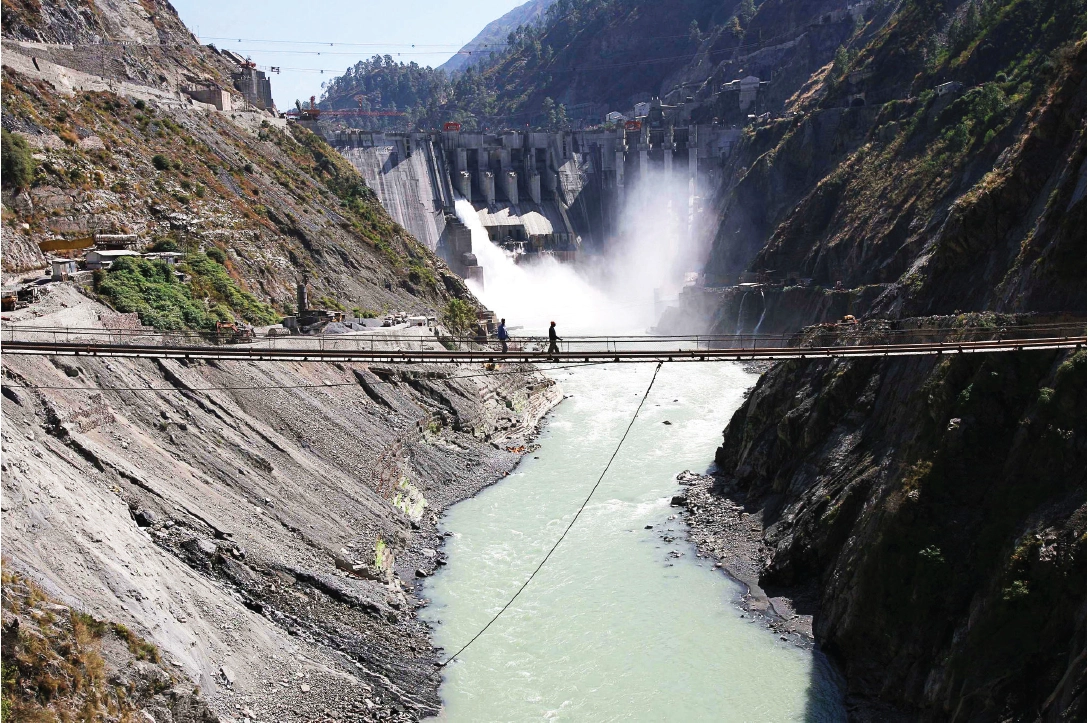
Modi’s government reportedly pushes for the speedy construction of four hydro projects with a combined capacity of 3,014 megawatts. These are: Pakal Dul (1,000 MW), Kiru (624 MW), Kwar (540 MW), and Ratle (850 MW). All of them are on the Chenab River, designated for use by Pakistan under the IWT. Not so surprisingly, a feasibility study is also underway for a 113-km canal diverting surplus flows from Jammu & Kashmir to Punjab, Haryana, and Rajasthan. This canal would link the Chenab River with the Ravi-Beas-Sutlej system. Meanwhile, in Pakistan, China has assured us it will speed up the construction of the Muhammadan Dam, and the Diamer Basha Dam has become the top priority on the government’s agenda. It turns out a hydro race is already underway in South Asia, with a looming threat of war.


The writer is an Advocate of the High Court and an International Law Consultant.
Excellent write up. Very well researched and incisive. Good choice of words with very flowing natural expression. Very well done!
The Pahalgam terrorist attack, connected to broader security and diplomatic issues, has provided India with a pretext to suspend the Indus Waters Treaty (IWT). This situation offers a valuable opportunity to delve into the complex regional dynamics and related legal and political challenges.
Incorporating official reactions from Pakistani officials and the geopolitical context—particularly hydro projects, water diversion, and dam constructions—aligns with open sources and current developments. It is crucial for authorities to treat this issue with urgency, considering these insights as a basis for early resolution.
The article presents a nuanced understanding of the legal and diplomatic landscape, linking recent military and diplomatic posturing with the IWT dispute. Specific project details and figures lend credibility, while phrases like “brazen disregard” and “hydro race already underway” reflect a strong tone that could be scrutinized for bias. Nonetheless, maintaining objectivity is challenging in such politically charged discussions.
Advocating a multipronged approach, the article calls for legal action, diplomatic engagement, environmental advocacy, and regional cooperation—particularly involving China. Emphasizing adherence to international law and rules-based order aligns with Pakistan’s strategic legal stance. Practical procedural suggestions—such as amendments, interim relief, and tribunal records—are grounded in established legal procedures.
The focus on legal channels and international treaties underscores a pragmatic approach to these complex disputes. Additionally, highlighting environmental and climate considerations broadens the scope of advocacy beyond legal arguments alone. Recognizing China’s potential role in mitigating regional tensions adds a strategic geopolitical dimension.
Overall, the article provides concrete strategies for Pakistan—rooted in legal and multilateral diplomacy—that reflect a thorough grasp of the issues and a sincere effort toward peaceful resolution. Its confident tone emphasizes Pakistan’s legal rights and adherence to international principles, portraying its approach as principled and lawful. This balanced perspective combines legal rigor with strategic foresight, offering a comprehensive roadmap for Pakistan’s diplomatic and legal posture on water sharing.