


Big power intervention in Afghanistan has been a recurring theme, driven by its strategic “Heart of Asia” location, resulting in a consistent pattern of initial military success followed by protracted, unsuccessful attempts at long-term stabilization, ultimately leading to withdrawal and local powers regaining control. The British Empire’s three Anglo-Afghan wars (19th- early 20th Century), the Soviet Union misadventure (1979–1989) and the United States/NATO’s invasion (2001–2021) all left behind massive civilian casualties, a power vacuum and unstable proxy governments. Nevertheless, whenever the Great Game provided a respite, Afghans’ internal power play always ensued due to sub-nationalist, ethnic, sectarian, and inter- and intra-tribal feuds.
Since 1947, the main fallout, whether because of foreign aggression or Afghanistan’s internal strife, has been endured by Pakistan due to porous borders, misplaced ethnic affinity, misuse by Pakistani religious and sectarian cults, and the financial interests of powerful mafias running a parallel economy by exploiting the most controversial Afghan transit trade by indulging in the smuggling of drugs, weapons, automobiles, and even human trafficking. With due deference to the brave and hardy common people of Afghanistan, the Afghan gladiators’ propensity to be readily available as hired guns to the highest bidder has mostly kept the tribal society in a state of flux. That has been the history as well as the present state of affairs, with the thankless Afghan Taliban Regime quickly moving into India’s lap soon after settling in Kabul.
Ironically, like previous puppet Afghan rulers, many members of the incumbent Taliban-led Afghan regime also lived, studied, or operated from Pakistan for decades, particularly during their time in exile between 2001 and 2021. Key figures who lived in Pakistan included: Mullah Hibatullah Akhundzada, Sirajuddin Haqqani, Mullah Abdul Ghani Baradar, Amir Khan Muttaqi, Mawlawi Abdul Kabir, Mullah Muhammad, and Shirin Akhund, who kept Pakistan under immense diplomatic pressure, accusations, sanctions, and economic coercion by the USA/Allies and their international watchdogs.
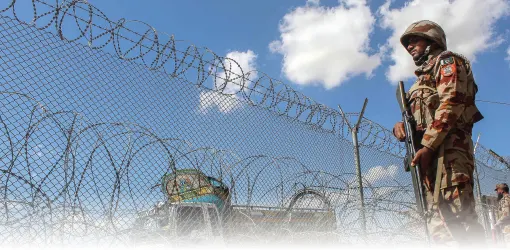
Between 2021 and early 2026, Pakistan experienced a significant upward trend in terrorist attacks launched from Afghanistan. The surge is primarily driven by the Tehreek-e-Taliban Pakistan (TTP)/ ISIS-K, which operates from sanctuaries inside Afghanistan. Terrorist incidents increased by 51% in the year following the Taliban takeover in August 2021. TTP/ISIS-K increased attacks, often utilizing sophisticated weapons acquired during the US withdrawal, and has expanded its scope from border regions into the rest of Pakistan, including KPK, Islamabad, Karachi and Lahore.
Violence reached a peak in early 2026, with Pakistan being ranked highest on the Global Terrorism Index. More than 3,500 Pakistani security personnel and civilians have been martyred in TTP attacks since 2021 to date. Increased targeting of Chinese nationals and economic infrastructure, aimed at destabilizing state-to-state relations, indicates the sponsors’ interests. The international borders saw intense fighting, including Pakistani limited airstrikes inside Afghanistan against TTP, ISIS and allied Taliban terrorists’ camps and sanctuaries. Nevertheless, sitting away from the heat of battle and lucky enough not to have lost a dear one in Afghans’ acts of terrorism, a few drawing-room opinion-makers keep raising quixotic queries e.g. Is Islamabad wishing to replace the Taliban regime instead of mere legitimate security response, or is it the opening move in a high-stakes regional power play with profound implications for Afghanistan’s stability, China’s interests, and trans-Afghan connectivity?
To settle such speculations, suffice it to say that it is Pakistan that was held responsible for supporting and bringing back the Taliban into the government at a great national price. The Chinese, with their focus always on ‘day after tomorrow,’ had anchored themselves in Afghanistan for the mining of ‘Copper/rare-earth metals’ and for the realisation of BRI/CPEC variants even during the US/Allies’ invasion. As a solace for Pakistan, Chinese presence and strategic interests are likely to make it an improbable choice for any American replay or even for any major covert/overt Indian operations against Pakistan using Afghan soil. Recently, at the SCO Security Forum, the Russian Security Council Secretary General has also expressed serious concerns about acts of terrorism and drug smuggling from Afghanistan by approximately 23000 Terrorists belonging to DAESH and CARS. As for Afghanistan’s stability, in her known history, it is a word alien to Afghan tribal society, for whom ‘instability is the norm’ presents opportunities.


As a retired army officer, the writer has proficiency in military intelligence, diplomacy, strategic analyses, forecast and executive management. He can be reached at sqbutt61@gmail.com
Leave a Reply