



For decades, the people of Pakistan viewed the Indus Waters Treaty as both a lifeline and a vulnerability. Brokered by the World Bank in 1960, the treaty has proven remarkably resilient—surviving wars, crises, and prolonged political hostility. It allocated the eastern rivers, namely the Ravi, Beas, and Sutlej, to India and granted Pakistan primary rights over the western rivers, namely the Indus, Jhelum, and Chenab. In doing so, it secured the bulk of the basin’s waters for Pakistan, forming the backbone of its agricultural economy and food security.
That framework remains intact. Yet developments on the Ravi River suggest that while the treaty endures, the assumptions built around it are beginning to shift.
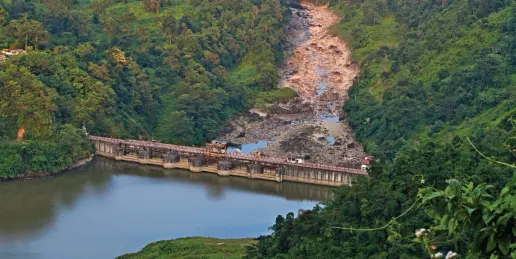
The Shahpur Kandi Dam, now approaching operational status, is a run-of-the-river project located on India’s side of the Ravi. With an installed capacity of approximately 206 megawatts and the ability to irrigate tens of thousands of hectares in Indian Punjab and occupied Jammu & Kashmir, it represents a long-delayed effort by India to fully utilize waters allocated to it under the treaty.
For much of the past six decades, India lacked sufficient infrastructure to capture and divert the Ravi’s entire flow. As a result, a portion of this water continued downstream into Pakistan. Shahpur Kandi is designed to reduce that surplus flow. Importantly, this is not a violation of the treaty; rather, it is an example of its implementation as originally envisioned.
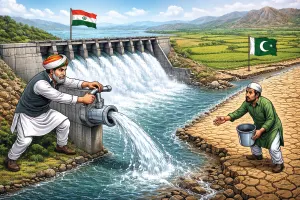
This distinction is critical. Shahpur Kandi does not “turn off” the tap for Pakistan, nor does it represent an abrupt disruption to the Indus system. The volumes involved are relatively small when compared to the massive flows of the Indus, Jhelum, and Chenab rivers. However, its strategic significance lies elsewhere. It marks the gradual end of a long-standing asymmetry—one in which Pakistan benefited from India’s underutilization of its share of the eastern rivers.
In that sense, Shahpur Kandi is less of a crisis than a transition point. It signals a future in which treaty allocations are more tightly enforced in practice, leaving less room for informal or unintended benefits.
This shift has naturally raised concerns in Pakistan about broader water security, particularly amid ongoing tensions between the two countries. Some analysts worry that India’s increasing technical capacity could translate into greater leverage over river flows, especially through the construction of hydropower projects upstream.
However, the treaty’s legal architecture remains highly relevant. Pakistan depends on the western rivers, which are protected by detailed provisions that restrict India’s ability to store or divert water. While India is permitted to build run-of-the-river hydropower projects, these must adhere to strict design and operational constraints intended to prevent significant interference with downstream flows.
Disputes over such projects are not new. They are currently being addressed through the treaty’s dispute resolution mechanisms, including proceedings involving the Permanent Court of Arbitration and neutral experts. These processes, though often slow and politically fraught, underscore an important point: the treaty is not dormant. It continues to function as a rules-based framework for managing disagreements.
If Shahpur Kandi does not constitute a direct threat, it nevertheless comes at a moment of growing vulnerability for Pakistan—one shaped less by external actions than by internal constraints.
Pakistan’s water crisis is increasingly driven by inefficiency, mismanagement, and structural neglect. A significant proportion of water is lost before it even reaches agricultural fields, due to aging canals, seepage, and poor maintenance. At the same time, the rapid expansion of private tube wells has led to unsustainable groundwater extraction, placing long-term pressure on aquifers.
 Equally concerning is the country’s limited storage capacity. Pakistan can store only a fraction of its annual river flows, leaving it exposed to seasonal variability. In years of heavy rainfall, excess water cannot be effectively captured, contributing to floods. In dry periods, the absence of adequate reserves exacerbates shortages.


The writer, based in Karachi, is a freelance contributor and investment banker. He can be reached at syedatifshamim@hotmail.com.
Leave a Reply