



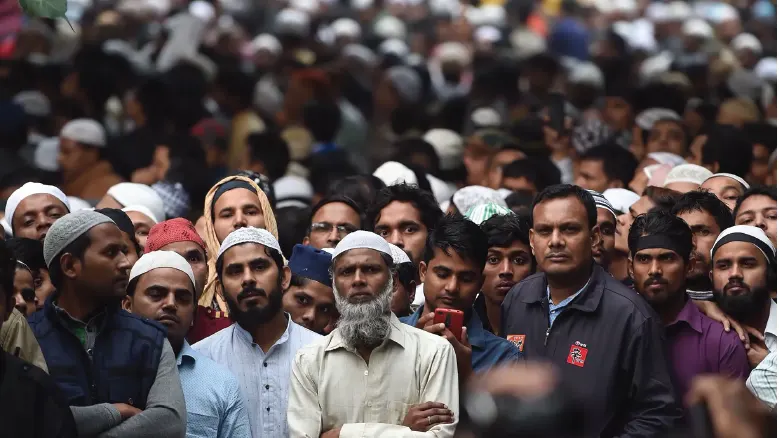
India is home to approximately 170–200 million Muslims, making it one of the largest Muslim populations in the world. Despite this demographic significance, Muslim political representation in national institutions remains disproportionately low in relation to their share of the population.
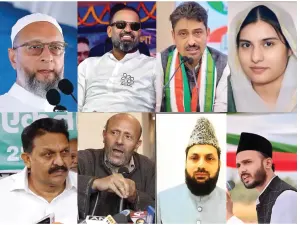
In the most recent Lok Sabha, the lower house of India’s Parliament, Muslim Members of Parliament number approximately 22–30 out of 543 seats, translating to roughly 4–5 percent representation compared to an estimated 14 percent of the national population. In addition, the recent Union Council of Ministers under Prime Minister Narendra Modi has included no Muslim full cabinet minister, reinforcing perceptions of declining executive-level inclusion. The Bharatiya Janata Party (BJP), which has emerged as the dominant political force in national politics since 2014, has also fielded very few Muslim candidates in recent parliamentary elections, further contributing to debates on political representation and inclusion.
This gap between demographic presence and legislative representation has become a central concern in discussions on Indian democracy and minority rights. However, explaining this phenomenon requires careful distinction between descriptive representation and substantive exclusion. Descriptive underrepresentation refers to numerical imbalance in elected bodies, while substantive representation concerns whether the interests of a group are represented through policy outcomes, party platforms, and institutional mechanisms.
In India’s case, Muslims continue to participate in electoral politics, hold positions in state legislatures and local governance structures, and engage with administrative institutions. Therefore, numerical underrepresentation in Parliament alone does not automatically equate to complete political exclusion, although it remains a significant indicator of imbalance. Scholarly explanations for the decline in Muslim representation vary.
One widely discussed argument attributes this trend to electoral logic, particularly the “winnability” criterion used by political parties when selecting candidates. In constituencies where communal polarization is perceived to influence voting behaviour, parties may avoid nominating Muslim candidates due to concerns about consolidating Hindu votes against them. This dynamic is not limited to a single political party but reflects broader competitive electoral incentives within India’s multi-party system.
Another line of analysis emphasizes increasing political polarization associated with identity-based mobilisation. The rise of Hindu nationalism, often discussed through the ideological framework of Hindutva, has reshaped political discourse and contributed to sharper identity boundaries in electoral politics, influencing both voter behaviour and party strategies.
Historical context also plays a crucial role in understanding present patterns. Muslim underrepresentation in India’s political institutions is not a recent phenomenon. In the first general election after independence in 1952, Muslim representation in Parliament was already limited, reflecting post-partition political suspicion, uneven development of leadership pipelines within the community, and broader structural constraints. Although there were periods of relatively higher representation in subsequent decades, including peaks of nearly 9–10 percent in earlier parliamentary compositions, the long-term trajectory has shown fluctuation followed by decline in recent years. Legal and constitutional developments have further intensified debates on minority inclusion.
The Citizenship Amendment Act of 2019 introduced religion as a criterion for fast-tracked citizenship for certain migrant groups while excluding Muslims, prompting concerns among critics about the implications of religious classification within citizenship law. When discussed alongside proposals for population registers and citizenship verification mechanisms, some scholars argue that there is potential for increased vulnerability among populations lacking formal documentation, although these interpretations remain contested and are not uniformly accepted in legal scholarship or policy analysis.
 Similarly, the re-organisation of Jammu and Kashmir in 2019, including the abrogation of Article 370 and Article 35A, significantly altered the federal structure of the region, which had previously enjoyed a special constitutional status. Critics view these changes as reducing regional autonomy and altering demographic and political dynamics, while the government frames them as steps toward integration and equal constitutional application across all states.


The writer, based in Islamabad, holds a Master’s degree in Defence and Strategic Studies. He can be contacted at daniyaltalat2013@gmail.com.
Leave a Reply