



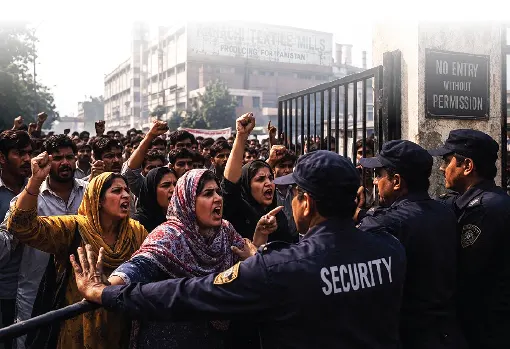
On a humid afternoon in Islamabad, a small group of activists gathers in a modest office, drafting yet another petition - this time on enforced disappearances. Their work is deliberate, careful, and increasingly cautious. A decade ago, such advocacy might have been louder, more visible, even defiant. Today, it is measured - not because the issues have faded, but because the space to speak has.
Civil society in Pakistan has never been passive. It has marched against military dictatorships, challenged authoritarianism, and stood at the forefront of rights-based struggles — from child protection and minority rights to judicial independence and press freedom. It has stepped in where the state has faltered, delivering relief during floods and earthquakes, and providing essential services in underserved areas.
Across major urban centers — Karachi, Lahore, and Islamabad — non-governmental organizations, advocacy groups, and professional associations continue to operate and engage. In rural areas, smaller welfare organizations and community-based networks quietly sustain livelihoods and provide essential services. Together, they form a vast and complex civic ecosystem.
Yet beneath this visible activity lies a more constrained reality. Civil society today operates within tightening regulatory frameworks, financial uncertainty, and political limitations. Its presence endures, but its influence is increasingly negotiated.
The regulatory environment has emerged as a central pressure point. Organizations now navigate multiple layers of registration, approval, and compliance requirements. No-objection certificates, security clearances, and shifting policy frameworks have turned routine operations into bureaucratic hurdles. While the state frames these mechanisms as necessary safeguards for transparency and national security, civil society actors experience them as tools that shape and often restrict their work. For many organizations, survival now depends as much on navigating bureaucracy as on delivering their core mission.
Restrictions on foreign funding have compounded these pressures. International support, once a key resource for civil society organizations, is now subject to heightened scrutiny and regulatory barriers. The language of “foreign influence” and “national security” has reshaped the funding landscape, forcing several organizations to scale down, reorient, or close altogether. In response, many have shifted away from contentious advocacy toward less politically sensitive, service-oriented work.
This shift is visible across the sector. Organizations that once championed human rights and governance reforms are increasingly focused on humanitarian assistance, education, and climate resilience. These are critical areas, particularly in a country facing economic strain and environmental crises. But they are also safer. Distributing aid or responding to disasters carries fewer risks than advocating for accountability, judicial independence, media freedom, or civil-military balance.


The writer is an advocate of the high court based in Islamabad and a human rights lawyer. He can be reached at adv.wajahat.ali@gmail.com
Leave a Reply