



We are in a campaign in which we are bringing the full strength of the IDF to the battle, as never before, in order to ensure our existence and our future. But we are also bringing to this campaign the assistance of the United States, my friend, US President Donald Trump, and the US military. This coalition of forces allows us to do what I have yearned to do for 40 years: smite the terror regime hip and thigh. This is what I promised – and this is what we shall do (statement by Prime Minister Netanyahu – 1 March 2026).
Prime Minister Netanyahu’s statement betrays a delusional concept of power, overconfidence, and arrogance –totally divorced from ground realities. He admits he has been yearning to destroy Iran’s clergy leadership for the last 40 years. This shows his disrespect for international laws, conventions, the UN Charter, and principles governing interstate conduct. His patrons, the American leadership, never learned a lesson from their previous humiliations, especially in Vietnam and Afghanistan. While holding talks with Iran, President Donald Trump remained engaged in frothing, blustering, and threatening the Iranian leadership in a bid to compel them to capitulate and make a humiliating deal on the USA’s terms.
The American and Jewish leadership had misplaced assumptions about the Islamic regime, its political strength, and the defence capacity of Iran. They considered it a cakewalk, utterly disregarding its proud civilizational history, geography, and terrain. Iran has a territory of over 1.6 million square kilometers, 55 percent of which is mountainous. This unique geography stands guard over this nation. Given this vast strategic depth, the Persian nation has not historically been subdued, except for the military expedition of Alexander and the Muslim military campaigns from 633 to 651 AD.
The ill-conceived war on Iran entered its second month with the evil coalition’s relentless and indiscriminate airstrikes of over eleven thousand on cities, towns, schools and universities, strategic locations, civilian and non-military assets, industrial units, and every moving object. The air war has caused massive loss of innocent lives, including the assassination of senior political and military leadership, destruction of socio-economic and communication infrastructure, and internal displacement.
All this failed to weaken the Iranian nation’s resolve to fight back in self-defence. They really stunned the world and compelled the invaders to keep changing their war objectives. Iran’s adversaries have finally come down to the reopening of the Strait of Hormuz as a precondition to a ceasefire. President Donald Trump has been showing increasing signs of frustration, anger, and nervousness, and making contradictory statements about war. The war has not gone his way, foiling the coalition’s plans and dreams.
The Iranian people, well prepared for the war, actually rallied behind their besieged leaders. The second and third rank political and military leaders were lined up to lift the banner in the wake of their seniors’ assassination; the defence system was defused to provincial and even district levels with necessary arms and ammunition and target lists to continue asymmetric retaliation; large quantities of arms and ammunition, including drones and missiles, were stocked. Besides, the country’s military industrial network remained engaged in producing drones and missiles.
For the first time, the USA received rebuffs from its NATO allies. They refused to join the war or to allow their foreign military facilities to be used by the USA. They also rejected the suggestion for a combined fleet of ships to reopen the Strait of Hormuz. The Gulf States, with US military bases, were met with the biggest disappointment of their existence – witnessing the USA’s failure to shield them against Iran’s attacks.
Iran closed the Strait of Hormuz, effectively choking the outbound flow of over 90 percent of Gulf oil to international markets. These countries lost over $ 250 billion in oil revenues in the first two weeks of the war. The international oil market reacted sharply to the blockade of the waterway, sending Brent crude prices soaring above $ 100 per barrel. With the stock exchanges worldwide in turmoil, the potential crash of the global economy seemed imminent.
The reaction to the war differed from country to country. The major global powers, including China and Russia, condemned the unprovoked attack on Iran but abstained from taking sides. The Gulf States, unsettled by Iran’s retaliatory attacks, were uncertain how to face the security situation. India, with its deep bilateral cooperation with Israel, did not condemn the invasion of Iran.
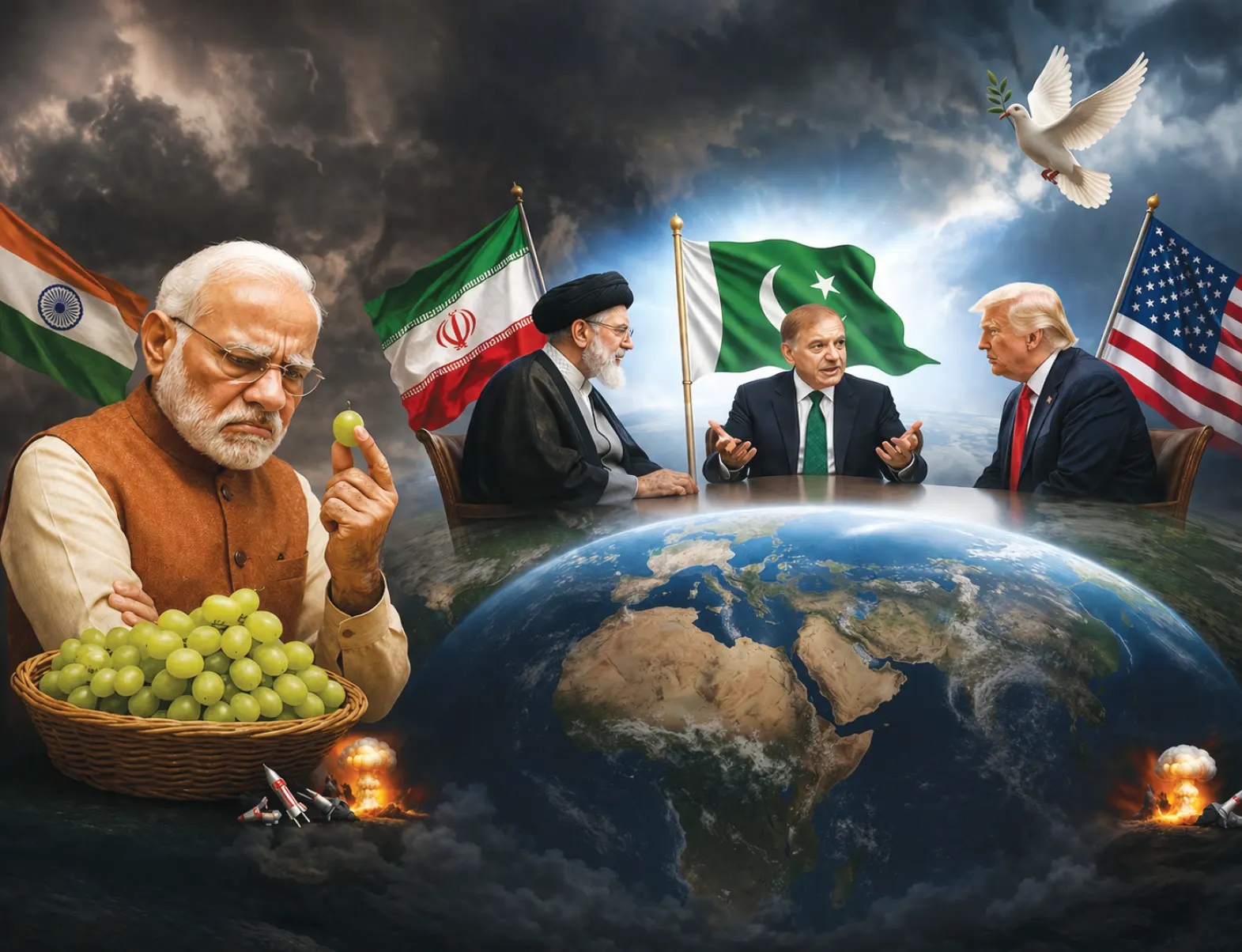
Pakistan, given its close bilateral relations with Iran, the Gulf States, and the USA, took a balanced stance. While condemning the unprovoked invasion of Iran, it also conveyed its disagreement over Iran’s attack on the Gulf States. This stand actually aligned with its economic and financial constraints and with a large number of its working citizens in the Gulf States.
Pakistan simultaneously anchored its stance in de-escalation and a return to the table. This stand resonated with countries of the troubled region and major global powers. U.S. President Donald Trump, along with some GCC leaders, encouraged Pakistan to take the initiative to facilitate a backdoor exchange of messages between the adversaries and lay the groundwork for talks. This role, undertaken by Pakistan, brought it to the world’s attention.


Based in Karachi, the author is a seasoned professional who previously served as a member of the Foreign Service of Pakistan and enjoyed a seven-year tenure as an Ambassador. Feel free to get in touch at brohialam7@gmail.com.
Leave a Reply