

Kathmandu
From Rap to Reform
Nepalese Prime Minister Balen Shah is pursuing ambitious policies, although doubts about their feasibility persist
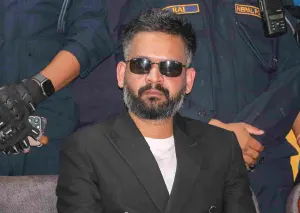
On 27 March 2026, Balendra Shah, popularly known as Balen Shah, made history in Nepal by defeating veteran politician KP Sharma Oli to become the country’s 47th Prime Minister. Balen represents a striking departure from Nepal’s entrenched political order. Rising on the wave of Generation Z’s aspirations, his ascent signals not just a change in leadership but a deeper shift in political culture, one driven by reform, anti-establishment sentiment, and a promise to dismantle long-standing inefficiencies. Yet, behind the symbolism of this historic victory lies a critical question: can a political outsider translate bold vision into tangible transformation?
Before discussing how Balen will perform, it is necessary to shed some light on his background and his policies. Shah is a rapper-turned politician. He is much different from other politicians, as he has no traditional political base. He was a musician who criticised politicians through his music and was termed a rebel and an uncouth figure. He entered politics in 2022, becoming the mayor of Kathmandu. In 2026, he resigned from his post, joined the Rashtriya Swatantra Party (RSP), ran for prime minister, and won a landslide victory.
Balen Shah has come to power on an anti-establishment, reform-driven campaign. He expressed his disapproval of government policies, politicians’ corrupt practices, and the perks and privileges enjoyed by VIPs.
Balen aims to introduce efficiency in governance. He has formed a relatively small cabinet of only 15 members, 5 of whom are women. Besides, he has introduced a 100-point reform agenda. He aims to bring about significant changes in the first 100 days. He intends to clear encroachments across Nepal, as he did in Kathmandu during his term as mayor: double the economy to $100 billion within 7 years, raise per capita income to $3000, create 1.2 million jobs, and cleanse the bureaucracy of corruption.
After coming to power, the first thing Balen Shah has done is dismantle VIP culture. He has decided to ban political displays in offices, reduce security convoys, and put constraints on the use of public resources in VIP protocols. He himself travels in simple cars, avoiding expensive SUVs.
Besides, he has introduced significant changes in education. As per the new policy, there will be no examinations till class five, and public education will be mandatory for the children of ministers and other dignitaries, meaning that the children of politicians will study in government schools. Moreover, all political activities will be banned in educational centres. He has also ordered schools with foreign names to adopt local Nepali names.
Shah has also shifted foreign policy from alignment with China to neutrality. He seeks to reduce external influence over the country. He has started taking a balanced stand regarding India and China. During his tenure as mayor of Kathmandu, he had reportedly banned Indian films in the city. However, after assuming power, Shah appears somewhat neutral towards both China and India. In this regard, Shah has dropped from his agenda the Damak Industrial Park project funded by a Chinese company. Besides, after coming to power, Shah met ambassadors collectively without giving any special treatment. These considerations stem from Nepal’s vulnerability as a landlocked nation wedged between two big powers.
While Balen is pursuing ambitious domestic policies, questions remain about their viability. Undoubtedly, Balen enjoys strong political support and a heavy mandate, but turning his objectives into reality will be challenging. This is because one can be a popular leader at getting votes, but not so effective at bringing a country out of chaos and crisis.
Balen’s performance can be undermined by the strong opposition that he is likely to face from political parties such as the Nepali Congress (NC) and the Communist Party of Nepal–United Marxist Leninist (CPN-UML). Leaders of these parties have been in power and are well aware of the country’s vulnerabilities. Since Balen is inexperienced, he will have a tough time dealing with the opposition and seeking their cooperation.
Balen Shah will also face a challenge in the form of an unruly bureaucracy notorious for corruption and patronage networks. Subduing the bureaucracy would be an arduous task. While Balen may have good intentions, he cannot do anything without the support of the bureaucracy, which is practically the engine of any country.
Additionally, Balen is not an experienced politician or statesman. He is just 35 years old. His limited experience and exposure raise questions about his suitability for such comprehensive reforms. Making grand claims about reforms is easier said than done.
Immense public expectations are another challenge for Balen. The citizens have chosen him over seasoned politicians in the hope that, despite never being tested before, he will resolve all the problems facing them. These over-expectations severely strain his capacity, as the country faces complex problems.
While Balen Shah has announced that he will create 1.2 million jobs, the real question is how he will fulfil this promise. The country is facing a severe economic crisis. The economy has stalled. Jobs are drying up. Creating over a million jobs under such circumstances is not an easy feat. Shah has not given a clear blueprint for how he will achieve that feat. Many leaders have made similar claims, but they have desperately failed to fulfil their promises. How will he manage to create such a huge number of jobs at a time when the world is facing a global energy crisis?
Regarding his educational reforms, will they be sufficient to address Nepal’s educational challenges, such as low literacy rates, poor infrastructure, and high dropout rates? The answer appears to be no. While it will be good optics for ministers’ children to study in public schools, what about schools and colleges in rural areas? How can the infrastructure issues be fixed without material investment?
As regards digitalisation and governance efficiency, Balen is likely to succeed. This is because the world is already moving towards digitalisation. Regional countries such as Pakistan have also planned to digitalise their services. Therefore, Balen Shah is not doing anything particularly novel or extraordinary when it comes to digitalisation, but rather following an existing global trend.
Balen Shah is no doubt a popular leader at the moment. He seems sincere in his job. However, the circumstances of Nepal are not in his favour. As great things take time, will the people of Nepal be patient enough to see the promised change, or will Balen Shah’s novelty give way to the same cycle of rise and fall? This will become clear as time unfolds. 
Based in Larkana, Sindh, the writer is a freelance contributor and can be reached at sjatoi831@gmail.com


Leave a Reply