


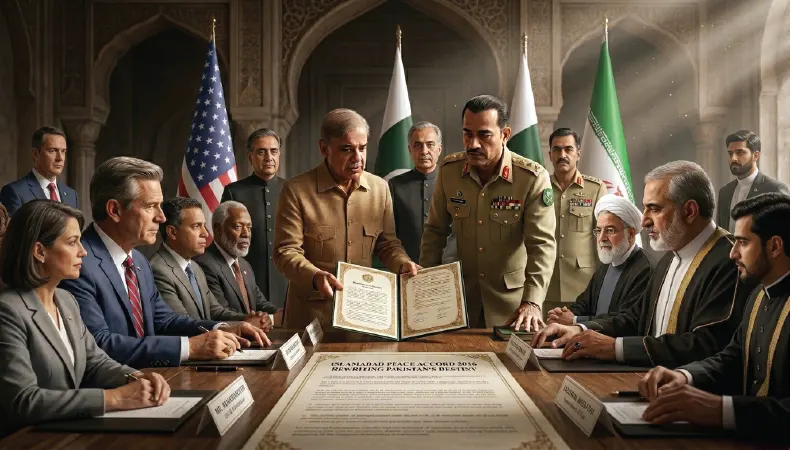
Pakistan hosted what had long seemed impossible: the first sustained, high-level face-to-face engagement between the United States and Iran since the 1979 Islamic Revolution. U.S. Vice President JD Vance led the American side in marathon talks in Islamabad earlier in April. No final agreement emerged – the nuclear gulf and differences over the Strait of Hormuz remained too wide – and major outlets reported a clear stalemate rather than substantive breakthroughs on de-escalation, energy security, or sanctions pathways.
Despite Pakistan’s continued facilitation efforts – including Prime Minister Shehbaz Sharif’s recent shuttle diplomacy with Saudi Arabia, Qatar, and Türkiye to build regional consensus – and Field Marshal Asim Munir’s visit to Iran, the immediate outlook for a US-Iran settlement has dimmed. As of this writing, Vice President JD Vance’s planned return for a second round has been placed on hold, Iran has refused to commit and cited contradictory signals from Washington, and while President Trump has extended the fragile ceasefire at Pakistan’s direct request, no date has been set for resumed talks. The door is not closed, but prospects for an early breakthrough have cooled.
Yet this episode has still delivered Pakistan a tangible lift in diplomatic stature. Riyadh’s swift decision to inject a fresh $3 billion deposit into the State Bank of Pakistan - on top of extending the existing $5 billion facility – is concrete proof of the trust Islamabad now commands among key Gulf partners. When bitter adversaries cannot speak directly, they have turned to Pakistan – for now. That is leverage: real, rare, and now fortified by fresh economic ballast and renewed international relations. The window has widened, but it remains ours to seize.
Let us be brutally honest, as a nation must be when history bangs on the door. We have a long-standing strategic relationship with China and episodic but important partnerships with the United States – ties that have played a vital role in our security. But no external relationship, no matter how deep or warm, can transform Pakistan into a high-growth economy with a prospering population. While we celebrate diplomatic successes and enjoy the cheesy stories of foreign visitors – mostly goras – raving about Pakistani hospitality, there is a real danger in getting carried away. There is still painfully little evidence of solid, sustained progress on the economic development front. Unfortunately, those in power too often have little appetite for realistic and honest feedback.
We have seen moments like this before and let them slip away. Photo-ops, short-term aid, fleeting applause – then back to the same cycle of crisis. Not this time. If we treat this opening as an end in itself, we will have betrayed the opportunity of a lifetime. The only question that matters is whether we convert this external relevance into permanent internal strength before the world’s attention shifts and the window slams shut.
Energy first. No excuses.
Pakistan’s chronic blackouts and price shocks are a national emergency that has strangled industry, scared off investors, and condemned millions to poverty. We now have the diplomatic muscle to act decisively and immediately. Within the next six months, we must negotiate and ratify a tightly structured, legally compliant framework for reliable Iranian energy imports – not as a gamble, but as hard-headed insurance against global price spikes.
At the same time, we must lock in a $5-7 billion US-Saudi-Pakistan Energy Transition Compact that delivers results, or it dies: modernise the grid, slash transmission losses, build massive battery storage, and launch the largest solar build-out in our history. Non-negotiable precondition: we must immediately and transparently renegotiate the scandalous capacity payments to IPPs and finally kill the monstrous circular debt they created. Replace guaranteed payments with performance-based, take-and-pay contracts. Create a dedicated debt resolution facility that securitises and retires the arrears while converting toxic obligations into sustainable, lower-cost financing.


The writer is a political economist with a background as the former head of Citigroup`s emerging markets investments and is also the author of the book `The Gathering Storm.’ If you’d like to get in touch, you can reach him at yousufnazar@nazarcapital.com.
Leave a Reply