



AI startup with Pakistani co-founder set for $60bn deal with SpaceX
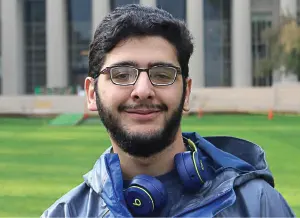 Cursor, an AI code-generation startup co-founded by Pakistani-born Sualeh Asif, has secured a $60 billion acquisition deal with Elon Musk’s SpaceX.
Along with OpenAI and Anthropic, Cursor is one of several Silicon Valley startups that have drawn waves of developers by using artificial intelligence to automate coding, a business where AI companies have found early commercial traction, according to Reuters.
SpaceX announced in a post on X that Cursor gave SpaceX the right to acquire the company later this year for $60 billion. If SpaceX doesn’t buy Cursor, it will pay $10 billion for their work together, the company said.
“The combination of Cursor’s leading product and distribution to expert software engineers with SpaceX’s million H100 equivalent Colossus training supercomputer will allow us to build the world’s most useful models,” it added.
Originally from Karachi, Asif attended Nixor College before attending the Massachusetts Institute of Technology (MIT), and represented the country in the International Math Olympiad from 2016 to 2018.
While there, he co-founded Anysphere, the maker of the popular AI code editing tool Cursor, with three friends from MIT.
World facing ‘biggest’ energy security threat in history: International Energy Agency
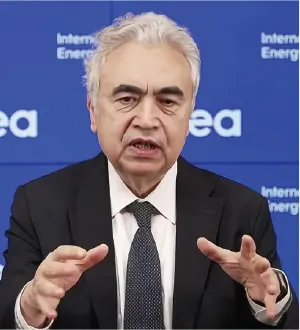 The world is facing the “biggest threat” to energy security in history, according to International Energy Agency Executive Director Fatih Birol, Reuters reports.
“We will see downward pressure on demand as a result of rising prices, and in some cases as a result of some measures that governments are taking or will take” to address the energy crisis, he said.
Birol said, “As of today, we have lost 13 million barrels of oil per day”.
9 killed in armed attack at mining site in Balochistan
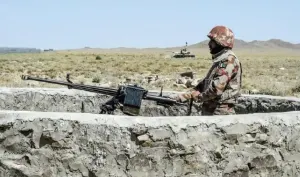 At least nine people working at a copper and gold project site in Balochistan’s Chagai district were killed in an armed attack by unidentified assailants.
In a statement, the mining company National Resources Limited (NRL) said the attack took place in the evening, adding that security forces, including the Frontier Corps, responded promptly, secured the area, and launched a clearance operation.
The company did not mention any casualties in its statement. However, local authorities have confirmed the incident and nine casualties.
“At least nine employees, including two security guards, were killed,” a senior official of the Chagai administration said on condition of anonymity.
Police officials also confirmed the attack and the killing of nine people. All nine bodies were taken to Prince Fahad Hospital in Dalbandin.
In its statement, NRL said it remained “fully committed to the development and empowerment of local communities in Balochistan, with a strong focus on improving livelihoods and contributing to economic upliftment”.
“Over 90 per cent of the workforce at the Darigwan site comprises individuals from Balochistan,” the firm noted.
NRL said it was closely coordinating with the relevant authorities and affirmed that the safety and security of its employees and operations remained its highest priority.
NRL is a Pakistani mining company formed as a joint venture between Lucky Cement, Fatima Fertiliser, and Liberty Mills. The company is actively exploring copper-gold and lead-zinc deposits in Chagai and has reported significant mineral discoveries. Lucky Cement holds a 33.33 per cent equity stake in the venture.
Rukhsati Explores Love, Loss, and Changing Identities
 Rukhsati, a poignant one-act play penned by the talented Saqib Deshmukh, was staged at the renowned Tara Theatre in London from April 23 to 25. The play was set in an intimate wedding hall, serving as a backdrop for a heartfelt exploration of complex relationships rooted in a South Asian cultural context, while also delving into the theme of societal change affecting these communities.
The narrative centered on two characters, Nighat and Tariq, both in their mid-forties, who had been separated for many years and were now unexpectedly reunited. As they reminisced about their youth and shared memories, their candid conversation unearthed personal struggles related to choices they had made, societal expectations they could not escape, and the relentless passage of time. Nighat expressed her feelings of being trapped in her current life circumstances, particularly highlighting her infertility and the emotional toll it took on her. Meanwhile, Tariq grappled with the responsibilities he bore as a father and husband, trying to balance tradition with personal desires. As their emotionally charged dialogue progressed, tension heightened, culminating in a vulnerable moment where Tariq subtly hinted at a longing to rekindle their past romance, adding layers of complexity to their already intricate relationship.
Rukhsati offered a rich tapestry of themes—love, life, and community—and was delivered as a genuinely humorous two-hander that skillfully examined the intricacies of relationships within a South Asian and Muslim setting. It also reflected on the ongoing shifts and transformations occurring within their communities, highlighting both personal and societal dynamics with sensitivity and depth.
PM directs that transport nationwide be gradually shifted to EVs
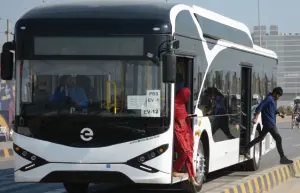 Prime Minister Shehbaz Sharif has directed that transport in the country be gradually shifted to electric vehicles.
The premier chaired a meeting on energy security, where he stressed that “energy security had become an important aspect of the country’s overall future planning,” according to a statement from the Prime Minister’s Office (PMO)
Taking note of the global energy crisis in the wake of the Iran war, PM Shehbaz said that due to the government’s “timely steps, an energy crisis has been averted”.
The prime minister told the meeting that to secure the country’s future energy needs, “work was underway to maintain strategic crude oil reserves”.
As part of the energy security plan, the premier further stated that modes of transportation in the country should be gradually shifted to electric vehicles, “for energy conservation and sustainable development”.
He instructed that electric buses and motorcycles should be purchased for government use. The premier also directed the expedited establishment of EV charging stations and the development of a framework “to facilitate the acquisition of batteries for storing excess electricity generated from solar energy”.
“Local production of high-quality storage batteries should be encouraged,” PM Shehbaz told the meeting.
The meeting was further briefed that the National Coordination and Management Council (NCMC) was regularly reviewing the situation and there were adequate petroleum reserves in the country.
HBL Awarded Mandate of Project Financing
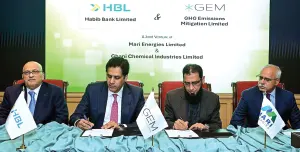 HBL has been awarded the mandate to arrange project financing for GHG Emissions Mitigation Limited (GEM), a project company jointly established by Mari Energies Limited and Ghani Chemical Industries Limited. The project will be financed through equity contributions from the sponsors and debt financing arranged by HBL.
This pioneering initiative marks a significant milestone in Pakistan’s transition toward a low-carbon energy future and supports the country’s broader climate action goals. Through this initiative, GEM aims to reduce methane emissions from the Sachal Gas Processing Complex (SGPC) Mari Field, Daharki, Sindh by recovering hydrocarbons from exhaust gas to produce liquefied natural gas (LNG), along with industrial- and food-grade carbon dioxide (CO2).
The mandate was awarded at a ceremony held at Mari Energies’ Head Office in Islamabad on 31 March 2026. Senior leadership, including Muhammad Nassir Salim, President & CEO – HBL, Faheem Haider, Managing Director / CEO – Mari Energies, and Hafiz Farooq Ahmad, MD – Ghani Chemical Industries, attended the event.
Through sustainable industrial and energy ventures like this, HBL continues to make investments that help build a greener, more resilient economy for Pakistan.
Thirteen killed in fireworks blast in Kerala
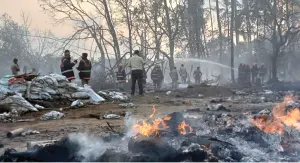 At least 13 people have been killed in an explosion at a firecracker factory in India’s southern state of Kerala, officials say.
The incident took place in Thrissur, where around 40 people were believed to be assembling firecrackers in a cluster of sheds for an upcoming festival. Several others were injured, with five reported to be in critical condition. This was the second such incident last month. Recently, a blast at a firecracker factory in neighbouring Tamil Nadu state left at least 25 dead.
Accidental explosions are a grim routine in India’s fireworks industry, recurring with troubling regularity - most visibly around Sivakasi in Tamil Nadu, which produces much of the country’s supply. The explosion in Thrissur around 15:30 local time (10:00 GMT) triggered secondary blasts that slowed rescue efforts.
Firecrackers were being made in temporary sheds near paddy fields with poor road access, hampering emergency response. The force of the blast was felt kilometres away - some residents mistook it for an earthquake - and nearby homes were damaged. Eyewitnesses described chaotic scenes as locals joined rescue efforts, pulling out the injured and dead.
Kerala’s Revenue Minister K Rajan said that all fireworks units preparing for the upcoming Thrissur Pooram - a major annual Hindu temple festival - had permission to manufacture and store fireworks in designated areas.
Cyberattack prompts investigation at Sri Lanka finance ministry
Sri Lanka’s Ministry of Finance said that hackers gained unauthorized access to a computer system belonging to the Department of External Resources, prompting an investigation by law enforcement authorities.
The Ministry of Finance, Planning, and Economic Development said it filed complaints after detecting a suspicious foreign currency transaction in January 2026.
The incident triggered a broader review of potential security breaches within the department’s systems.
Authorities said the Sri Lanka Computer Emergency Readiness Team and the Computer Crime Investigation Division of the police were immediately informed. Complaints were also lodged with the Criminal Investigation Department and the Financial Intelligence Unit of the Central Bank.
Bank of Punjab Signs Strategic MoU with Stacks
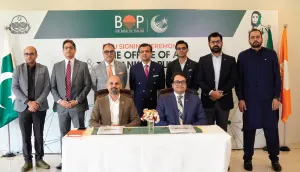 The Bank of Punjab has entered into a strategic Memorandum of Understanding with Stacks, marking an important step toward transforming Pakistan’s remittance landscape and strengthening the country’s digital financial ecosystem.
The MoU was signed by Mr. Muneeb Ali, Co-founder of Stacks, and Mr. Zafar Masud, President & CEO, The Bank of Punjab, reflecting a shared commitment to innovation, financial inclusion, and the development of faster and more efficient cross-border payment solutions for Pakistan.
Through this collaboration, The Bank of Punjab will combine its banking expertise and reach with Stacks’ technology to explore ways to improve remittance services, focusing on speed, security, transparency, and convenience for overseas Pakistanis and their families.
As part of this initiative, the two organizations will also undertake a pilot transaction to explore the use of stablecoins for remittances. The pilot will assess how blockchain-based solutions can help reduce transaction costs, improve processing time, and enhance transparency in cross-border payments.
Speaking on the occasion, Mr. Zafar Masud, President & CEO, The Bank of Punjab, said, “This partnership reflects our continued focus on innovation and our commitment to building a more efficient, inclusive, and future-ready financial system. By exploring emerging technologies in collaboration with leading innovators such as Stacks, we aim to unlock new possibilities for remittances and create greater value for overseas Pakistanis.”
Visa Opens the Door to AI-Driven Shopping
 Visa Inc. (NYSE: V) has unveiled Intelligent Commerce Connect, a new solution that makes it easier for businesses to connect to and participate in AI-powered commerce. Intelligent Commerce Connect acts as a network, protocol, and token vault-agnostic ‘on ramp’ to agentic commerce for agent builders, merchants, and enablers.
As consumers increasingly rely on AI agents to make purchases, businesses – whether they are building agents, selling to them, or processing transactions – need a simple way to get started. Intelligent Commerce Connect, part of the Visa Intelligent Commerce portfolio, meets that need.
Through a single integration via the Visa Acceptance Platform, Intelligent Commerce Connect enables secure payment initiation, tokenization, spend controls, and authentication. This solution allows agents to pay with both Visa and non-Visa cards, providing more choice in how agents can pay and making it easier for the entire ecosystem to adopt agentic payment experiences.
“From small businesses to the world’s biggest retailers, Visa powers how people pay every day, millions of times over,” said Leila Serhan, Senior Vice President & Group Country Manager for Visa in North Africa, Levant and Pakistan (NALP). “Intelligent Commerce Connect brings that same, trusted payment acceptance infrastructure into the emerging world of AI-driven commerce, so businesses can let AI agents buy on behalf of consumers, securely and at scale.”
Bhutan launches first international travel mart
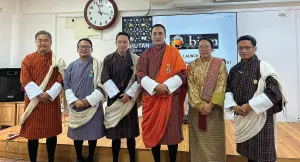 Bhutan is set to host its first-ever Bhutan International Travel Mart (BITM) from 11 to 13 June 2026 in Thimphu, aiming to strengthen its position as a high-value, sustainable travel destination. Organised by Bhutan’s Department of Tourism, the Ministry of Industry, Commerce and Employment, and the Association of Bhutanese Tour Operators, the event will connect international buyers and media with Bhutanese tourism partners.
The BITM will serve as a B2B platform, offering pre-scheduled meetings, product showcases, and networking opportunities. This initiative aligns with the increasing demand in the UK for sustainable and experiential travel. Damcho Rinzin, Director at the Department of Tourism, emphasised that BITM is “not merely an exhibition, but a platform to engage directly with global partners.”
A key highlight of the event will be the introduction of the Gelephu Mindfulness City, a development focused on wellness and sustainability, expected to attract high-value tourism. The BITM supports Bhutan’s ‘High Value, Low Volume’ tourism strategy, promoting regenerative tourism and authentic cultural experiences.
Kinley Gyeltshen, Chairman of ABTO, noted the importance of BITM for international partnerships, stating that it provides a direct platform for global buyers to build relationships with Bhutanese operators. The event is expected to become an annual fixture, enhancing Bhutan’s global tourism ties and offering UK travel professionals opportunities to expand their high-value portfolios.
Bangladesh to buy 14 aircraft from Boeing
 Bangladesh’s new government has decided to purchase 14 aircraft from the US-based Boeing Company.
The government has also decided to resume direct flights to Tokyo, Japan, in June. The flights were suspended during the last interim government’s tenure.
Discussions are also underway with the European manufacturer Airbus to build a mixed fleet in the future. Earlier, the interim government moved to finalize the procurement of aircraft from Boeing, reversing the previous Awami League government’s decision to purchase aircraft from Airbus. Biman currently operates around 19 aircraft on international routes, below the estimated requirement of 30 to 35 to meet growing passenger demand and support a planned expansion.
Brussels talks reinforce growing Bangladesh-Belgium relations
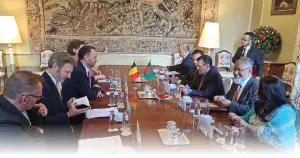 The Foreign Minister of Bangladesh, Dr. Khalilur Rahman, visited Brussels on 20 April 2026. The visit marked a significant milestone in Bangladesh-EU relations as the two sides initiated the Bangladesh–EU Partnership and Cooperation Agreement (PCA).
On the occasion, Foreign Minister Dr. Khalilur Rahman and the EU High Representative and Vice-President Ms. Kaja Kallas witnessed the initialing of the PCA. Addressing the media, both sides described the Agreement as a forward-looking and comprehensive framework that will elevate Bangladesh–EU relations across the political, economic, development, and security domains.
ADB deepens Pakistan engagement with $3.67bn commitments
 The Asian Development Bank (ADB) made fresh commitments worth $3.672bn to Pakistan in 2025, up 22pc from $2.995bn the previous year, as it ventured into new areas such as the mineral sector.
In its Annual Report 2025, the agency also reported new financial support commitments of $1.485bn to the public sector for the year, a one-third increase from $1.113bn in 2024. Most of these loan commitments were made on ordinary commercial terms.
“In Pakistan, a policy-based guarantee is helping to mitigate credit risk for commercial bank lending to smaller enterprises and to mobilise commercial financing of $1bn,” the bank said, adding that under ADB’s approach to supporting critical minerals-to-manufacturing value chains, it approved an innovative financing package for a copper-gold mine in Pakistan to strengthen the global copper supply chain.
The bank will also provide advisory support to Pakistan to prepare road maps for digital skills development, in addition to investing in girls’ education and participation in STEM subjects.
The bank noted that Pakistan continues to face fiscal pressures that limit investment in essential services and inclusive development. In 2025, ADB committed an $800m package, including a $300m policy-based loan and up to a $500m policy-based guarantee, enabling the government to mobilize $1bn in additional financing.
Former Afghanistan cricketer Shapoor Zadran battles a life-threatening disease
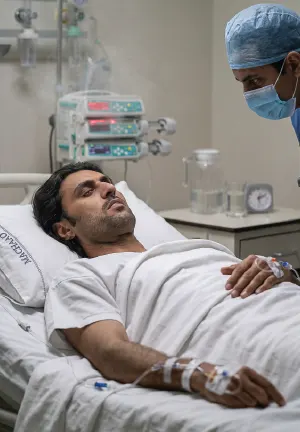 Former Afghanistan cricketer Shapoor Zadran is battling for his life as he receives treatment for a rare, life-threatening immune system disorder at a hospital in New Delhi.
Zadran, who was admitted to a hospital in the Indian capital in January, is suffering from an advanced form of hemophagocytic lymphohistiocytosis (HLH) and has been placed in the intensive care unit (ICU).
“It was a very serious infection,” Zadran’s brother Ghamai Zadran told ESPNcricinfo. “His whole body was full of the infection, including TB (tuberculosis). It also spread to his brain, which was revealed after MRI and CT scans.”
Ghamai said Zadran had started to respond to the treatment and, after a few weeks, he was discharged from the hospital, and the group moved to a hotel nearby.
“The doctor said we could drop in for the checkups frequently,” Ghamai said. “He [Zadran] was feeling good for about 20 days before he got the infection again. Then we admitted him to the hospital [again].”
HLH is a rare life-threatening disorder of immune regulation with a high mortality rate that usually occurs in infants and young children, according to Johns Hopkins Medicine.
In adults, many different conditions, including infections and cancer, can cause HLH. While the incidence is increasing, it remains underdiagnosed.
Pakistan vaccinates millions, averts 2.6m child deaths over decades: WHO
 Pakistan has protected over 160 million children and 130 million mothers with life-saving vaccines over the past five decades since the founding of Pakistan’s Expanded Programme on Immunisation in 1978, in collaboration with the WHO and its partners.
Pakistan eradicated smallpox in 1976 and paved the way for the launch of an immunisation programme that has since averted 2.6 million child deaths from vaccine-preventable diseases, proving that, for every generation, vaccines work and save lives.
Leave a Reply