Cover Story
Changing Global Order
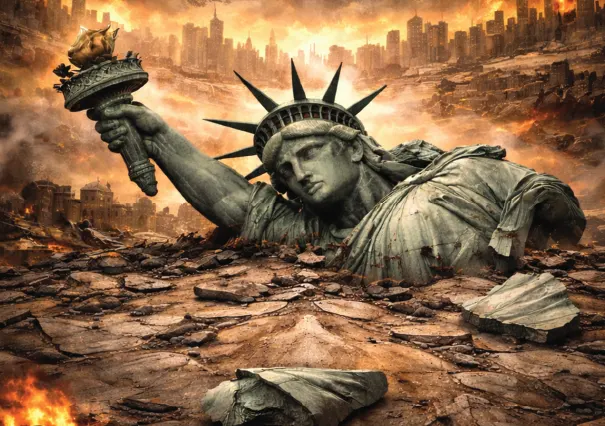
The transatlantic relationship, once the cornerstone of global order, is rapidly losing its centrality, giving way to a more fractured, post-American, multi-bloc world

The utter chaos and disorder of contemporary times often trigger discussions on the “new world order.” By definition and design, it is also seen as a conspiracy theory, one that argues a shadowy elite is attempting to establish a totalitarian global government. At Harvard, however, the “new world order” is generally defined as the post–Cold War shift from a bipolar system to a new, often volatile, international power structure. It represents a transition towards a rule-based system led by the U.S., marked by globalization, multilateralism, and the rise of non-state actors.
The world we witness today is increasingly complex. The emerging order, or disorder, is something the global community has never witnessed before. Historically, the term has been used by figures like Churchill and Bush to describe new periods in history following major conflicts such as World War I, World War II, and the Cold War. Can it now be applied to global dynamics emerging from the U.S.–Israel–Iran conflict?
Many believe a new world order is indeed in the making. In fact, this war may have accelerated it. West Asia, in all probability, stands transformed. The strategic logic behind the Abraham Accords and the so-called “board of peace” appears to have collapsed. Even the notion that Israel is the primary beneficiary of this war is now under scrutiny. Unprecedented firsts are happening, despite the asymmetry of power. Iran stood unshaken against the joint hard power of Israel and the U.S. After forty-plus years, the U.S. and Iran sat across the negotiating table post a fragile truce. A second round of talks is expected, interestingly, both held in Pakistan. The U.S. also hosts rare direct talks between Israel and Lebanon. With hopes for ending the suffering, as Beirut seeks a ceasefire with Israel. The two have technically been in a state of war with one another since 1948.
All of this became possible when the battlefield synergy of U.S.–Israel forces did not deliver its intended outcomes. The myth of unquestioned U.S. hard power appears to be weakening. A country under sanctions for over 40 years has managed to withstand the combined might of the U.S. and Israel, an outcome many view as deeply embarrassing for both.
The United States’ status as a global leader over the past seven decades has been built largely on its wealth, power, and credibility. However, in the aftermath of the US handling of Covid-19, the Ukraine crisis, the Israel–Palestine war, and now the Iran conflict, it appears to be faltering on all three fronts: wealth, power, and legitimacy. Critics argue it is failing both its own people, its allies, and the international community.
U.S. President Donald Trump has argued that other countries, particularly U.S. allies, have taken advantage of American security guarantees and open markets. As U.S. Secretary of State Marco Rubio stated, “The postwar global order is not just obsolete; it is now a weapon being used against us.”
Transatlantic relations are also under strain in ways not seen before. The so-called Western nexus appears increasingly fragmented. German Chancellor Friedrich Merz, French President Emmanuel Macron, and British Prime Minister Keir Starmer had pledged in Munich (February 2026) to strengthen a “European pillar” within NATO. Europe remains torn between U.S.-led security guarantees and China-linked economic opportunities. According to the Stimson Center, “this fragmentation risks a post-American, multi-bloc order and strengthens the Moscow–Beijing axis.”
By 2029, Europe may begin building a more independent defense framework in response to diluted U.S. commitments to its security against Russia and other threats. This raises critical questions: Is the fault line between Europe and the U.S. widening? Is Europe still fundamentally Atlanticist, or is it drifting towards an Eastern balance involving China and Russia?
The emergence of a multipolar world was predicted by realist scholar John Mearsheimer in 2009. Multipolar systems are anything but stable. History offers clear examples: the 17th century culminated in the Thirty Years’ War, while the 20th century witnessed World War I (1914–1918) followed by World War II (1939–1945). Today, some even speculate about a third global conflict in the 21st century.
The major poles identified in the current system include the U.S., the EU, Russia, China, and India. Each is supported by its own network of alliances and aligned states. The matrix of contemporary alliances closely resembles the pre–World War I system, often described as “marriages of convenience” driven by shifting power configurations.
The defining feature of the emerging order is its rejection of Western-centric governance models
The evolving order is increasingly described as “multiplexity” rather than simple multipolarity or hegemony. This is because multiplexity captures a more decentralized, diversified, and multidimensional global structure. The world moved from post–Cold War unipolarity to a form of neo-unipolarity, where the U.S. now coexists with at least two major powers that challenge its economic dominance, political reach, and military strength.
Many argue that the post-9/11 and post-COVID eras have fundamentally challenged the unquestioned supremacy of the U.S. As Fareed Zakaria rightly observed, “A world not defined by the decline of America, but rather the rise of everyone else.” New power centers are emerging and reshaping global dynamics. China’s economic and technological rise is now translating into growing—though still cautious—political influence.
India, often identified as a key power pole, appears to be facing declining political relevance in both the Western and Eastern blocs. Some analysts attribute this to the choices made by Prime Minister Narendra Modi, arguing that India’s policy of hard hedging has also backfired.
Russia’s resurgence, marked by Vladimir Putin’s assertive foreign policy in Syria and beyond, has followed an upward trajectory. While Ukraine remains a major point of contention, it has also become a symbol of Moscow’s resistance to NATO expansion. Russia’s energy leverage and the economic tailwinds it gained during the Iran–U.S.–Israel conflict have further strengthened its position.
The defining feature of this emerging order is its rejection of Western-centric governance models. Instead, it advocates for diverse political and economic systems. Europe, once firmly anchored in transatlantic alignment, now finds itself increasingly divided—caught between weakening U.S. security assurances, shaped by Trump-era policies, and attractive economic opportunities linked to China.
Once again, the Iran–Israel–U.S. conflict has accelerated this fragmentation. The transatlantic relationship, once the cornerstone of global order, is rapidly losing its centrality, giving way to a more fractured, post-American, multi-bloc world.
The US also comes across as a strategically confused state, and it’s not just President Trump’s tweets, but also Trump’s going to war with Iran or not being able to refuse Israel, directly contradict the National Security Strategy 2025. As per that, the US administration would prioritize the Western hemisphere and the Indo-Pacific, while the Middle East would recede in importance.
The major poles identified in the current system include the U.S., the EU, Russia, China, and India—each supported by its own network of alliances and aligned states
The growing disconnect is also visible within the U.S.–Israel partnership itself. Former U.S. Assistant Secretary of State for Near East Affairs, Jeffrey Feltman, recently pointed out that while both countries entered the conflict together, their priorities are no longer fully aligned. According to him, “The US and Israel went into this war together, but increasingly, you’re seeing a divergence, where the Israelis are much, much more concerned about [Iran’s] ballistic missile programme than we are, and now, I would suspect our Gulf allies are much more concerned about their ballistic missile programme, given that the security blanket they thought was there has been penetrated repeatedly.”
After the announcement of a two-week ceasefire between Iran, Israel, and the United States on April 7, set to expire on April 22, there was an initial sense of relief. For now, the immediate fear of a nuclear escalation has eased. But the bigger question is hard to ignore: how long can this calm last? Can a superpower, with unmatched military strength and the ability to strike at will, truly hold itself back for long, where the nudging from Israel will not stop?
At the same time, tensions remain close to the surface. The U.S. has moved towards enforcing a naval blockade in the Strait of Hormuz, prompting Iran to warn that such a step would violate the ceasefire. In parallel, diplomatic efforts are underway. Another round of Iran–United States dialogue is being actively pursued.
In this context, three possible scenarios emerge regarding the future trajectory of the U.S.–Iran–Israel conflict, two inherently unstable, and one offering a narrow pathway towards stability.
The first scenario involves regime change in Iran, whereby the United States and Israel succeed in significantly weakening or even toppling the Iranian government. While this may appear strategically appealing to some, the likely consequences would be deeply destabilizing. Historical precedents such as Iraq and Afghanistan suggest that such an outcome would trigger prolonged chaos, internal resistance, and sustained violence. Rather than resolving tensions, it would amplify regional instability and create power vacuums with far-reaching consequences. As such, this scenario remains both unlikely and highly destabilizing.
The second scenario envisions a prolonged conflict with no meaningful political settlement. In this case, cycles of escalation and retaliation would continue, with Iran retaining its capacity to disrupt critical chokepoints such as the Strait of Hormuz or the Bab el-Mandeb, disrupting a quarter of global oil and gas flows. This is making the economic pain global. Thus, the implications would be severe: disruptions in oil supply, breakdowns in international supply chains, and heightened risks of economic recession and food insecurity. Given the current trajectory and deep mistrust among the actors involved, this scenario appears the most likely, yet it is also the most dangerous in terms of systemic instability.
The third and most constructive scenario is that of a negotiated settlement between the United States and Iran. Under such an arrangement, Iran would agree to limit its nuclear program, while the U.S. and Israel would halt military actions. Over time, this could pave the way for gradual regional accommodation, particularly between Iran and Gulf states. However, this path is fraught with challenges, including the domestic political costs of compromise and the presence of potential spoilers, particularly from actors unwilling to concede strategic ground. Despite these obstacles, this remains the only viable pathway towards long-term stability.
In the end, the emerging world order is not defined by clarity, but by uncertainty. Old alliances are shifting, new power centers are rising, and the rules that once governed global politics are being tested. Whether this moment leads to greater stability or deeper fragmentation will depend not just on power, but on the willingness of states to choose restraint over confrontation, livelihoods and humanity over ‘hot war’ and short-term gains. In a nutshell, the US is frustrated, Israel is desperate, Iran is smug, Pakistan and China are adults in the room, and this is not ending anytime soon.
The writer is a distinguished scholar, policy analyst, and academic leader, currently serving as the Rector of the Millennium Institute of Technology and Entrepreneurship (MiTE) in Karachi. She can be reached at hnbaqai@gmail.com.


Leave a Reply