



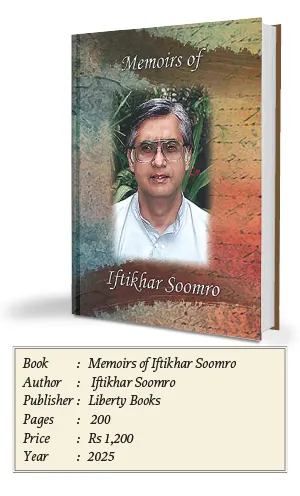
 The book ‘Memoirs of Iftikhar Soomro’ is a sincere and engaging account of a life penned by the author Iftikhar Soomro. The book tells the story of a person who has taken on many roles over the years, including politician, industrialist, agriculturist, philanthropist, and family man. Spanning more than five decades, the memoir gives the reader a clear sense of his journey, his achievements, and the challenges he faced along the way.
Iftikhar Soomro’s life is closely linked with the development of his community. He describes how he established textile mills and rice husking plants, contributing to the local industry and employment. At the same time, he focused on social welfare by founding institutions in Sindh, including a school, a hospital, an IT institute, and a center for children with special needs.
For this scribe, this book carried a personal connection. I have known Iftikhar Soomro since our student days in the Economics Department at the University of Karachi. Over time, we lost contact, but many years later, I came across his memoir by chance at a local bookstore. Seeing his name brought back many memories, and it encouraged me to reconnect with him. When we finally met after decades, he kindly presented me with a copy of his book. This personal link made reading the memoir more meaningful, and reviewing it more thoughtful and reflective.
The strength of this memoir lies in its honesty. Soomro does not try to present a perfect image of his life. Instead, he writes openly about the difficulties he has faced. He speaks about betrayal by close family members, political disappointments, and encounters with dishonest individuals. These experiences are described in a straightforward and sincere way, which allows the reader to understand the emotional impact behind them.
Alongside his personal story, the memoir also offers a broader view of Pakistan’s political environment. Soomro reflects on the role of powerful institutions in shaping the country’s history and direction. He discusses the influence of the military, sections of the judiciary, and senior bureaucrats, and connects this influence to key political events. His views are clear and sometimes critical.
One of the most interesting aspects of the memoir is its simple writing style. The language is clear, direct, and easy to follow. A deeper theme in the book is reflection in later life, as Soomro shares his thoughts on regret, choices, and the passage of time. These reflections give the memoir a thoughtful tone and make it relatable to a wide range of readers. His discussion of betrayal is particularly powerful.
The sections on his political career are among the most interesting parts of the book. His involvement in party politics provides an insider’s view of how decisions are made and how relationships work within political groups. His time in a major political party’s core committee offers useful insight into leadership styles and internal dynamics. His comments on key political figures are direct and, at times, critical.
Soomro also writes about his work in social welfare through the HMB Trust, which he established in his father’s name. His efforts to support the people of Shikarpur show his continued commitment to public service.
The memoir also includes lighter and more enjoyable sections, particularly when Soomro writes about his travels. His descriptions of visiting different places and meeting people add warmth to the book. These moments provide a welcome contrast to the more serious themes of politics and personal struggle. They also show another side of the author, one that appreciates life’s simple pleasures and memorable experiences.
The book is an honest and thoughtful account of a life filled with both success and challenges. It combines personal experiences with wider political reflections, making it both engaging and meaningful. Written in simple British English, the book is easy to read yet offers depth and insight.
Leave a Reply