
Kabul
Beyond Guns and Roses
Why aren’t Pakistan’s air strikes in Afghanistan stopping armed attacks? Pakistan has to blame itself as well.
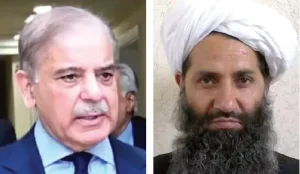
The Pakistani government has effectively declared a harder line against Afghanistan. The recent warning came from Prime Minister Shehbaz Sharif, followed two days later by an even stronger one from Field Marshal Asim Munir. Viewing this as an offensive policy, the Taliban have reacted negatively. They have adopted a more aggressive stance and vowed to avenge violations of their territory by launching retaliatory attacks. Indeed, as Pakistan has intensified air strikes inside Afghanistan in response to frequent suicide attacks by the TTP and the BLA, Afghan officials have issued increasingly belligerent statements, followed by attacks on border posts.
Do the Taliban regard Pakistan as neither powerful nor important enough to their interests to ask the TTP—their fiercest ally during the war against the United States and now a partner in government—to restrain itself? Or do they increasingly believe they have strategic alternatives beyond Pakistan?
Why are air strikes not stopping armed attacks? Pakistan has to blame itself as well. It miscalculated by assuming that militant actors could be cultivated, influenced, and disciplined for state purposes. Some saw the Taliban’s return to power in Pakistan as the restoration of strategic comfort on the western frontier. Instead, it exposed the bankruptcy of the assumption that influence over the Afghan Taliban would automatically translate into control over the TTP or compliance on border security. Pakistan now confronts a Taliban regime that wants the benefits of engagement with Islamabad but rejects the obligations Islamabad assumed would accompany past support. Pakistan’s presumed leverage over Taliban-type actors has repeatedly proved far less durable than imagined.
The problem is not merely one of militant hideouts that can be bombed. It is the product of a revived TTP sheltered by Taliban permissiveness, an unresolved frontier dispute, Islamabad’s own contradictory Taliban policy, and a regional environment in which Kabul increasingly sees itself as a strategically relevant actor rather than a dependent client. Once the conflict is framed in Afghanistan as a struggle over sovereignty rather than a counterterrorism dispute, the Taliban’s incentive to cooperate shrinks even further. In effect, Pakistan’s strikes have hardened precisely the regime behaviour they were intended to change.
As Ambassador Maleeha Lodhi has argued, Pakistan’s expectation that Taliban rule in Kabul would pacify the western frontier proved to be a strategic miscalculation. Instead, it created the space for the TTP to regroup and escalate attacks. The Taliban regime now portrays Pakistan’s air strikes as coercive and unjust. The damage these strikes could inflict on Pakistan-Afghanistan relations is potentially profound. Civilian casualties, disputed targeting claims, and images of bombed villages make it politically easier for Kabul to portray Pakistan as an aggressor than to acknowledge the issue of TTP and BLA sanctuaries.
The Taliban see little tactical advantage in cooperating with Pakistan on this issue. Doing so could undermine their carefully crafted ruling coalition. They also trust Pakistan far less than they once did, particularly because Islamabad did not promptly recognise their government and instead supported a regional approach. Afghan political observer Ahmad Shuja Jamal argues that the Taliban seek to convert Afghanistan’s geography and regime survival into strategic bargaining power with all regional actors. They do not wish to be perceived as Pakistan’s security instrument or as a dependent state lacking strategic autonomy.
As Muhammad Amir Rana’s analysis of militancy and state response repeatedly suggests, Pakistan’s Afghan problem is not merely operational; it is also the product of contradictory strategic expectations that no amount of episodic bombing can reconcile. Pakistan seeks a friendly regime in Kabul, no TTP sanctuary, no anti-Pakistan Afghan nationalism, and no strategic opening for rivals—especially India. These objectives do not fit together neatly.
Pakistan backed the wrong horse. It underestimated the central political contradiction in its Afghanistan policy. Islamabad supported the Taliban and did not object to their alliance with the TTP. At one stage, TTP families were even allowed to live in Pakistan. Now it expects the Taliban to turn against the TTP despite their ideological, tribal, and historical ties. On top of that, the BLA—which played no role in the Taliban’s return to power—has nevertheless become useful to the Taliban as political leverage against Pakistan.
Pakistan’s Afghanistan policy reflects what can only be described as strategic short-sightedness. Warnings from analysts such as Zahid Hussain—that Pakistan’s militancy problem cannot be separated from the politics of the Durand Line, a border the Taliban still refuse to normalise (although Afghanistan has never questioned its legality at the official level), which therefore cannot provide a stable foundation for deterrence—were largely ignored.
There is little doubt that air power, however dramatic, can produce strategic results in Afghanistan. Air strikes may destroy compounds, kill TTP and BLA militants, and signal resolve to domestic audiences, but they do not address the deeper problem of cross-border militancy. For the Afghan government, however, such strikes can easily be portrayed as hostile acts amounting to violations of its sovereignty. Air strikes risk becoming a substitute for a missing political strategy.
Pakistan now confronts a Taliban regime that wants the benefits of engagement with Islamabad but rejects the obligations Islamabad assumed would accompany past support
On the other hand, Pakistan’s air strikes reinforce Afghan nationalism and Taliban defiance. The geography of the border is exceptionally challenging. It cuts across ethnic, tribal, and commercial spaces that have never been fully governed by either capital in the modern bureaucratic sense. Pakistan’s leverage has also diminished because the Taliban are no longer as diplomatically isolated as Pakistan once assumed. Russia has recognised the Taliban government, while China is coordinating closely with it.
The logic behind Pakistan’s strikes is not difficult to understand. Pakistani officials have repeatedly argued that Kabul must prevent its territory from being used against Pakistan; otherwise, Pakistan will target armed groups operating from across the border.
The problem is layered and demands a layered solution. Pakistan is confronting not merely militant camps but an altered strategic environment. There are several reasons why even deadly air strikes are failing. The TTP has been strengthened by the Taliban’s return to power. Moreover, the TTP is not a conventional army dependent on a few fixed positions that can be neutralised from the air. It is a dispersed insurgent ecosystem—part ideological movement, part tribal network, part guerrilla organisation, and part criminal-financial infrastructure —with deep sympathiser networks in Pakistan. The same is true, to varying degrees, of the BLA and its affiliated groups. These organisations can absorb losses, relocate cadres, blend into civilian populations, exploit mountainous terrain, and regenerate through local recruitment, often strengthened by tribal grievances arising from civilian casualties. Air power can degrade such groups; it rarely dismantles them.
The strikes are hitting symptoms rather than the enabling architecture of militancy. The TTP’s operational resilience rests not only on camps in Paktika, Khost, and Kunar, but also on cross-border kinship networks, smuggling routes, informal financing, ideological alliances, and local facilitators on both sides of the Durand Line. A missile can destroy a building; it cannot sever those social and logistical arteries. Nor can it resolve the governance vacuum in the frontier belt, where militancy feeds on weak policing, inadequate intelligence penetration, fear, extortion, and the long afterlife of earlier wars. In that environment, air strikes can inflict pain, but they cannot produce strategic compliance. By relying primarily on this approach, Pakistan is unlikely to eliminate the TTP threat.
Former Special Representative Asif Durrani has described the TTP as a Pakistani “red line” and acknowledged that militancy emanating from Afghan soil is also a concern for China, Iran, and the Central Asian states—a reminder that the problem is regional. Nevertheless, none of these countries has joined Pakistan’s largely kinetic approach. They have opted instead for diplomacy, perhaps because the damage they face has not been as severe as the human and material losses Pakistan has suffered over the past four years.
The Durand Line is not merely an international frontier; it is a complex social and geographic space. Militant movement across this terrain cannot be stopped by episodic kinetic action alone. Unless Pakistan combines military pressure with a credible border-control architecture, better surveillance, stronger district-level administration, and a patient political strategy for the former tribal belt, the operational space available to armed groups will remain. The state may kill fighters more quickly, but the pipeline that produces or shelters them will remain open.
None of this means Pakistan should simply absorb attacks or abandon its right of self-defence. No state can tolerate cross-border militancy indefinitely. But the lesson of the past several years is that punitive air strikes, by themselves, are not delivering deterrence. Armed attacks continue because the conflict is fundamentally not about a handful of targetable hideouts. It is about sanctuary, certainly—but also about the Kabul regime’s priorities, disorder along the border, and deepening relations with India.
A more durable approach would require Pakistan’s policymakers to treat the Afghan front not as a problem solvable primarily through episodic aerial punishment, but as a layered security challenge. That means sustained diplomacy with the Taliban, even if relations remain strained; pressure through regional interlocutors such as China and the Gulf states; a more credible evidentiary and political campaign to win the Taliban’s support against the TTP; and, above all, a renewed internal security doctrine at home.
Pakistan’s response to cross-border militancy cannot consist solely of “more bombs across the border.” It must also include better intelligence at home, tighter policing, stronger border management, institutional coherence between the civilian and military arms of the state, and a realistic recognition that Taliban-ruled Afghanistan is unlikely to become a fully cooperative security partner in the foreseeable future.
Bombs alone cannot destroy the political ecology that sustains militancy. That is why Pakistan’s Afghan air strikes continue to recur, and why armed attacks inside Pakistan continue despite them. The pattern is no longer one of decisive retaliation; it has become a cycle of violence that neither side appears able to break.
The writer, based in Rawalpindi, is a former ambassador and can be contacted at mian.sana@gmail.com.


Leave a Reply