



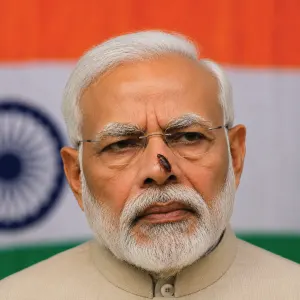
The ‘cockroaches’ have swarmed the streets across major Indian cities, such as New Delhi, Pune, Hyderabad and several others, unexpectedly and suddenly challenging the seemingly indomitable power of the country’s right-wing Narendra Modi government. Driven by millions of discontented and disillusioned young people, the newly formed Cockroach Janata Party (CJP) quickly amassed over 14 million followers, dealing a major blow to the BJP’s digital dominance by channelling widespread public anger over unemployment, inflation, corruption and controversial government remarks.
The movement, which began as an online joke, rapidly jolted the very base of the Bharatiya Janata Party (BJP). Prime Minister Narendra Modi’s voter base, historically supported by Hindu nationalist sentiment and strong youth turnout, is now facing a serious challenge to the idea of “Indomitable Modi,” a term frequently used in political discourse, biographies and media commentary to describe his resilience and unwavering political drive.
The Indian political landscape is in rapid flux, marked by the rise of influential grassroots opposition movements and shifting voter demands. Recent seismic shifts include growing public frustration over unemployment, a surge in decentralised, Gen Z-driven socio-political movements, and intense national debates over state polarisation and institutional centralisation. India is navigating a highly complex political environment, with the ruling party’s electoral fortunes shifting amid unprecedented youth pushback.
Though it is too early to say whether the CJP will be able to mobilise movements similar to those that brought down governments in neighbouring Nepal, Bangladesh and Sri Lanka, the discontented and disillusioned Gen Z youth of India appear determined to push for a change. CJP Founder Abhijeet Dipke, who travelled from the United States to lead the protests, said: “The youth of this country will no longer fear; they will fight. For the government, we may be mere insects, but we are alive and capable of fighting for our rights.”
Indian political analysts, however, believe the CJP is an online-led youth movement and satirical political group that lacks the formal structure, electoral machinery and legislative representation needed to bring down a national government. They also acknowledge that its popularity has significantly dented Prime Minister Narendra Modi’s image on the issues related to job creation and economic distress. The movement serves as a powerful channel for public dissent and accountability, but is likely to remain a pressure group rather than a direct electoral challenge.
Some political scientists believe that an alliance between the viral youth-led CJP and the Indian National Congress (INC) would represent a major ideological and cultural shift in India’s political landscape. Such an alliance would unite a Gen Z digital movement with a traditional political heavyweight to counter established political forces. A coalition of this nature could also advance a hybrid manifesto combining Congress’s institutional campaign structures with the CJP’s grassroots demands.
Congress MP Shashi Tharoor described the CJP as a ‘revelation’ of youth frustration over unemployment, inflation and the NEET (UG) paper leaks. Tharoor criticised the blocking of the CJP’s X handle as ‘disastrous’ for democracy, arguing that satirical and humorous platforms are healthy outlets for public dissatisfaction. He noted that the phenomenon reflects Gen Z’s growing restlessness and presents an opportunity for the political opposition to channel this discontent into mainstream electoral politics.


The writer is a veteran journalist and has worked with the Pakistan Civil Aviation Authority (CAA). He can be reached at mycolachi@gmail.com
Leave a Reply