Pakistan continues to fail local government because those responsible for creating it often benefit from its absence
ByShakeel Ahmed Shah | August 2026
Pakistan’s local government problem is usually described as a failure of political will. That is true, but incomplete. The deeper problem is a political order designed to devolve power only until it reaches the provincial capital. Pakistan is federal at the top and stubbornly unitary underneath. Islamabad is expected to share authority with Lahore, Karachi, Peshawar and Quetta; those capitals, in turn, treat districts, towns and neighbourhoods less as governments than as administrative outposts. The result is not merely delayed local elections. It is a stable political system built on provincial centralisation.
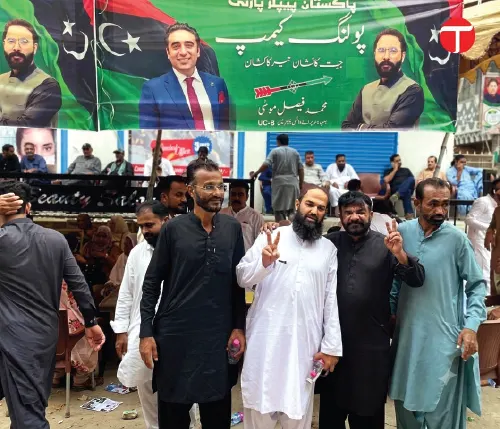
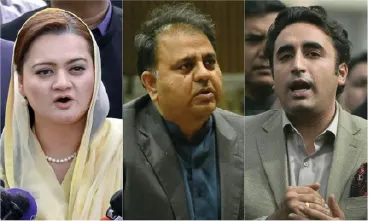
The latest exchange between the PPP and PML-N exposes this contradiction. Bilawal Bhutto-Zardari challenged the PML-N to hold elections in Punjab and Islamabad within 90 days; PPP leaders promised Sindh’s next polls in 2027. The PML-N replied that Punjab should not imitate Karachi’s model. Both charges contain an element of truth. Punjab has not held local elections since 2015. Sindh has held them, most recently through a cycle beginning in 2022, but elections alone do not constitute devolution when crucial authority, revenue and citywide services remain fragmented or provincialised. One party offers local government without sufficient government; the other has often offered government without the local.
The constitutional promise is deceptively clear. Article 140A requires every province to establish a local government system and to devolve political, administrative, and financial responsibilities to elected representatives, while the Election Commission conducts the polls. The Elections Act requires elections to be held within 120 days after a council’s term expires. Yet the Constitution leaves the decisive details, including tenure, functions, fiscal guarantees and protection against arbitrary redesign, to provincial legislation. This is constitutional recognition without constitutional security. A province can comply in form while defeating the provision in substance: rewrite the law, alter boundaries, change the number of councils, delay rules, restart delimitations and reset the electoral clock back to zero.
Punjab demonstrates the method. Its elected bodies were prematurely dissolved by the PTI government in May 2019, although their term ran to January 2022. The Supreme Court declared the dissolution unconstitutional and restored them in 2021. Yet restoration came late, and fresh elections never followed. In 2025, another local government law repealed the framework under which delimitations were proceeding, forcing the Election Commission to withdraw its schedule. Islamabad is an even sharper indictment: its local term expired in February 2021, and successive legal changes have repeatedly derailed elections. In July 2026, the Election Commission was still warning federal and Khyber Pakhtunkhwa authorities against delay. KP’s elected local governments, chosen in 2021–22, completed their four-year term on March 15, 2026; consultations on the next polls were only then gathering pace.
This history explains the famous paradox that military rulers have been more regular patrons of local bodies than elected governments. But this was not democratic generosity. Ayub Khan’s Basic Democracies, Zia-ul-Haq’s local councils, and Pervez Musharraf’s devolution of power to the grassroots created a vertical chain from the ruler to local notables, bypassing provincial politicians and national parties. Local elections gave authoritarian regimes civilian intermediaries, administrative reach and a controlled form of legitimacy. Civilian governments inherited institutions built partly to weaken them; once restored, provincial politicians reclaimed development funds, postings and patronage from local competitors. What appears paradoxical is, therefore, politically rational.
Local democracy in Pakistan has been distinctly countercyclical: it tends to expand during periods of authoritarian rule and contract with the return of parliamentary government. This is damaging not only because citizens lose representatives, but because political parties lose their nursery. Councillors are where future legislators ought to learn budgeting, negotiation, and public accountability. Instead, parties distribute tickets from above, legislatures become clubs of electables, and members of national and provincial assemblies spend their time inaugurating drains and streetlights. Legislators become municipal brokers because municipalities are prevented from becoming governments.
Local democracy in Pakistan has been distinctly countercyclical: it tends to expand during periods of authoritarian rule and contract with the return of parliamentary government
Were past local governments effective? The honest answer is: yes—but only partially, and more than their critics admit. Research on the 2001 system found that citizens gained substantially greater access to policymakers and that local elections were often as competitive as provincial and national contests. Local spending responded strongly to demands for roads, water, sanitation and electrification. The system also opened an unprecedented route for women: the 33 per cent quota brought tens of thousands into elected local office. These were not trivial gains in a state where distance from authority is itself a form of exclusion.
Yet proximity did not automatically produce good government. Local expenditure often favoured small, visible schemes over health, education, maintenance and citywide planning. Local leaders lacked effective control over provincial staff, predictable revenues and coherent authority over service providers. Patronage merely travelled downward in some places; landed, tribal and biradari elites could capture councils. Karachi illustrates the contemporary version: an elected mayor operates within a metropolis divided among municipal bodies, cantonments, development authorities, and provincial agencies. Accountability becomes impossible when every institution has jurisdiction, and no institution has responsibility.
This mixed record is not an argument against devolution. It is what should be expected from institutions repeatedly created, interrupted, stripped of powers and replaced. No government tier develops professional capacity when its law, map, staff and fiscal base are redesigned with every change of regime. Pakistan judges local governments after denying them the continuity through which organisations learn. It then cites their weakness as justification for keeping them weak.
The present vacuum has become costlier. The 2023 census counted 241.5 million people, with nearly 39 per cent officially classified as urban. Rapidly expanding settlements require land-use planning, public transport, drainage, waste management, building control and climate adaptation across electoral cycles. Provincial chief ministers can launch projects, but they cannot govern every street. Bureaucratic administrators can manage files, but they cannot supply electoral accountability. In the absence of councils, citizens confront a state that is simultaneously over-centralised and locally absent.
The remedy is not merely to “hold elections.” Pakistan needs a constitutional floor for local democracy: fixed terms, an enforceable election deadline, protection from premature dissolution and authority for the Election Commission to proceed when governments withhold maps or rules. Provincial Finance Commissions must make formula-based transfers predictable, while councils need meaningful own-source revenues. Functions should follow subsidiarity: neighbourhood services to neighbourhood bodies, district services to districts, and metropolitan transport, water, waste and spatial planning to unified city governments. Local executives must control relevant staff, publish budgets and service standards, and face empowered councils, audit and citizen scrutiny. Development funds should belong to local governments, not legislators.
Pakistan continues to fail local government because those responsible for creating it often benefit from its absence. The contest is not between democracy and administration; it is between two forms of representation competing for money, visibility and control. Until provincial parties accept that democracy must survive below the provincial assembly, Article 140A will remain a constitutional staircase that ends one floor too soon.





Leave a Reply