



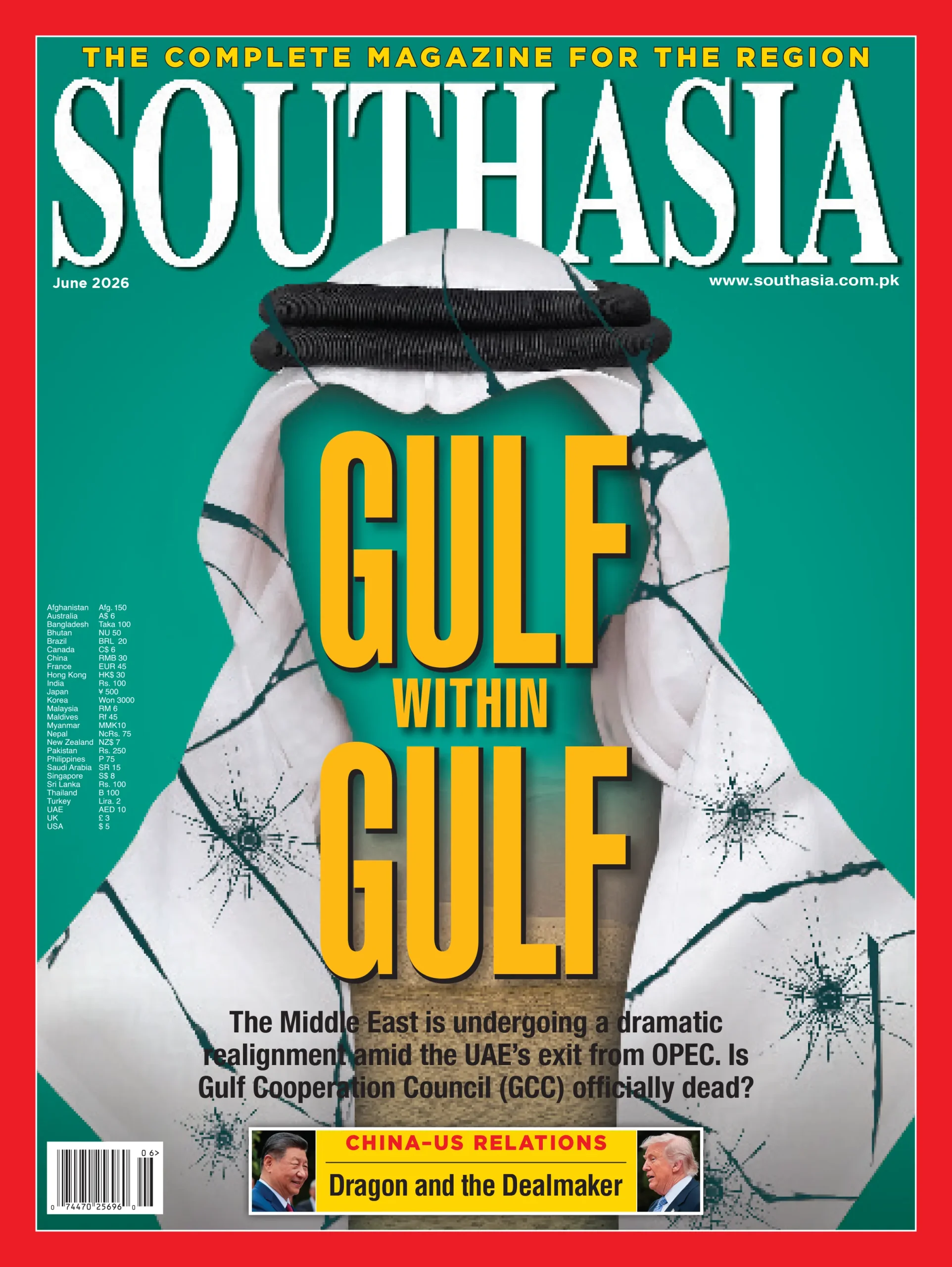
Gulf Within Gulf
SouthAsia Magazine’s cover story, titled ‘Gulf Within Gulf,’ published in June 2026, offered an engaging and insightful look at the intricate divisions in regional politics. As a Nepali observer, what struck me most was how the tensions described are not entirely unfamiliar — South Asia itself is a region where geography promises unity, but politics delivers division. Nepal sits at the crossroads of competing interests, watching larger neighbours navigate rivalries that inevitably shape our own options. The lesson from the Gulf is sobering: prosperity and proximity are no guarantee of cohesion. SouthAsia Magazine continues to give voice to perspectives that mainstream narratives often overlook.
Bikram Thapa,
Kathmandu, Nepal.

BISP: Charity or Political Branding?
In Pakistan, government welfare programme sometimes seem to be used to serve political interests. Regarding the Benazir Income Support programme (BISP), the very name can be seen as controversial. If Asif Ali Zardari and Bilawal Zardari truly wanted to establish a charitable initiative in honor of Benazir Bhutto, it might have been more appropriate to fund it with their own wealth. The people of Pakistan are aware of the Zardari family’s sizable resources, which could easily support not just one but many programs similar to BISP. Those who honor Zulfikar Ali Bhutto and Benazir Bhutto through their leadership could certainly invest generously in their memory, recognizing their sacrifices and contributions to the country.
Saleemullah Chandio,
Khairpur, Pakistan.

Taliban’s Moscow Gambit
Even though the recent agreement between the Taliban and Russia is an important diplomatic milestone, it shouldn’t be seen as a replacement for Pakistan or a major shift in regional strategy just yet. Pakistan and Afghanistan are truly interconnected, and while they have differences, their mutual dependence is far stronger. A more realistic view is that the Taliban is exploring new options to overcome feelings of resentment, anxiety, and diplomatic isolation. Still, they will likely need to recognize that the key to Afghanistan’s stability, economic growth, and regional connections largely depends on maintaining a balanced and positive relationship with Pakistan. External powers might offer short-term benefits, but they can’t alter the fundamental geographic limitations. No other country, be it Russia, China, or anyone else, can change this fundamental reality.
Sarah Faruqui,
Mardan, Pakistan.
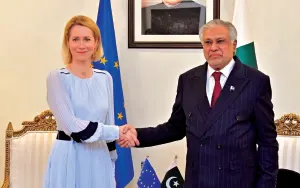
Pakistan and the EU
Over the past few years, global politics has been defined by uncertainty — regional conflicts, economic instability, and evolving security challenges. Tensions in the Middle East, the war in Ukraine, trade disputes, and the volatile situation in Afghanistan have all reinforced the idea that diplomacy, no less than power, is indispensable to the international order.  The recent tenure of Kaja Kallas as High Representative of the European Union for Foreign Affairs and Security Policy is a case in point, bringing renewed momentum to Pakistan-EU relations and underscoring Pakistan’s growing diplomatic significance on the world stage. When the European Union recognizes Pakistan as a meaningful partner and an important regional player, it’s more than just a polite gesture; it’s a real political acknowledgement that matters.
Dr. Ali Naseer,
Brussels, Belgium.
Smartphones and the Shrinking Family
 A recently published study by the US National Bureau of Economic Research has revealed a striking correlation: the US birth rate has declined by 22 percent since 2007 — the year the first iPhone was introduced. As smartphone use became increasingly widespread in the years that followed, researchers have identified it as an unconventional but significant factor influencing birth rates. The findings deserve serious reflection. Smartphones have fundamentally altered how people spend their time, form relationships, and prioritise life choices. Endless digital engagement may be quietly displacing the human connections that lead to family formation. If a device can measurably reshape demographic trends, we must ask harder questions about what else it is silently changing — and whether we are paying close enough attention.
Ishrat Ilyas,
Mumbai, India.
Spirit Without Order
 A nation’s character is often revealed not in its formal declarations but in its everyday behaviour — how it celebrates, how it grieves, and how it conducts itself under pressure. We are a people of genuine spirit and warmth, quick to mark occasions with enthusiasm and pride. Yet that same energy, left undisciplined, can work against us. Consider something as ordinary as rain. A downpour transforms city roads into gridlock, stretching a thirty-minute commute into a multi-hour ordeal. The cause is rarely the weather alone; it is the collective habit of ignoring lane discipline, cutting queues, and compounding disorder, followed swiftly by the impulse to blame everyone but oneself. The same pattern repeats itself in traffic accidents, cutting across educational and social backgrounds alike. We celebrate boldly. We would do well to govern ourselves with equal conviction.
Shumaila Raza,
Lahore, Pakistan.
Jamaat’s Long March
Among the most significant developments in Bangladeshi politics in recent years, the resurgence of Jamaat-e-Islami Bangladesh stands out prominently. For decades, the party endured intense political pressure, court cases, sanctions, and the execution of its senior leadership. The ruling establishment believed that such measures would erode the party’s organisational foundations, but that expectation proved mistaken. Jamaat not only produced new leadership to fill the void left by those lost but also consolidated its position through organisational discipline, political acumen, and grassroots social service. That a political movement could sustain its ideology, retain its workers, and maintain public trust despite sustained and severe repression is a testament to its resilience and to the enduring appeal of its message among a significant segment of Bangladeshi society.
Tariq Mahmud Chowdhury,
Dhaka, Bangladesh.