



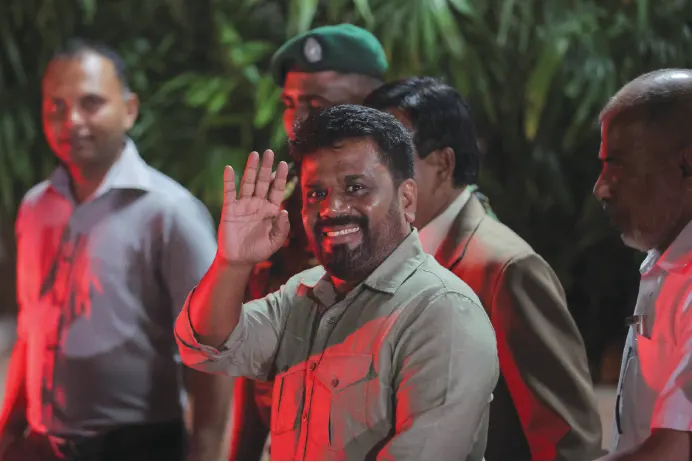
The election of President Anura Kumara Dissanayake and the National People’s Power (NPP) government in 2024 marked one of the most significant political shifts in Sri Lanka’s modern history. Emerging from the devastating economic crisis of 2022 and widespread public dissatisfaction with the traditional political elite, the NPP promised nothing less than a complete transformation of the country’s political culture. The government pledged to fight corruption, restore public trust in institutions, reduce economic hardship, and bring about what it called “system change.” Nearly eighteen months into its term, the government has undoubtedly achieved some important successes.
However, questions remain about whether it is truly transforming Sri Lanka’s political system or gradually becoming part of the very establishment it promised to dismantle. One of the NPP government’s most notable achievements has been maintaining economic stability. When President Dissanayake came to power, Sri Lanka was still recovering from one of the worst economic crises in its history.
Foreign reserves had collapsed, inflation had soared, and public confidence in government institutions had reached historic lows. Despite campaigning against certain aspects of the International Monetary Fund (IMF) program, the new administration ultimately chose a pragmatic path, continuing many of the reforms introduced under the IMF bailout agreement.
This decision helped sustain economic recovery, restore confidence among international creditors, and stabilize key economic indicators. Economic growth has resumed, inflation has moderated, and government revenues have increased. These achievements demonstrate that the NPP government understands the importance of economic discipline. However, this success has come at a political cost. Many supporters who voted for the NPP expected substantial relief from austerity measures and greater economic justice. Instead, the government has largely continued the policies it once criticized, leading some observers to argue that economic recovery has been prioritized over social transformation.
The government’s anti-corruption campaign represents another area of significant progress. For decades, corruption, nepotism, and abuse of power have weakened Sri Lanka’s democratic institutions. The NPP built much of its electoral appeal on its promise to clean up politics and hold powerful individuals accountable. Since taking office, anti-corruption agencies and law enforcement bodies have become more active in investigating former ministers, senior officials, and politically connected individuals. Several high-profile cases that had previously stalled have been reopened, signaling a greater willingness to challenge entrenched interests.
Nevertheless, anti-corruption efforts remain incomplete. Critics argue that while investigations into former officials have increased, the government has been less enthusiastic when allegations involve individuals within its own ranks. Questions surrounding procurement processes and government contracts have generated concerns that the NPP may be applying different standards depending on who is under scrutiny. If the government wishes to maintain credibility as a reformist force, it must demonstrate that no individual, regardless of political affiliation, is above the law.
Beyond economics and corruption, the government’s promise of “system change” was also closely linked to strengthening democratic institutions and reducing the concentration of power. During the election campaign, the NPP pledged to introduce constitutional reforms, limit executive authority, and create a more transparent and accountable system of governance. However, progress in these areas has been slow. Despite possessing a strong parliamentary majority capable of passing major reforms, the government has yet to present a clear roadmap for constitutional change. Many observers worry that the NPP may be following a familiar pattern in Sri Lankan politics. Previous governments also promised to reduce presidential powers but became reluctant to do so once they gained control of the executive office. The delay in implementing constitutional reforms has fueled skepticism regarding whether the government genuinely intends to alter the structures that have long concentrated political power in Colombo.


The writer, based in Islamabad, holds a Master’s degree in Defence and Strategic Studies. He can be contacted at daniyaltalat2013@gmail.com.
Leave a Reply