



 Syed Mazhar Jameel, a leading scholar, political activist, and conscience of the Progressive Writers’ Movement, was born on 9 March 1936 in Nagpur, India. He was among the rare intellectuals who combined scholarship, literary commitment, and political consciousness with remarkable consistency. Deeply associated with the Progressive Writers’ Movement, Jameel devoted his life to preserving and advancing its humanist and democratic traditions.
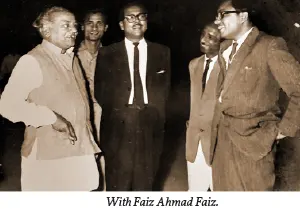 Mazhar Jameel received his early education in Nagpur and Hyderabad, Deccan. In 1949, he moved to Pakistan and settled in Sukkur. During his studies at Islamia High School in 1952, he actively participated in the student movement. He completed his MA in Urdu and LLB from Sindh University, Hyderabad, in 1963, and began his legal practice in Sukkur. In 1973, he moved to Karachi and joined United Bank as a Law Officer, eventually rising to serve as Chief Law Officer and Executive Vice President by 1996. After retiring, he returned to literature, devoting himself to Urdu poetry, criticism, and research. His collection of interviews with distinguished poets, writers, and intellectuals, Guftagu, was published in 1982.
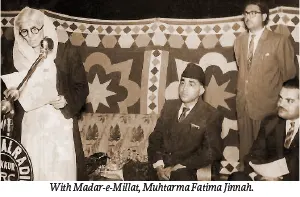 At a time when progressive ideas were increasingly pushed to the margins, Mazhar Jameel continued to champion social justice, secularism, equality, and intellectual freedom through his writings and scholarship. Though he spent the better part of his professional life as a banker, his commitment to the progressive movement gave his literary and research contributions the weight and breadth of an institution rather than the work of a single individual. Unlike many writers who confine themselves to creative expression, he emerged as a formidable literary historian and researcher.
His critical study, Ashob-e-Sindh aur Urdu Fiction, exploring the political, social, and religious dimensions of Sindh through Urdu short stories and novels, was published in 2002. His comprehensive study, Jadeed Sindhi Adab: Meelanaat, Rujhanaat, Imkanaat, followed in 2004 and received the Best Book Award from the Pakistan Academy of Letters the same year. His book on the distinguished literary and political figure of Sindh, Sobho Gianchandani: Shakhsiyat aur Fun, published in 2007, stands as the first authoritative, research-based biographical work on Faiz Ahmad Faiz. Zikr-e-Faiz appeared in 2012, followed by Muhammad Ibrahim Joyo: Ek Sadi ki Awaaz in 2015. His Urdu translation, Alice Ba Naam Faiz, and the biographical account, Alice ki Kahani — centred on letters written on behalf of Faiz Ahmad Faiz during his imprisonment — have been in circulation since 2018.
Jameel introduced younger readers to the ideological and literary legacy of Faiz Ahmad Faiz, Sajjad Zaheer, Makhdoom Mohiuddin, and Sibte Hasan. His writings on Makhdoom Mohiuddin and the Telangana peasant uprising demonstrated both scholarly depth and political sensitivity. A steadfast champion of progressive thought, Syed Mazhar Jameel kept alive the spirit of resistance and demonstrated, through a lifetime of dedicated work, that literature can be a powerful instrument of enlightenment, justice, and human dignity.
Leave a Reply