




She was seven months old. Her name was Fatima.
Her mother carried her for two hours by rickshaw through the crushing Dhaka heat. The nearest clinic had run out of the measles vaccine three weeks earlier. The nurse had said, “Come back next month.” But by next month, Fatima had a fever, then a rash, followed by the cough that wouldn’t stop.
She died on a Wednesday night. The paediatric ward had no oxygen left. A doctor held her hand in remorse, not because he didn’t know how to treat measles, but because he had no vaccine to give her three months ago, and no ICU bed to save her now.
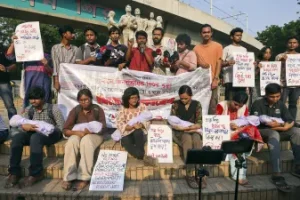
Fatima is not a statistic. She is one of more than 300 children who have perished in Bangladesh’s current measles outbreak, an outbreak that has swept across 58 of the country’s 64 districts, hospitalised over 50,000 children, and, on the single deadliest day, 4th May, claimed 17 young lives in 24 hours.
Here is what makes Fatima’s death unforgivable. Measles has been entirely preventable for over sixty years. We have the vaccine. We know the schedule. We have global financing. And Bangladesh, until very recently, was celebrated as a model of universal immunisation success.
How did a story of success turn into a heartbreaking tragedy with so many children affected? It wasn’t because the virus suddenly became more powerful. Instead, it was a series of human choices—many of which could have been avoided and were even warned against—that transformed a fragile health system into a devastating crisis.
This is not a natural disaster; it is a failure of governance, attributable to those who have perished.
Let us examine how progress unraveled.
For years, Bangladesh followed a proven formula: two routine doses of measles‑rubella vaccine at 9 months and 15 months, supplemented by nationwide campaigns every four years to reach the 95% coverage threshold needed to prevent outbreaks. UNICEF supplied the vaccines, with most funding from GAVI and government contributions. Between 2000 and 2016, first‑dose coverage soared. After 2012, second‑dose coverage followed. The country stood on the brink of measles elimination.
Then came the political turbulence of 2024. The immediate trigger was a wrong procurement decision. In September 2025, the Muhammad Yunus-led interim government halted vaccine procurement through UNICEF and switched to an open-tender system. Bureaucracy slowed down the new process, causing vaccine supplies to run out. This led to nationwide shortages that affected routine immunisation. The supplementary MR campaign, initially planned for 2024, was first postponed and then canceled altogether due to political unrest.
UNICEF had sounded the alarm loudly and repeatedly. “It was very frustrating,” said Rana Flowers, UNICEF’s representative in Bangladesh. “We warned them directly.” Those warnings went unheeded.
The result was catastrophic. Routine vaccine coverage fell to just 59%, a far cry from the 95% herd immunity needed to halt transmission. Measles tore into that gap with devastating speed.
There were deeper weaknesses that turned an outbreak into a calamity. It would be convenient to call this a simple supply chain failure. Experts reject that framing. “Beyond immunisation gaps, Bangladesh’s measles crisis reflects deep structural weaknesses,” said Mohammad Mushtuq Husain, adviser at the Institute of Epidemiology, Disease Control and Research (IEDCR).
Malnutrition is rampant. About 28% of children under five are stunted; 10% suffer from wasting. Vitamin A deficiency further weakens children’s defences, and Bangladesh has missed three consecutive biannual vitamin A distribution campaigns since 2024.
Chronic underinvestment in public health infrastructure meant that poorly funded clinics were overwhelmed within days. The military was eventually called in to erect field hospitals.
Mahmudur Rahman, chief of the National Verification Committee on Measles and Rubella, admitted plainly: “We committed to reducing the number to zero by December 2025 but failed to achieve the target due to poor vaccination programmes.”
Tajul Islam A. Bari, a former Expanded Programme on Immunisation official, was equally direct. Funds had been allocated for vaccine purchases, he said, but authorities had failed to actually procure them. “Now we see the result. The situation is scary.”
 Five Lessons Bangladesh Cannot Afford to Ignore


Based in Islamabad, the writer is the Director of Climate Change, Nutrition, and Health, and can be reached at drmehr5@gmail.com
Leave a Reply