



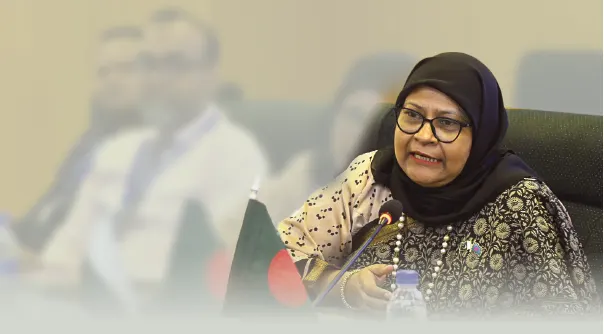
The National Institute of Public Administration (NIPA) in Karachi recently hosted a 12-member delegation of senior civil servants from Bangladesh. The visit marked a significant milestone in strengthening institutional relations and promoting collaboration between Pakistan and Bangladesh in the areas of governance, training, and policy innovation.
During its two-day visit to Karachi and Lahore, the Bangladeshi delegation held meaningful discussions on strategic leadership, governance, and policy innovation, demonstrating their commitment and enthusiasm. The visit offered a wonderful opportunity for senior policymakers from both countries to come together and share ideas, fostering encouraging discussions on how they can continue their valuable collaboration.
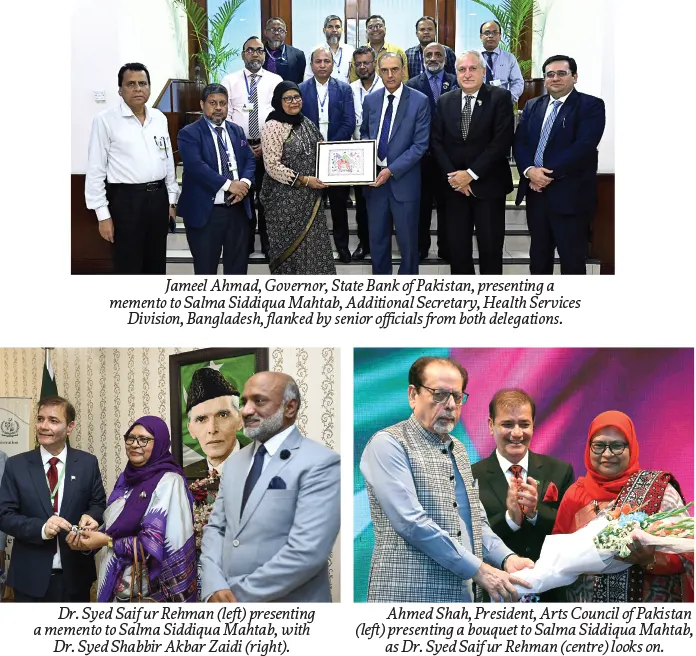
On the sidelines of Bangladesh’s civil servants’ visit to Karachi, SouthAsia Magazine had the chance to speak with the delegation, which included one Additional Secretary and eleven Joint Secretaries. The group was led by Salma Siddiqua Mahtab, an Additional Secretary in Bangladesh’s Health Services Division. Dr. Syed Shabbir Akbar Zaidi, Director, Capacity Building, Civil Services Academy (CSA), Lahore; Farhan Aziz Khawaja, Rector, National School of Public Policy and DG CSA, Lahore; and Dr. Saif ur Rehman, Director General of the National Institute of Public Administration (NIPA) in Karachi, were also present on the occasion.
In response to a query that since Pakistan and Bangladesh have both undergone significant institutional reforms in recent years, what can the two civil services learn from each other, Ms. Salma Siddiqua Mahtab said, “We can learn from each other in many sectors, in social development, in economic development, in every sector, information and communication technology. The civil service can foster mutual understanding and cooperation on policy issues, including policy formulation, implementation, and tools for implementation. In every aspect, we can cooperate.”
Answering a question about what role a stronger Pakistan and Bangladesh partnership could play in promoting regional stability and development, Ms. Mahtab said, “The relationship between Pakistan and Bangladesh plays a significant role in regional stability and geopolitics, especially since we both share borders with India. For sustainable development, security, and overall prosperity, it’s important that we maintain stability and foster positive relationships with our neighbors and regional countries.”
Regarding the specific governance practices or experiences the Bangladeshi delegation was hoping to take back to Bangladesh from this visit, Ms. Salma Siddiqua Mahtab replied, “Our visit to Karachi and Lahore has provided us with numerous insights; thus, it is challenging to specify what exactly we will take away from this experience. Nonetheless, we have gained valuable knowledge, and upon our return to our homeland, we will deliberate on these findings and seek to identify the issues we can address to enhance our governance system.
Sharing her thoughts on the renewed diplomatic friendship between Pakistan and Bangladesh, she expressed great optimism about their future relationship over the next five to ten years, confident that it is just beginning and will continue to strengthen.
With regard to the leading role the Bangladesh civil bureaucracy played in the country’s notable economic growth over the last few decades, Salma Siddiqua Mahtab stated, “Civil bureaucrats play a key role as both the policy makers and implementers, dedicated to putting policies into action. It’s through their efforts—guided by instructions from politicians—that many policies contributing to economic growth have been successfully carried out. This strong collaboration is a big reason why Bangladesh has experienced development.”
Regarding the recent change in Bangladesh’s government, she mentioned that the country’s bureaucracy remains consistent, regardless of leadership changes. She emphasized that the bureaucracy is expected to stay neutral and continue executing government instructions while working to address the concerns of everyday people. In her view, this system and institution are steadfast, and she believes the Bangladesh bureaucracy will continue to serve the nation’s best interests, unchanged by political shifts.
Lastly, she shared her honest feelings about what being in Karachi personally means to her and what her hopes were before arriving. Ms. Mahtab happily mentioned that Karachi is incredibly welcoming. “I didn’t expect to receive so much honor and such a warm welcome. It’s truly exciting, and I feel grateful,” she concluded with a smile.

Leave a Reply