


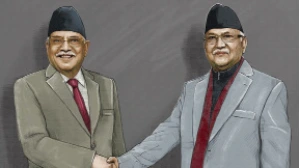
 Nepal’s political landscape is marked by constant change and coalition shifts. On March 4, 2024, Prime Minister Pushpa Kamal Dahal, or Prachanda, formed a new alliance with the UML, RSP, JSP, and Unified Socialist Party after dissolving his coalition with the NC. This move aims to address Nepal’s persistent political and economic instability. Expert says this action is a component of Prachanda’s overarching political strategy and indicates his propensity for establishing and dissolving coalitions to preserve his authority. The primary reasons for forming the new alliance were frustrations with the NC, particularly with the performance of significant ministers, and policy disagreements. Members of the UML, the RSP, and Prachanda’s Maoist Centre cabinet have united to establish a new coalition. By uniting organizations with shared interests, the objective is to promote a more stable and robust government. However, because the new ministers have not been given particular tasks, the coalition’s future is unclear; this might be because the partnership is still in its formative stages.
One of the primary advantages of the new coalition is the potential for enhanced political stability. By incorporating the UML and RSP, Prachanda has successfully established a government encompassing a broader spectrum of political interests. This inclusivity has the potential to foster a more cohesive approach to addressing Nepal’s imperative challenges and more effective governance. The new coalition also demonstrates the potential for economic development. Nepal’s $40 billion economy faces challenges due to high unemployment and slow development. The coalition’s eight-point agreement prioritizes economic reforms to enhance quality of life, create jobs, and foster growth. A stable government is crucial for economic progress, as it boosts investor confidence and attracts foreign investment and aid.
The new coalition is not without its challenges despite the potential it possesses. Throughout Nepal’s history of coalition politics, there have been many internal conflicts and power struggles. Inefficiencies and disputes during decision-making may result from the coalition partners’ contrasting objectives and perspectives. One of the most pressing issues is the allocation of ministerial portfolios. The new ministers have not yet been designated with specific responsibilities, which suggests that there may be disagreements regarding the distribution of positions. This delay may adversely affect the government’s capacity to implement its policies effectively. Public skepticism presents yet another impediment. Given the country’s history of political instability and unfulfilled promises, the Nepali populace is reasonably apprehensive about any new political arrangements. The coalition must promptly produce tangible results to establish and maintain public confidence. The failure to address this issue may result in a decline in public confidence in the government and increased political unrest.
Nepal’s political landscape is further complicated by its geopolitical location between China and India. The strategic interests of both neighboring countries can influence Nepal’s domestic politics. Maintaining a neutral, balanced, and non-aligned foreign policy will prove challenging for the new coalition in light of its external pressures. China is ebullient about fortifying its strategic partnership, primarily through the Belt and Road Initiative (BRI), while India is amenable to collaborating with the new administration. The Deputy Prime Minister’s recent visit to China emphasizes the ongoing geopolitical dynamics. The complexities of engaging with India and China while prioritizing our domestic objectives will necessitate a high level of diplomatic skills.
The alliance comprises parties with a wide range of political objectives and ideologies. The CPN (Maoist Centre) and UML, two left-leaning organizations, have a history of ideological unity. Nevertheless, their prior collaborations have been frequently overshadowed by internal power struggles. The RSP and JSP, as relatively new coalition members, have distinct priorities and demands. Prachanda will face a significant challenge in reconciling these divergent interests.


The writer is a freelance contributor. She can be reached at gulnaznawaz1551@gmail.com
Leave a Reply