New Delhi
No Entry
Despite these tall claims, India is denied accreditation by the United Nations-linked Global Alliance of National Human (GANHRI) due to India’s gross human rights violations, injustices, and discrimination against the country’s minorities.

The Geneva-based, United Nations-linked Global Alliance of National Human Rights Institutions (GANHRI) deferred the National Human Rights Commission-India (NHRC) accreditation for the second year in a row. The Indian National Human Rights Commission has held an ‘A status’ since 1999 and was due for re-accreditation by the Geneva-based body last year. This is the second time India’s status has been suspended for two years, in 2023 and 2024. This raises eyebrows about why India’s accreditation is suspended for two consecutive years. Is it because of questioning how free and fair India’s National Human Rights Commission is in dealing with communities or what? Before we discuss why Indian accreditation is suspended, it is important to understand the concept of National Human Rights Institutions (NHRIs).
The concept of NHRIs is not new to the world. It has been part of the infrastructure of international law since 1946, two years before the Universal Declaration of Human Rights was completed. The Global Association of National Human Rights Institutions (GANHRI) Caucus on Human Rights and Climate Change aims to facilitate the exchange of knowledge, experiences, and good practices among NHRIs across all regions in addressing climate change from a human rights-based approach. Globally, more than 120 nations have established independent NHRIs. The GANHRI has accredited two-thirds after passing a rigorous review to assess their compliance with the Paris Principles, a set of minimum standards for NHRIs. Then, the question comes to mind: What is the story behind accreditation, and what are its benefits?
The accreditation status is a process developed by GANHRI that makes the accreditation a peer-reviewed process for permitting member status to access the United Nations and various governance positions. There are two categories/grades of accreditation: A & B. States accredited as ‘A status’ countries have access to participation in all UN processes, whether Geneva-based or elsewhere. A grade is based on the 1993 General Assembly Resolution of general standards guidelines of institutions adopted in the Paris Principles in Vienna in 1992. The ‘A status’ NHRIs have independent participation rights at the UN Human Rights Council, its subsidiary bodies, and some General Assembly bodies and mechanisms. They are eligible for full membership of GANHRI, including the right to vote and hold governance positions. NHRIs accredited with ‘B status’ participate in GANHRI meetings but cannot vote or hold governance positions. An ‘A status’ is conferred on institutions fully compliant with the Principles. Meanwhile, ‘B status’ indicates partial compliance. All national human rights institutions with an ‘A status’ are subject to re-accreditation every five years. Accreditation decisions are deferred when institutions fail to comply fully with the Paris Principles.
According to the above classification, India, for the second time, has lost its ‘A status’ since it was first categorized in 1999. The Commission retained its status in the 2006 and 2011 reviews. In 2016, its accreditation was deferred by 12 months; in November 2017, it was re-accredited as ‘A.’ However, for two consecutive years, the Indian accreditation has been denied by GANHRI. What are the reasons behind the denial of its accreditation?
According to GANHRI, India lacks diversity in staff and leadership; its political interference in appointments is high; its involvement of police officers in investigations of human rights violations violates the basic principles of GANHRI. India also lacks cooperation with civil society, and insufficient action to protect marginalized groups is an alarmingly high violation. These are the reasons cited by a GANHRI in deferring the accreditation of India’s National Human Rights Commission for its highest rating for the second time in nearly a quarter century. According to Indian scholars, India is home to nine national commissions, including the National Commission for Women, National Commission for Minority, National Commission for Child Rights, National Commission for the Scheduled Caste, etc., and 160 state human rights commissions that can potentially make India a role model to the world. Despite these tall claims, India is denied accreditation.
The denial indicates India is home to human rights violations, injustices, discrimination, and unfair political involvement that goes against the set objectives of GANHRI. It is not a knee-jerk response to deny India its accreditation at the moment, but the Sub-Committee for Accreditation (SCA) concerns have carried over through the years. The SCA claims that the composition of the human rights body lacks diversity, has an opaque appointment process, fails to cooperate with civil society, involves police personnel in investigations creating “conflict(s) of interest,” and cannot respond to escalating human rights violations. Thus, India does not qualify to maintain its accreditation until it fixes major issues that violate the basic principles of GANHRI.
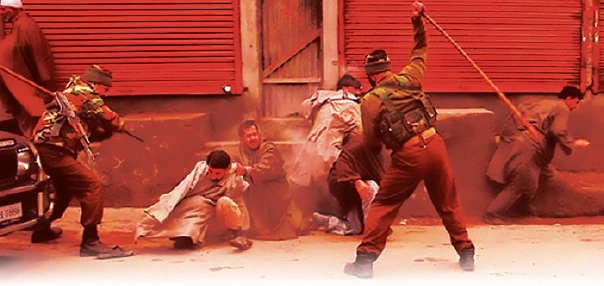
India has to realize that it is not living in isolation. In global politics, everything is connected. India has to give minorities its due share and accept the rights of Kashmiris to live/enjoy their life like any other citizen in the world. India has to harness the Hindutva ideology and let Hindus, Muslims, Christians, Sikhs, and other minorities live their lives in a diversified society. Along with this, India has to let its people live according to the democratic norms set by international organizations rather than according to the extreme lines set by the BJP under its Hindutva influence.![]()
Aurangzeb and the Western Bias Against the Mughal Emperor
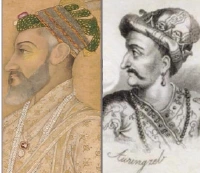
Made by two artists, there are two different portraits of Aurangzeb, the sixth Mughal emperor. One was created by a contemporary artist of Aurangzeb’s time who saw the king and made the portrait by himself. Another portrait was made by an unknown European artist who lived in a distant land a century later, never saw the emperor, and never visited his kingdom.
Influenced by the mindset of historians to serve a particular purpose, image changes, and so do the biography and pictorial illustrations of kings and emperors. Fictions are presented as facts and are used to create a situation where notions are infused among the masses to blame a particular community for mistakes made by a ruler in the past. Unfortunately, history drafted under colonial rule served only one purpose, ‘divide and rule,’ and serves the current purpose of vilifying a specific religious community and a religion to achieve a political goal.
Henry Miers Elliot, a colonial evangelical historian, penned “The History of India, as Told by Its Own Historians” in eight volumes. The book became a reference book for English and right-wing Hindu historians. What Elliot did was select a few paragraphs from earlier historical documents against Muslim rulers and their unjust historical mistakes, spiced in religious flavour, and present them as a so-called ‘true history’ of the Subcontinent. His book presented Muslim rulers in a bad light, and the reason he gave was the religious practice of rulers, which caused a rift and division among communities. Francis H. Robinson wrote in 1853 that ‘Elliot’s evangelical trait tended to criminate those about whom he wrote.’ Elliot never travelled to India but became a famous English historian who was considered an authority in Indian history. How bizarre!
These are two portraits; one gives an impression of a gentleman of his time, and another gives an impression of a rude person, totally different in features and costumes from the real. Orientalists have maligned Aurangzeb’s portrait, so they have maligned his biography to serve one purpose: ‘divide the community.’
· The colour portrait was made by a contemporary Mughal Court artist from India.
· The black and white sketch, which first appeared in ‘Crabb’s Historical Dictionary,’ was made by a European artist.
– SouthAsia Social Media Desk

The writer is associated with the National University of Sciences and Technology, Islamabad as an Assistant Professor at Department of Government and Public Policy. She can be reached at farahnaz@s3h.nust.edu.pk
Financial facilitation to augment Pakistan-China B2B activities
GO Energy and STDC sign MoU
Kamal Siddiqi honoured
Planning Minister Inaugurates Nestlé Pakistan’s Clean and Safe Drinking Water Facility
Sri Lankan Prime Minister Graces IWMI’s 40th Year Celebration
Sharmeen Obaid-Chinoy’s Documentary Opens Tribeca Festival
Sri Lanka rain floods kill 14
Trump joins TikTok
Rupert Murdoch marries yet again at age 93
Maldives to ban Israeli tourists
UBL announces winners of the 11th UBL Literature & Arts Awards
Surya Productions unearths the ‘real’ Manto
Afghans remain the largest refugee population globally


Leave a Reply