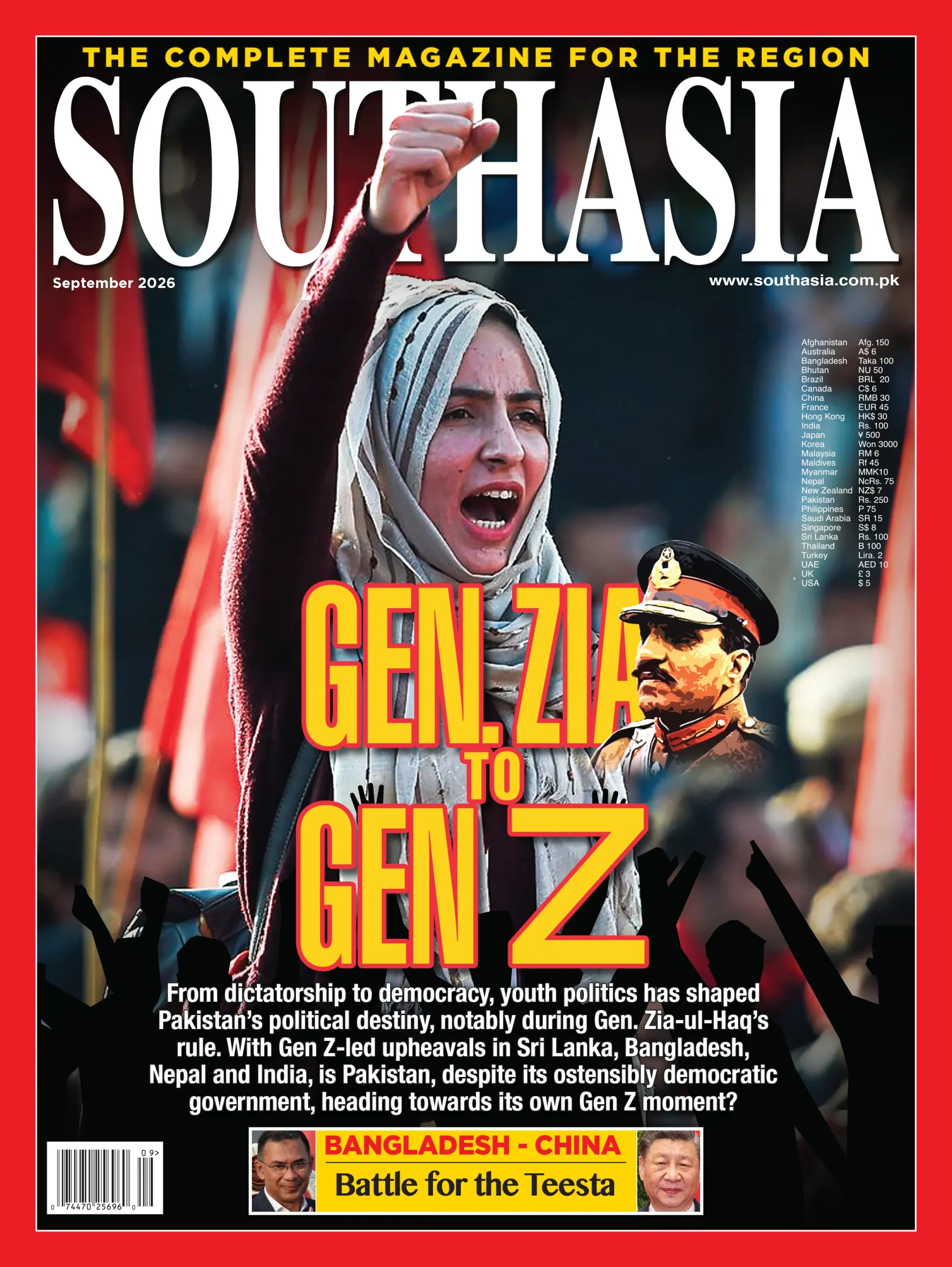



The debate on democracy has been taking place, it seems, forever. The definition of democracy given by Abraham Lincoln is “government of, by and for the people.” On the other hand, the people of Pakistan have been experiencing a variety of so-called democracies. The definition of democracy by Lincoln was replaced in Pakistan with a new definition introduced by General Ayub Khas and that was “government for the people by the bureaucracy.”
Ayub Khan introduced the “Basic Democracies (BD) System” in 1959, which only strengthened the military-bureaucratic oligarchy; there was nothing for the well-being of the people in that system. Interestingly, the purpose behind imposing the BD system was political in order to depoliticize the institutions and to isolate the politicians. The Basic Democracies System provided all powers to the bureaucrats from the Union Council to the Divisional Council. As these bureaucrats were not elected representatives of the people, hence they were not directly responsible to the people.
This was a very positive gesture in the history of Pakistan. Free and fair elections, based on adult franchise, were held in 1970. But, again, democracy is not merely a process to hold free and fair elections; to transfer power to the elected bodies is also one of the main components in this regard. The Awami League led by Sheikh Mujib-ur-Rehman did a clean sweep, still, rather than transferring powers to his party, General Yahya and Bhutto resisted this transfer of power with arrogance. And, later, the people of Pakistan witnessed that every government, including military dictatorships, claimed to be democratic, but what did that democracy mean? Was it like “democracy is off the people, far the people, and buy the people”?
The political forces of the country have been launching movements in the name of the ‘restoration of democracy’, but do they really believe in democratic norms? Military ruler Zia-ul-Haq overthrew the elected government of Z. A. Bhutto, and hanged him. The political parties having different ideological orientations started a movement, Movement for the Restoration of Democracy (MRD), against Zia’s Martial Law. That was a very strong movement indeed, which got the attention of the international community as well. But, what happened after Zia’s death in an air crash? Both the major political forces of Pakistan; the PPP and the PML-N had been surpassing all democratic norms and supported non-democratic forces to dissolve the assemblies. Surprisingly, the PPP, which was the driving force behind the MRD, was doing the same what Nawaz Sharif, who was the creation of General Zia-ul-Haq, was doing. However, the overthrow of the Nawaz Sharif government by General Musharraf changed Sharif’s political stance, and ultimately he signed the ‘Charter of Democracy’ with Benazir Bhutto in 2006.


The writer has a PhD in World History from the College of Liberal Arts, Shanghai University, and teaches at the National Institute of Pakistan Studies (NIPS), Quaid-i-Azam University, Islamabad. He can be reached at qasim_shu2016@yahoo.com |
|
Cover Story
|
|
News Buzz
|
Update |
Leave a Reply