

Region
Not Pawns
‘Migrants and refugees are not pawns on the chessboard of humanity.’

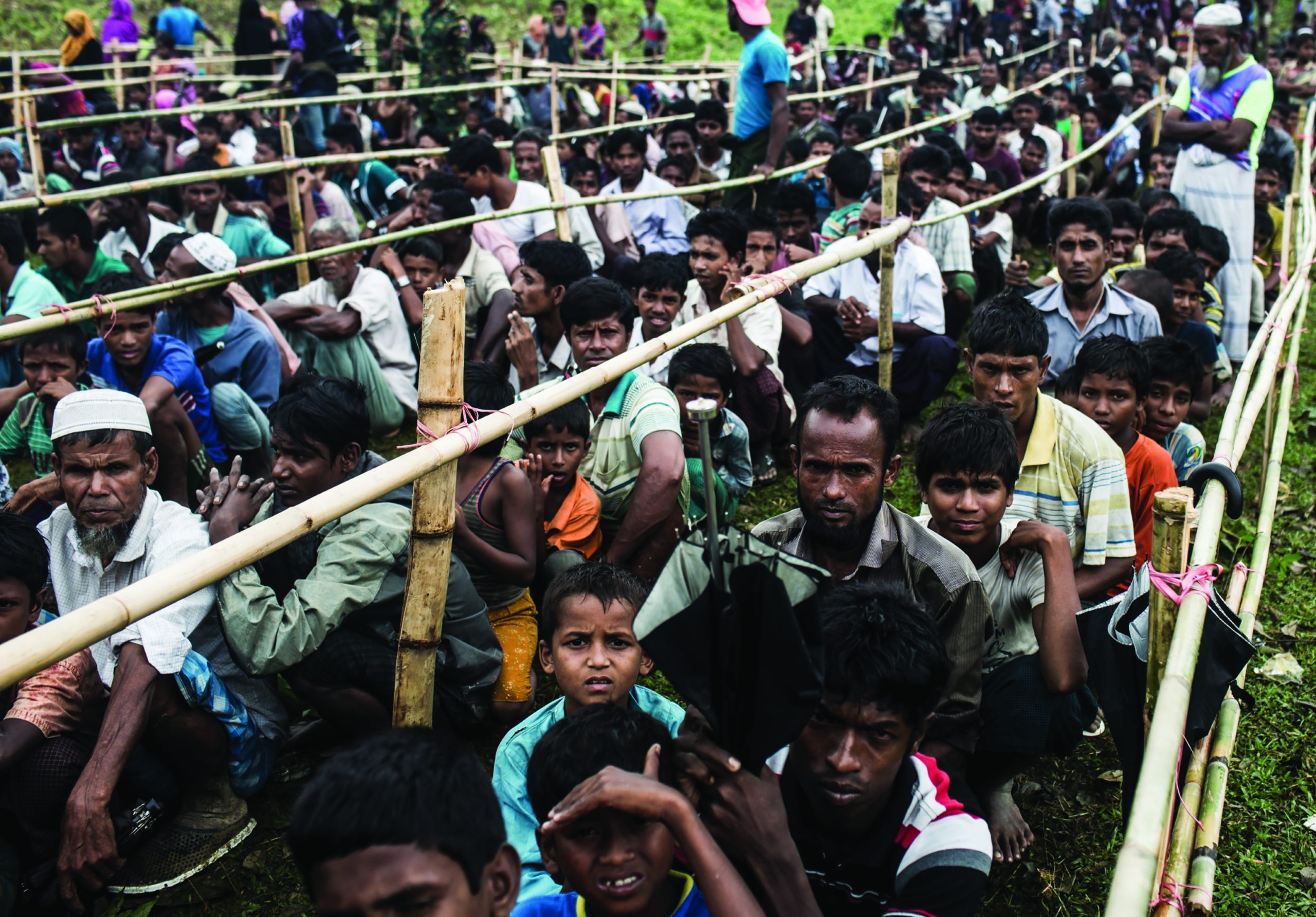
The Rohingya have been subjected to persecution, discrimination and torture for decades in Myanmar. In 2017, almost one million Rohingyas had to leave their homeland because of fierce human rights abuses committed against them.
Consequently, Bangladesh welcomed them. However, three years down the line, the Rohingya are still suffering, still not able to speak up for their rights and still marginalized.
As things stand today, Rohingya refugees in Bangladesh do not have the right to participate in decision-making processes regarding their own lives. This severely impacts their human rights. From freedom of expression, to assembly and movement to healthcare and education, to facing extrajudicial killings, they have been restricted and left on the periphery of the dignified lives that they seek and deserve.
Escaping Suu Kyi’s Myanmar to seeking refuge in Sheikh Hasina’s Bangladesh, the Rohingya face continual suffering.
Crackdown on Rohingya freedom of expression and movement
In 2019, the Bangladesh government cut access to 3G and 4G in those towns which are home to the refugee camps. This move sent a clear signal to the Rohingya that their movements and freedom of expression would be significantly restricted. Following this move, the Bangladesh authorities also stopped the sale of SIM cards to the refugees, a move which was impossible to enforce effectively, giving rise to a black market for SIM cards.
The government’s justification was that the restrictions would curb criminal networks, but activists feared it would further isolate the community.
Prohibiting access to education outside the camps
Bangladesh has always made it clear that the Rohingya will not be able to remain in the country. With this in mind, it is intentionally blocking access to local educational institutions for Rohingya children. They are only allowed to attend schools within the camps. However, Myanmar has stated that it will not recognize the education provided in the camps. This leaves the Rohingya children with no access to Bangladesh government-recognized schools. They have thus completely lost access to formal education for the last three years, with no hopes of it being recognized when they return home. This is yet another means to curb human rights on a people whose only hope remains the future of their children and better lives for them.
Extrajudicial killings
Amnesty International issued a statement expressing deep concerns about a series of extrajudicial executions of Rohingya refugees in the camps. Allegedly, a member of the youth wing of the ruling Awami League Party was shot dead by a group of Rohingya men.
Seven Rohingya individuals were shot as a result in what is termed as “gunfights”, which is a common term to disguise what is known to Bangladeshis as extrajudicial killings.
As a result, Amnesty International issued the following statement:
“The killings of the alleged suspects are a serious violation of human rights and reflects disregard for the rule of law. All persons, irrespective of whether or not they are suspected of crimes, have basic human rights guarantees under international human rights treaties binding on Bangladesh. These include the right to a fair trial and to be presumed innocent until proven guilty. Human rights are completely disrespected and violated by extrajudicial executions.”
There are serious questions which arise as to the well-being of the Rohingya in Bangladesh. Having agreed to take and shelter them, the Bangladesh government should be much more accommodating to the idea of providing them with the security and education that they need. They are not illegal immigrants, a point which the Bangladesh authorities perhaps forget to acknowledge.
Bangladesh, being a small emerging economy itself, has taken on the tremendous task of sheltering roughly 1 million refugees. That is highly commendable. Bangladesh wants them to be repatriated and they want to be repatriated. They want to go home, of course, with the condition that they will be able to live in their country Myanmar, peacefully and freely, and would be exempt from persecution.
For that to happen, the governments of Bangladesh and Myanmar, with help from the United Nations and ASEAN, need to work out the political mechanisms.
In the meantime, it is counterproductive to put additional burdens on people who are already in a state of limbo. No one gains from it. The Rohingya are stuck between a rock and a hard place. Pope Francis’ quote about migrants and refugees not being pawns on the chessboard of humanity is absolutely valid.![]()
The writer is a teacher, political columnist and member of the US Democratic Party. She can be reached at sabriacballand |
|
Cover Story
|
|
News Buzz
|
Update |


Leave a Reply