



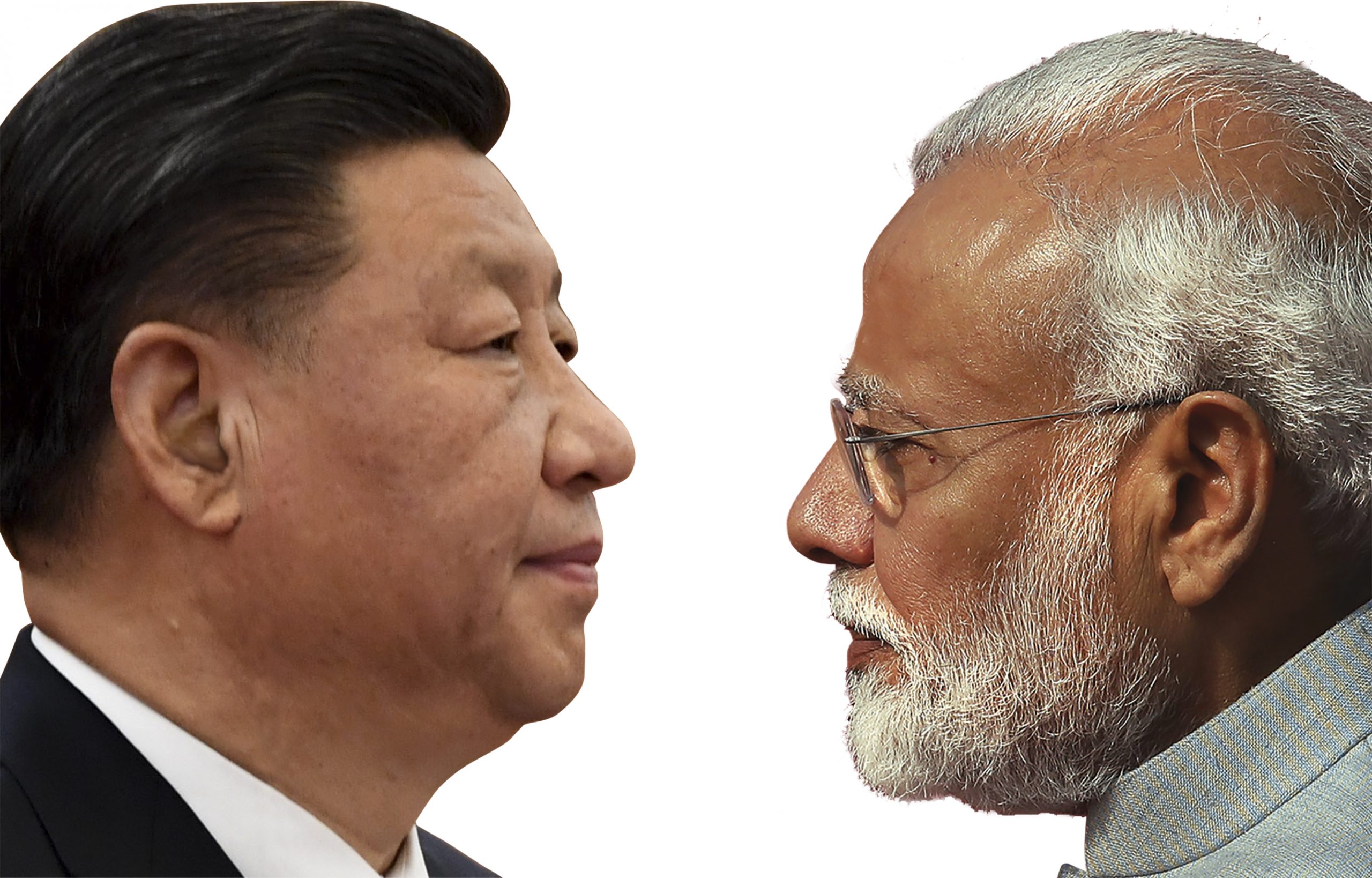
A lot has been written on the recent Sino-Indian border skirmishes in Ladakh area. The analyst community from Pakistan expects a possible conflagration of the conflict and India’s potential military embarrassment at the hands of a stronger China. Such expectation is too far-fetched as China and India would never – willingly or unwillingly – cross the Rubicon and walk into a full-blown war because that would be in nobody’s interest.
If anyone expects India to stand up to China - under US bidding - in a resurrected Great Game 2.0, then it amounts to not recognizing the India of Chanakiya Kautilya (375-283 BC). He also called Vishnugupta or the Indian Machiavelli and said, “Do not reveal what you have thought of doing, but by wise council, keep it secret, being determined to carry it into execution.”
Expecting India to go against its largest trading partner in an otherwise obscure border conflict is not understanding the geo-economics. Sino-Indian annual trade is just under US $100 billion. Hoping for India going to war - after the ravages of Coronavirus - with a neighbour that is destined to rise as a great super-power and who just became the largest economy in the world, on a changed global chessboard post-Covid-19, is naïve at best and delusional at worst.
India has historically conceded against formidable adversaries, from the Afghans to the Moghuls and from the Portuguese to the British. That historic constant – based on a deep study of all elements of Indian national power potential, enclosed by a deep identity crisis and complex - has not changed, Modi or no Modi. However, instead of outright hostility, this time around, the so-called ‘Shining India’ under Modi - the RSS and Hindutva brigade strongman - may change the mode of conflict with China, choosing from an array of tools out of the playbook of hybrid warfare. We see traces of it through blockage of Chinese apps, for example.
The root cause of this border conflict lies in an ill-defined, 3,440 km long border that both countries dispute. Traversed by rivers, lakes and snowcapped mountains, this difficult terrain in a harsh climate now brings soldiers face to face at many points. The Doklam crisis between June and August 2017 caused introspection by both states to re-orient their future relationship. Politically, both parties concluded it would have to be rivalry than cooperation and waning inclination towards a peaceful resolution. Militarily, Indian discussions converged around the view that China holds conventional and nuclear advantage over India.


The writer, a retired major general, covers global affairs and political sociology. He can be reached at tayyarinam |
|
Cover Story
|
|
News Buzz
|
Leave a Reply |
Update |
Good up-to-date assessment of Sino-Indian relations
A professional and all encompassing assessment of the Sino-Indian embroglio.
Very realistically analyzed. Both are wise to co-exist with China being the bigger partner. India has given China the space it required. However China has decided to capitalize and gain all the advantage it can. India has much to give up.