



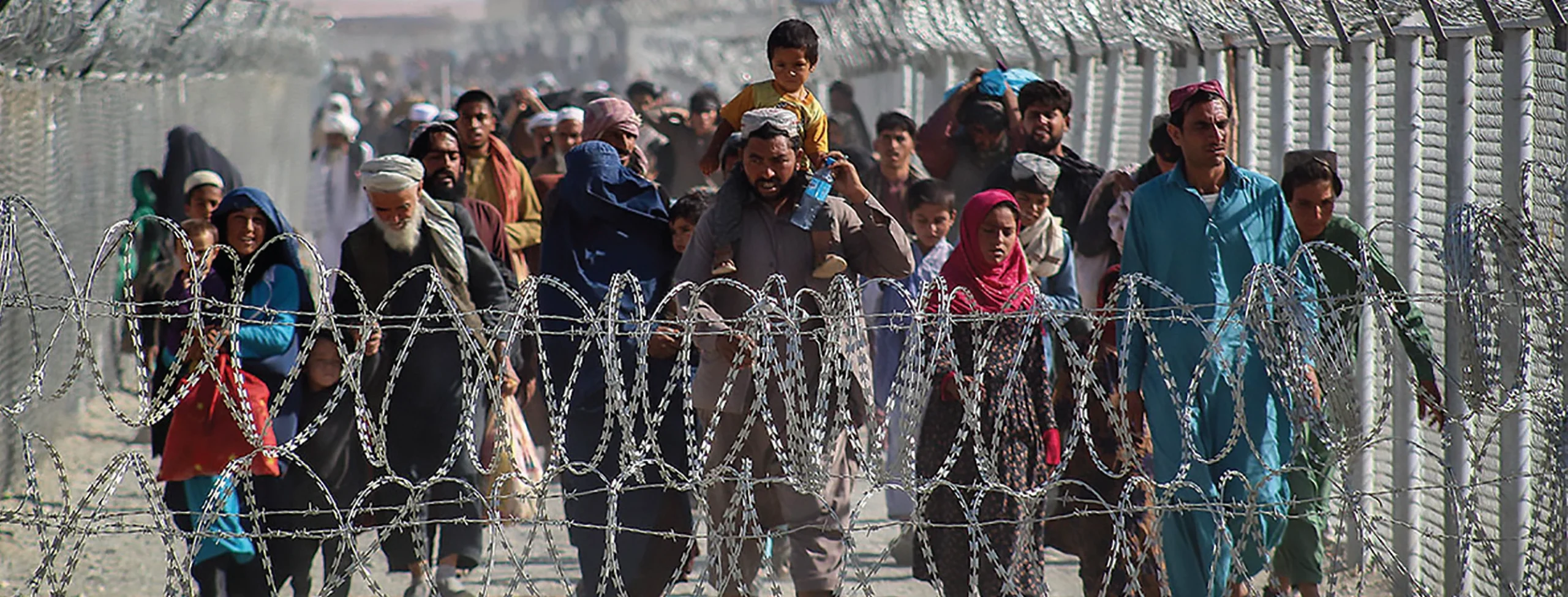
Should Pakistani authorities have the determination and the resources, their announcement of a mandatory departure date for all irregular foreign migrants and refugees by November 1st, or face expulsion, could trigger one of the most significant human migrations in recent South Asian history. The majority of undocumented residents in Pakistan are of Afghan origin, with approximately 1.7 million out of the 4.4 million Afghan nationals in Pakistan believed to lack proper documentation.
Forced to move to Afghanistan due to decades of conflict and instability, Afghan refugees are now faced with the prospect of returning to a nation in turmoil. Recently, substantial portions of the western Herat province have been devastated by earthquakes. Those Afghans who escaped the Soviet invasion in 1979 have been absent from their homeland for so long that they lack local connections. Some have spent their entire lives in Pakistan. Among the estimated 600,000 individuals who left Afghanistan after the Taliban assumed control in August 2021, many have valid concerns about their safety and well-being.
The process and decision-making behind the expulsion orders are shrouded in ambiguity, much like the overall functioning of the country’s government. A provisional civilian administration currently occupies Islamabad, anticipating forthcoming elections whose timing remains uncertain. The expulsion policy was initially implemented in Islamabad, followed by Karachi, the nation’s primary financial and economic center.
Amir Rana, affiliated with the Pak Institute for Peace Studies, a think tank in Islamabad, indicates that the city’s law enforcement has expressed longstanding concerns regarding escalating criminal activities associated with Afghans, particularly smuggling. Given the pressing economic challenges, the official declaration finds favor among ordinary Pakistanis who hold Afghans accountable for perceived job stealth. In Karachi, Pakistani residents are capitalizing on the distress of Afghan sellers, who are forced to depart by purchasing properties at substantially reduced prices.
The Establishment has additional reasons for supporting the expulsion, with one of the primary concerns being the revival of the Tehreek-e-Taliban Pakistan (TTP), also referred to as the Pakistani Taliban. This is an alliance of Islamic extremist groups committed to overthrowing the state, with connections to al-Qaeda and allegiance to the Afghan Taliban, even though the latter denies providing them with safe havens. It’s worth noting that a significant proportion of the members in both Taliban groups hail from ethnic Pashtun clans.
For nearly ten years, the Tehreek-e-Taliban Pakistan (TTP) remained subdued, mainly due to military operations. However, in Pakistan, the Taliban’s return to power in Afghanistan has been paralleled by a significant surge in TTP-related violence, particularly in the bordering provinces of Khyber Pakhtunkhwa and Balochistan. Just in October 2023, there were two separate suicide bombings at mosques on the same day, resulting in the tragic loss of 60 lives. According to the government, the TTP’s ranks are increasingly filled with Afghan members, and it is reported that Afghans carried out more than half of the two dozen suicide bombings that occurred this year.


The writer is associated with a communications agency and can be reached at sara.amj@hotmail.co.uk
Leave a Reply