



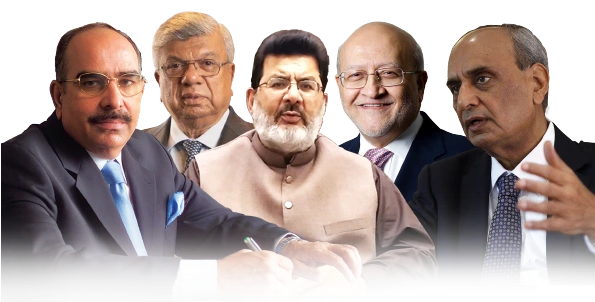
Corporate entities in many countries influence the electoral process through various means. The single purpose of business corporations to engage in any such activity is to shape government policies that promote business-friendly regulations or seek favourable treatment from elected officials. How do they do it?
Through political donations (funding political action committees), establishing corporate media houses, creating corporate-funded research and think tanks, electoral campaign sponsorships, grassroots mobilization, engaging employees and customers to get involved in political activities, involving corporate interest groups like business chambers, corporate endorsement or funding issue-based campaigns that indirectly benefit specific candidates or parties to frame public discourse in a way that aligns with their interests.
The indulgence of business corporations in political processes has been happening on every continent. In the United States, colossal tech corporations like Facebook, Google, and Twitter have been accused of influencing elections through the spread of misinformation, algorithm manipulation, and data collection. Who is not aware of the Cambridge Analytica Scandal; the data analytics firm Cambridge Analytica was accused of using Facebook data to target and influence voters during the 2016 US presidential election and the Brexit referendum in the UK. Moreover, the US-based pharmaceutical companies, the tobacco industry, defense contractors, military-industrial complexes, and significant oil and gas companies have extensively lobbied to influence electoral outcomes that ultimately result in favourable policies. Corporate entities that own media outlets in the United States have been accused of shaping public opinion and influencing electoral outcomes by providing favourable coverage to specific political candidates or parties.
It’s not just in the US; there are unfathomable examples of corporate entities playing with electoral processes around the globe in recent history. For instance, the interference of Siemens in Germany, South Korea’s Chaebols, Japan’s Keiretsu and Zaibatsu, Crony Capitalism in the Philippines, and the telecom industry in India, to name a few. The mining industry of Australia and Congo has been known to fund political campaigns and exert influence on policies related to mining and environmental regulations, the oil and gas industry in Nigeria, Monsanto (now owned by Bayer) in the EU, Business conglomerates like CP Group in Thailand, textile clout in Bangladesh and Mauritius.
Moreover, powerful commercial farming interests accused of influencing electoral outcomes and land reform policies in Zimbabwe, Pokies Industry and Anti-Gambling reforms in Australia, healthcare and private health insurance companies find government that protects their interests in many countries by bringing their own people alcohol industry has lobbied against proposals to increase alcohol taxes, the 1-Malaysia Development Berhad (1-MDB) scandal involved allegations of embezzlement and corruption, implicating former Prime Minister Najib Razak and leading to accusations of corporate influence on Malaysian politics, and the list is never-ending.
Pakistan is no exception to the modus above operandi in its political events. As a nation with a democratic governance structure influenced by capitalism, all borrowed from Western masters, it is unsurprising that it follows a similar pattern. Since its inception in 1947, Pakistan has witnessed a complex relationship between business corporations and the electoral process. Over the years, business entities have significantly shaped the political landscape, influenced elections, and interacted with the state. We need to have a brief peek into the political history of Pakistan to understand how politics have become business.
In the early years of Pakistan, the business community largely maintained a low profile in electoral politics. A nascent democracy and intermittent military rule characterized the political landscape. However, as the country transitioned into the 1960s, a shift occurred. Business elites began to recognize the potential benefits of aligning with political figures, forging alliances that could safeguard their economic interests. The 1970s marked a turning point with the nationalization policies of the then Prime Minister Zulfikar Ali Bhutto. As Bhutto’s government nationalized major industries, a rift emerged between the state and business corporations. This period witnessed increased corporate involvement in supporting opposition parties that opposed Z. A. Bhutto’s policies.


The writer is a columnist and broadcast journalist. He teaches at UVAS Business School in Lahore and can be reached at mali.hamza@yahoo.com
Leave a Reply