Islamabad
Great People to Fly With?
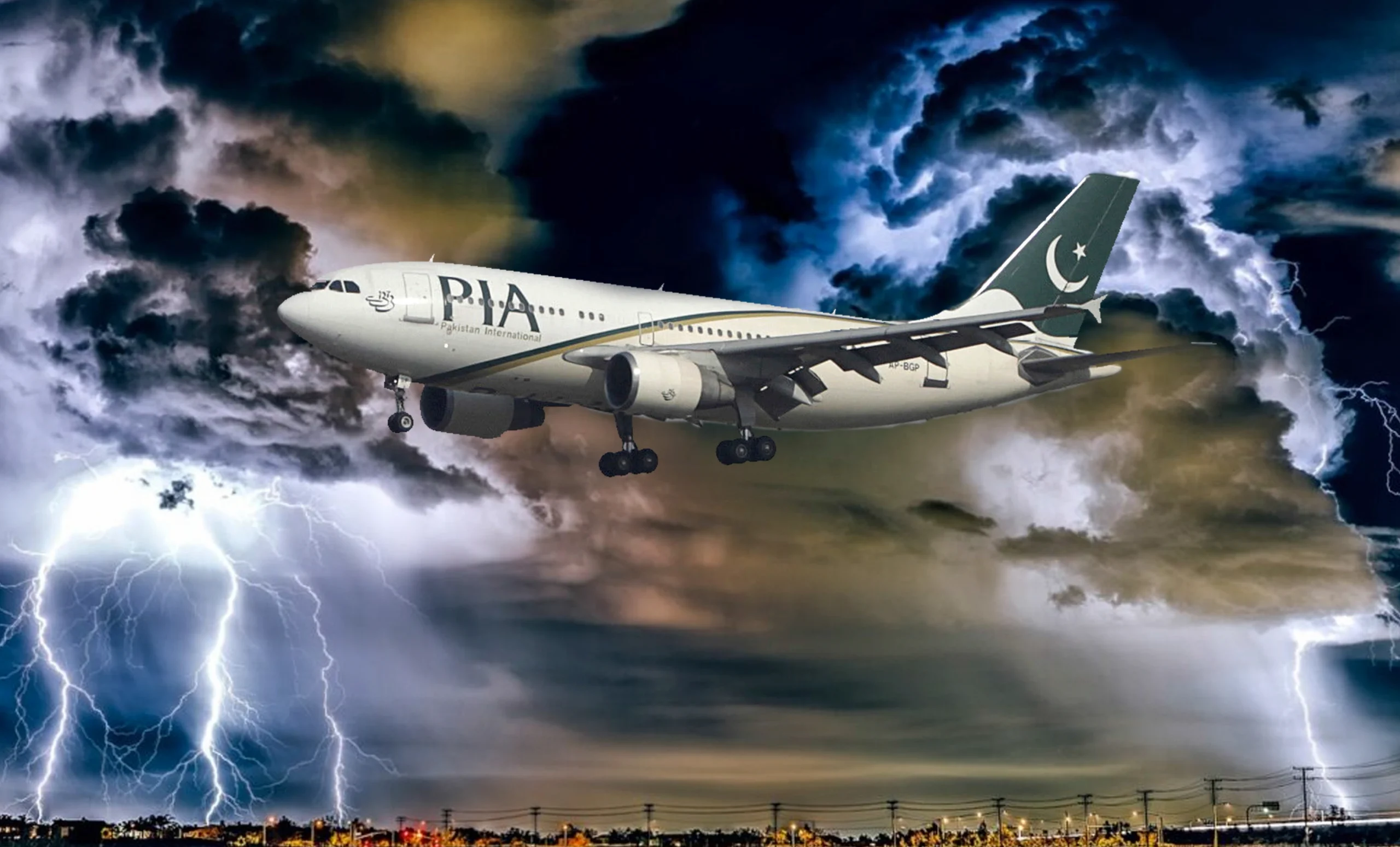
This article delves into the intricate details of the PIA’s transformation from a legacy airline to an endangered airline.

Imagine yourself reclined in luxury and comfort, a flight attendant in a designer uniform serving Pakistan’s fine cuisine. You reach London from Karachi on the fastest flight ever recorded on the route in 6 hours, 43 minutes, and 51 seconds. This was all a reality in the 1960s for the Pakistani flag carrier- Pakistan International Airlines. Fast forward to now. A flight to London is impossible as the organization is banned from flying in the European Union and the United Kingdom.
From establishing the legacy airline Emirates into reality by wet leasing aircraft to now grappling with losses of 80+ billion rupees. It transitioned from pioneers in innovation and engineering, even supporting startups and providing technical assistance to airlines like Air Malta and Philippines Airways, to acquiring one of the worst safety records in aviation history, marked by many crashes.
From making history as the first commercial flight from a non-communist nation to communist China, PIA now stands on the brink of becoming history itself. The airline witnessed a significant decline starting from the 1990s, and since then, it has been not only on a figurative but literal nosedive. Instead of solely blaming political and economic conditions, established organizations must address these challenges. Acknowledging that the aviation industry is critical to navigating political turmoil, organizations must take responsibility and find practical solutions within their control.
Confronting the glaring issue, the elephant in the room lies in the abysmal bureaucratic management, as they could not tackle the increase in competition with emerging private airlines such as Airblue and especially with the new low-budget carrier Fly Jinnah and its innovative and intelligent business model. Furthermore, PIA is exacerbated by a deteriorating safety record that has eroded customer confidence. PIA neglects the potential of Pakistan as a destination, hindering any increase in passenger demand.
As a response, the government has elevated the privatization of PIA to top priority, enlisting Ernst & Young as the advisor for the sale. This article delves into the intricate details of PIA’s transformation from a legacy to an endangered airline. It emphasizes the crucial need for visionary and enterprising leadership to steer PIA towards becoming a vital instrument for the development and prosperity of Pakistan.
Management and Bad Decision Making
The golden era of PIA was observed under Air Commodore Nur Khan. he was appointed 1959 as the Managing Director of PIA. The six-year span he led introduced Asia to the world of jet aircraft, as PIA was the first Asian airline to have operated a jet airliner, the Boeing 707.
However, as the decline started in the 1990s, the government introduced the open skies policy, introducing new organizations to be set up. This policy should have benefited the economy as it promoted a healthy competitive market but added to PIAs misfortune. It demanded the military men and civil servants who lead the organization to have an enterprising mindset.
Due to economic challenges, PIA faced a setback exacerbated by leadership prioritizing petty politics and utilizing the organization for personal interests. People in the top hierarchy lacked professional backgrounds, undermining the company’s stability. This also created the issue of overstaffing, as PIA had employed 500 employees per aircraft, as reported in the Express Tribune: “They said PIA’s total strength was around 14,500 [including outsourced staff] while it currently has a fleet of 29 aircraft, which cost Rs2.06 billion per month. Compared with other airlines, the officials said the PIA has a ratio of 500 employees per aircraft.”
The news of fake pilot licenses, although later proven false, triggered a significant backlash. The repercussions were severe, with the EU banning PIA from their routes and Pakistani pilots globally losing their jobs. This underscores the damaging impact of the top leadership on the organization.
Abdullah Khan, the spokesperson for PIA, had accepted that politics was a factor in the downfall of the PIA on the Duniya news show “Nuqta-e-Nazar.” They have identified the issues and claim to be moving forward in a new direction.
Tactics to Generate Revenue
To boost revenue, let’s pinpoint essential costs affecting an airline: oil, operational and maintenance, taxes, subsidiaries, and loan repayments. Post-pandemic and amid global turmoil, PIA faced hundreds of flight cancellations and grounded aircraft due to surging oil prices and higher interest rates.
While airlines generally operate at a loss, strategic business models can offset this. Emirates, for instance, manages oil costs through prepayment and securing discounts. Loyalty programs are a vital asset as they operate as banks and have air miles as currency, which passengers can spend in many ways; this enables airlines to expand into various ventures and create partnerships in the hotel, transport, banking, and other profiteering industries. PIA’s subsidiaries, notably Roosevelt Hotel, have turned into liabilities; Entrepreneurial minds would have utilized this asset and created profit. Unfortunately, PIA desperately needs monetary injection and requires a significant offshore property to be sold off.
Due to economic challenges, PIA faced a setback exacerbated by leadership prioritizing petty politics and utilizing the organization for personal interests.
Cost-cutting measures, like short-term wet leasing with trained crews, will be dealt with vigorously. To compete domestically with Fly Jinnah, PIA should explore the low-budget airline market, mirroring successful models like Lufthansa and Turkish Airways’ Sunway Airlines, and British Airways’ partnership with ComAir.
Furthermore, investing in younger aircraft is essential. The average age of the plane in PIA is around 16 years, which is pretty old. Fuel-efficient and safer airplanes will save costs in the long run.
Saving jobs and optimizing resources requires brilliant leadership. PIA must acquire capital wisely, adapt proven strategies from major airlines, and invest in cost-effective initiatives for a sustainable turnaround. PIA should create a corporate culture of dreams for the staff as they are the company’s foundation; a great look would be the PAN AM culture, as the employees still reminisce about the good days they had served the company.
The Pakistani Flag on Its Tail
For all airlines, the origin-destination is its main reason to operate; as PIA operates for Pakistan, Pakistan needs PIA and vice versa. Every airline with a good business model will always want to develop its own home. The Emirates Group played a significant role in promoting Dubai as a tourist destination and invested heavily in the development of the Emirate.
Pakistan, especially Karachi and Gwadar, have the potential to become transit hubs because of their geographic positioning. If PIA is to expand in the future, it is important to play a pivotal role in Pakistan’s development, including improving human resources. As the UAE Emirates Aviation College is one of the highly rated universities, PIA should also take initiatives to promote human development.
It also is an ambassador to the country and can use new marketing and PR strategies to promote Pakistan. Promoting culture through language, dressing, cuisine, and even incorporating a hospitable nature from each state in Pakistan is to be seen within the organization. The use of the Ajrak livery proved to be a success, however, with politics once more damaging brand and image building.
Furthermore, for a more visionary approach, expand outbound and help develop in regions such as the Levant region and other Arab nations, the CIS regions, and African nations. It can be used as a diplomatic tool to promote Pakistan and Pakistanis and create new routes to connect to the world, tapping into potential markets.
The Privatization Debate
PIA desperately needs restructuring, investment, and a visionary leader. Privatization has helped bring innovation and revenue. However, selling a state-owned enterprise to the right owner is essential. As sovereignty is at hand, private ownership only focuses on profit-making, and Pakistan’s development is of utmost priority.
Furthermore, privatization should occur when easy regulation is possible to prevent dangerous monopolies. Emphasizing ethical and sustainable practices is vital. It would also be essential to sell it to a Pakistani party, as it is the flag carrier and hence is the responsibility of Pakistanis to develop Pakistan. However, it is unfortunate that Pakistan has a limited elite that has a very close circle with the government and the establishment. This can fall into the same hands, just under a different style of management; although they can also use this to their advantage in development, it just boils down to the mindset. Pakistan is also unfortunate to have one of the least innovative elite classes as they tend to evade taxes and buy into the “real estate” mentality and not expand further. The case study of privatizing the UK Railways should be examined as it proved to be a significant failure for the country. Pakistan is in no condition to take substantial risks; this transition is a make-or-break for the nation. The government must learn from examples worldwide and implement the best model to progress.
Despite ownership style considerations, the primary concern is the individuals at the helm. Transitioning to a private owner should ensure the well-being of all stakeholders, fostering a return to PIA’s golden age and enabling it to compete at a global level once again.![]()

This writer is a freelance journalist. He can be reached at khalid.hassan3000@gmail.com
US calls for safe resettlement of Afghan refugees
Collaboration between CxO Global Forum and Magnus Technologies
Bangladesh convicts 98 more opposition activists
Kabul to be Engaged Diplomatically
Nestlé Pakistan Wins Sustainability Awards
Ali Zafar wins big at DIAFA
Nepal riot police rout protesters seeking restoration of monarchy
NBP PRESIDENT ATTENDS UNIONPAY INTERNATIONAL MEETING
Pakistan applies for BRICS membership
COURT DIRECTS PIA, CAA TO SUBMIT REPORT
UNHCR raises alarm over Afghans’ exit order
HASINA’S DAUGHTER TAKES WHO TOP JOB, REJECTS CRITICISM
Concerns raised over ‘radicalisation’ of Afghan youth
‘ANIMAL’ TRAILER IS OUT
US seeks explanation from India over plot to assassinate Sikh leader
Pakistani teacher wins Global Teacher Prize 2023
NAPA holds an evening with Ustad Shafqat Salamat Ali Khan


Leave a Reply