



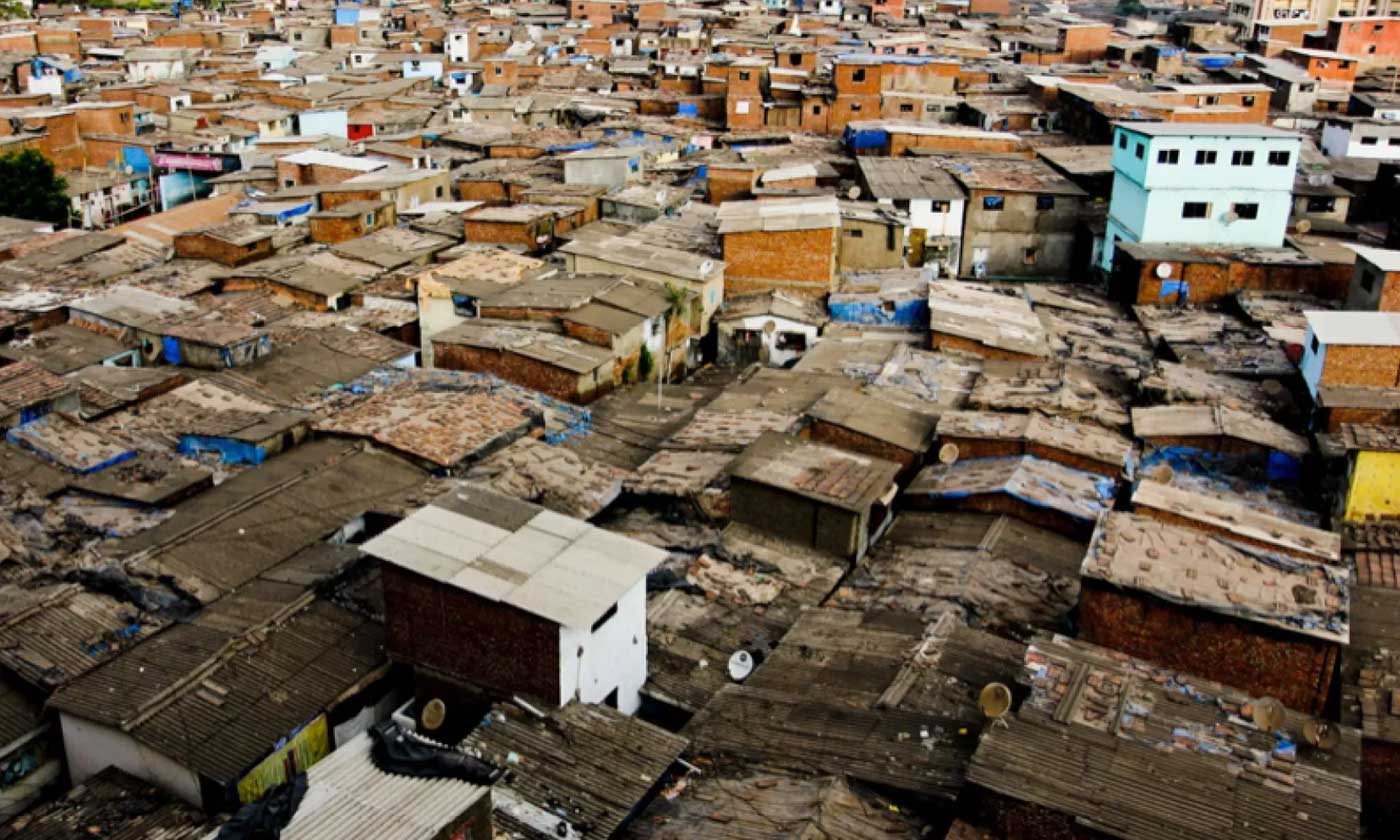
The media is mostly abuzz with the news of anti-encroachment drives and violent public reactions against such on-and-off anti-encroachment operations carried out by the concerned government authorities. As the most recent example, an anti-encroachment drive has been in full swing in Karachi, Pakistan's largest city that was hit by disastrous monsoon rains in August last year. The focus of the on-going operation is on the city's storm water drains that are heavily encroached by illegal housing and commercial buildings. In many other areas of Sindh, the drainage and irrigation department as well as local authorities keep undertaking drives in large chunk of lands, demolishing illegal settlements on the embankments along canals and rivers in particular.
There could not be any second opinion about the inevitability of these anti-encroachment measures that are needed to avert a whole slew of human-induced catastrophes and civic calamities in the future by timely removing illegal settlements mushroomed along drains, nullahs, canals and riverbanks. Up till now, however, several hundred families have been severally affected and displaced owing to on-going operations. Other than displacement of hundreds of people, a large number of small businesses have been rendered non-functional overnight, thus swelling the number of unemployed people.
Referred to as slums, goths or katchi abadis, these irregular and illegal settlements occupying public land is a normal sight, particularly in urban spaces. Some large cities in Asia have witnessed a mushroom growth of slum areas in the recent past. Data accumulated in the last decade suggests an alarming rise in the number of slum dwellers in the region. In 2001, for instance, there were about 332 million people living in shantytowns across Asia, but in 2010 this figure reached to almost 505 million. In Pakistan, as per the statistics, more than 40 per cent urban population lives in katchi abadis, which is a matter of concern.
Compared to those of the residents living in adequately-planned housing schemes, the dwellers of katchi abadis experience higher mortality, face greater health hazards and are always at a high risk. Boasting of a marginalized existence, almost all slum settlements tend to lead a miserable, dehumanizing life without such basic amenities as access to clean water, sanitation and a hygienic environment, apparently a Hobson's choice for the innumerable lot of unfortunate souls born on the wrong side of the tracks.
In katchi abadis, the major chunk of the population consists of rural migrants, particularly non-agricultural and non-farm individual workers, who come from different parts of the country to search their livelihood in urban centres. This suggests the fact that the mushroom growth of slum areas and katchi abadis in and around outskirts of urban areas is concomitant of decline in the traditional rural economy.
The rural economy in essence depends on a conventional mix of farm and non-farm activities, which are vocations other than agricultural production. In South Asia, historically, Jajmani system, referred to as the patron-client relationship in modern terms, has been remained essentially intact for centuries. In that system, farmers and landlords used to hire the services of priests, artisans, barbers, potters, blacksmiths, carpenters, masons, musicians, etc., who were paid later in the form of farm produce, mostly at the time of harvest twice a year. With the passage of time, however, the system was replaced with cash payment.
Thanks to technological advances in the agriculture sector, most rural professions have now been vanished or their requirement has been drastically decreased. To make matters worse, the increase in population, burgeoning food inflation along with frequent climate-induced disasters have made it difficult for farmers and small landowners to make ends meet. Consequently, the historical, long-standing structure of the rural economy has been ruined to the point of its total elimination.
In rural settings, as a rule, when the livelihood of a large number of non-farm population is at stake, it gives rise to poverty and impoverishment. In Pakistan, out of the country's 79 million rural population, about 71 million people are poor and cannot meet their basic needs, says Javed Ahmed Malik in his book “Transforming Villages.”
The eventual outcome of this inequality is incessant rural migration to urban areas, hence the consequent rise of katchi abadis. To prevent further expansion of katchi abadis, the migration of rural people to urban areas must be discouraged and this could be best achieved by minimizing the income gap between cities and villages.
In this regard, the example of the Saemaul Undong Movement (SU), also known as the New Village Movement, can be emulated. Implemented in South Korea in 1970s, the SU Movement, a community-driven development initiative, played a key role in overcoming rural poverty by removing the big gap and disparities between the income of rural and urban people.
In Pakistan, the magnitude of the discrepancy between rural and urban income can be curtailed with proper recognition and consideration to non-farm population, who could be better engaged in modern employment opportunities, credit-driven small business initiatives and dedicated agro-based livelihood programs.

The writer is a free-lance contributor based in Islamabad. He can be reached at |
|
Cover Story
|
|
News Buzz
|
Update |
Leave a Reply