

Public Health
Polio Challenge
It would be wrong to assume that conflict alone has been the main barrier
in polio eradication. Polio-endemic countries like Pakistan have faced
numerous additional challenges, including insufficient population
immunity to halt viral transmission.

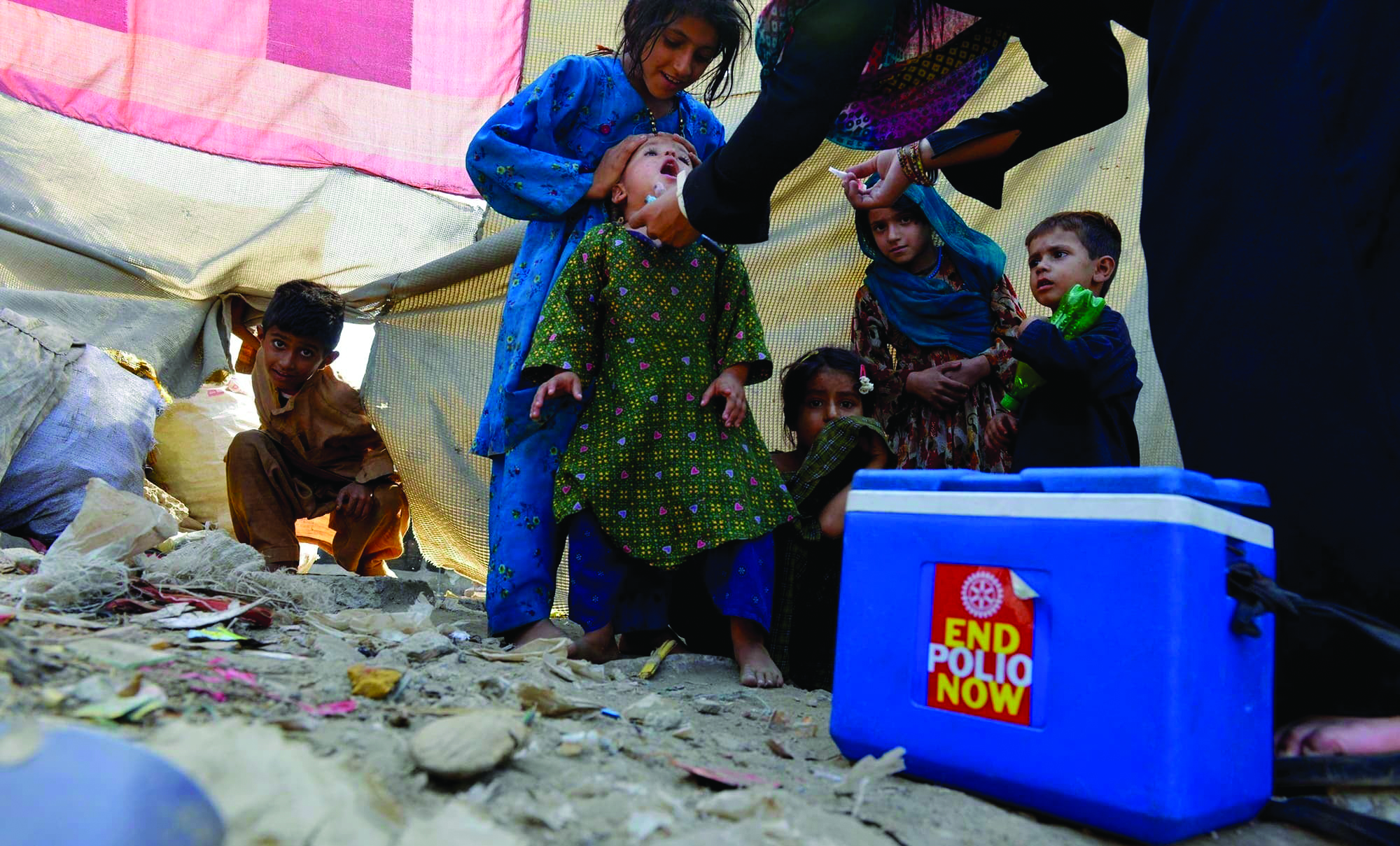
Polio is a social and public health crisis. Until a few decades ago, the virus was endemic in 125 countries across five continents, paralyzing 350,000 children annually.
The World Health Assembly launched the Global Polio Eradication Initiative in 1988, which resulted in the reduction of global annual incidences by 99 percent. By 1999, the virus was successfully eradicated from the world except in Pakistan, Afghanistan and Nigeria.
Now, when Africa has been declared polio-free, an Independent Monitoring Board (IMB) report contains damning revelations about Pakistan’s blundering response to eradicating the disease. Currently, as per the IMB, the vaccination of a large number of children who traverse the border daily is way below par, risking transfer of the virus between the world’s two remaining polio endemic countries - Pakistan and Afghanistan. There are many factors behind the failure of polio eradication in Pakistan.
The country has made steady and impressive progress since 1994 by managing to reduce the number of polio cases. However, in 2019 the program saw a significant spread of the virus as the number of children missed during house-to-house campaigns resulted in an upsurge of polio cases. Last year, 91 new cases were reported from various parts of the country, especially from Sindh and Khyber Pukhtunkhwa (KP) – a sharp increase from the 12 cases reported in 2018. In addition, 11 new cases of vaccine-derived polio virus were reported from KP and Gilgit-Baltistan and one case from Islamabad between July 7 and Nov 3, 2019, whereas the last such case was reported in Pakistan in 2016.
Pakistan’s polio eradication program has come under scrutiny from all quarters due to its position as the main driver of the global polio virus spread in recent years. The problem is deeply rooted not only in organizational and financial deficits but also in the conflict and insecurity surrounding the program, which has resulted in the failure of effective immunization campaigns and Supplementary Immunization Activities to reach all parts of the country.
Despite the fact that the polio eradication program has been going on for so many years, the number of cases doesn’t seem to be abating. Among other stumbling blocks, three main hurdles can be identified.
The first and foremost is vaccine hesitation. According to Dr. Fazal Ather, an expert working with WHO, vaccine hesitation is the most important reason underlying the failure of the program in Pakistan. He is of the opinion that if this problem is not addressed in a timely fashion, it may hamper the progress of the program and pose challenges to the completion of the disease’s eradication and elimination.
Secondly, security issues for polio workers and concerns regarding the efficacy and safety of the vaccines, weak routine immunization and a high prevalence of malnutrition; all these conditions are allowing the poliovirus to survive and paralyze vulnerable children with low immunity levels.
Thirdly, lack of poor civic amenities in over-populated major cities like Lahore and Karachi present the risk of rapid faeco-oral spread, as has been seen with environmental samples collected from these cities after polio outbreaks.
Additionally, the lack of transparency in governance juxtaposed with an under-resourced public healthcare system and an unregulated private health sector are further compounding the situation.
Vaccinator satisfaction and security have been major concerns -- due to the targeted killings of vaccinators as well as the lack of financial incentives, low salaries and lack or delay of payments. The result? The polio program has become politicized, leading to institutional malpractices, poor accountability, pilfering of resources and polio inspectors appointed on political grounds.
The dynamics of the polio program are multifaceted. The successful eradication of the disease has been hampered by conflicts and insecurity, especially in KP and FATA regions, where a dramatic rise in polio cases was seen in 2014 when the number of reported cases increased from 91 in 2013 to more than 300 in just a year.
In addition to these operational challenges, the program faces the huge issue of fallacy and negative propaganda by the vested interest group, which has contributed to the increasing number of vaccine refusals. Concerted propaganda campaigns by militant outfits operating in these areas further damage the program.
The wide range of challenges also include poor health infrastructure, operational and managerial deficits and a myriad of security-related issues. Commitment to the cause is needed at all levels with over-arching government support.
This can be achieved by strengthening Pakistan’s health infrastructure. Increasing the number of immunization centers in rural and far-flung areas is crucial for effective service delivery. Effective health communication strategies by engaging religious leaders and influential public figures can shift negative perceptions about the polio vaccine campaign, which took a huge blow after the CIA’s fake hepatitis B vaccination campaign in its bid to identify Osama bin Laden.
Global health initiatives are becoming intertwined with foreign policy and diplomacy of donor and recipient countries. Hence, the role of religious and social norms and their wider economic, security and diplomatic repercussions should not be underestimated in this era of globalization.![]()
The writer is a free-lance consultant working on health and the environment. She can be reached at drmehr5 |
|
Cover Story
|
|
News Buzz
|
Update |


Leave a Reply