Though an organisation’s safety culture infuses its employees with the concepts, values and norms conducive to establishing a safety environment, it is also the local culture, habits, beliefs and customs that prepare the employees for quick adaptability to these requirements. Where do we stand as a nation in generating the awareness regarding safety in our daily lives and in our work environment? To be sure, we as a nation have an abysmal sense of safety. It is appalling to see the neglect of known good practices in health care, road safety, infrastructure, manufacturing industry, etc. Societies, norms, practices, values and beliefs have a lot to do with development of safety climate and culture at the national, organisational and individual level.
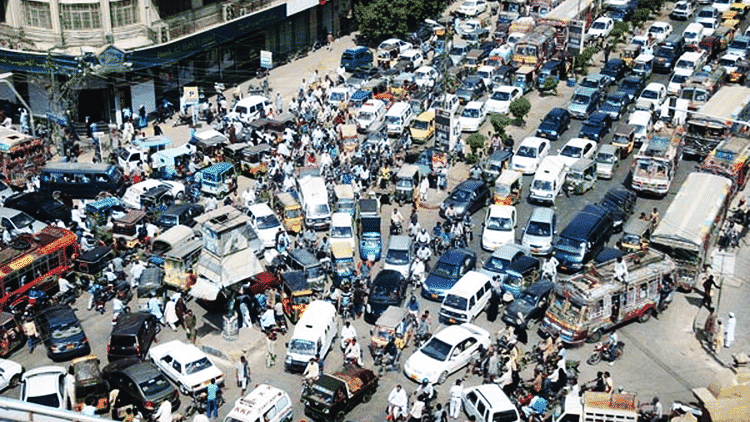
Take the case of our free-for-all behaviour on the road. There is absolute disregard of traffic rules and common sense. Violations are a norm on main city roads and are even more rampant in back streets. Instead of risk mitigation (helmet wearing), we don’t mind risk-taking (going against one-way traffic even on fast and heavy traffic stretches like Ferozpur Road). We frivolously accept the risk by not wearing seatbelts despite understanding the utterly devastating consequences. The unchecked, uncontrolled and accident-prone riding of motorcycles, which is also a sure cause of blood pressure and heart anomalies for others, results in unwarranted accidents, causing unfortunate injuries and deaths.
From the top to the bottom, from officers to peons, from ministers to the common man, from the educated to the illiterate, our tribal and feudal emotions and traits prevail predominantly over our sense of responsibility, compliance to regulations and observance of discipline. Travel on a motorway on weekends. It is incredulously pathetic to see how people break the lines at the toll gates and it is even more disturbing and frustrating to see the apathy of the administrators to remedy the situation. This stupendous display of tribal societal characteristics, which was not attuned to modern structures, machine operations, adherence to procedures and respect for rule of law, is indicative of a gnawing gap between global trends (already established) in safety and our pattern of living. It gets more agonising and portrays the society’s utter ignorance and disregard towards safety with the way children are transported to and from school in private wagons. Not adhering to procedures, taking short-cuts, shunning responsibility, and having a disparaging view of the rule of law and safety (throwing caution to winds) is glaringly visible all over in our private and public sector domains.
What we practice in our daily lives either gets refuted by the culture and we stop its practice or get accepted by the culture, thus ensuring its continuity. Pick any person and take him/her to a different cultural setting; the practice will change. Societies which revere rule of law, compliance to rules and regulations and protection of life and property, have a totally different behavioural pattern. Cultures usually improve themselves. To improve, however, we need a collective sense of desire to change which will then manifest itself in good practices which will further imply adherence to rules, regulations, procedures and practices. Unfortunately, we have yet to find the right direction in this aspect. Our social attitude and behaviour impinge significantly on our safe conduct.
Safety starts with commitment and at present the political commitment to safety at the national level is almost non-existent. It is apparent in the investigations of all incidents and accidents and remains shrouded in mystery. The causes, reasons and errors which result in heavy loss of life and property, remain hidden from the public eye. The details of all accidents in the USA are available for public information and scrutiny on NTSB and FAA sites. Similarly, there are numerous European websites dispensing national safety data for public consumption. However, in Pakistan, the public doesn’t get to know the causes of accidents and the mitigation measures taken by the authorities to prevent such happenings in the future (recall the number of recent airplane, railway and bus accidents and the information we have on them). Information-sharing, is a core pillars of a safety-oriented society. But in Pakistan, it remains confined within the bureaucratic establishment which guards information as if it is the holy grail. With no information available to the public about the investigation of accidents, causes and remedial actions taken, society remains oblivious to the dangers and risks and therefore the already existing public lack of awareness on safety issues is perpetuated and remains unaltered. Further, due to this lack of information, the door to institutional and bureaucratic public scrutiny remains closed forever.
There is a need for change in our national mindset by embracing modern patterns of social and institutional behaviour that looks at business efficiencies by imparting high priority to safe practices. Cultural change cannot be envisaged and safety issues cannot be addressed at the national level, unless a clear and concise course is charted that fulfils the prerequisites of a learned and advanced culture by ensuring essential education and awareness and knowledge and skills at all levels. The prerequisites on their own would not suffice and would need an appropriate environment to flourish in a safe, efficient, productive and evolving polity. The right environment would comprise public institutions, infrastructure, transparency, fairness, enforcement and monitoring as these are essential ingredients for converting the prerequisites into capabilities.
If we have to evolve in a meaningful way in the 21st century we have to start and start soon and aggressively, by addressing our own societal attitudes towards safety in general and see how deplorably we have stepped away from the requirements of one of the necessities of an advanced society. 




 Safety is absence of an adverse outcome. Technology provides a certain outcome if the input conditions are according to design specifications that will generate the intended outcome. A variation in the input conditions may result in an outcome that is not acceptable. Machines have a fixed design and work within the performance parameters inherent in the design. Therefore, there is either a failure (breakdown of the machine) or success (normal working). Humans, as we understand them, do not work that way. Human performance varies based on the number of factors that have been studied in detail by psychologists, behaviourists, cognitive scientists, etc. The mental and physical limitations of human beings make them highly prone to errors and mistakes, slips and lapses, illusions and perceptions, forgetfulness and biases. Since machines are prone to failure and human performance variability may impinge on safe operations, one hundred percent safe operations cannot be guaranteed. This concept applies to the socio-technical environment (socio-technical habitat) i.e. environment where people interact with the machines in carrying out their job function, such as aviation, railways, shipping, road transportation, hospitals, factories, etc. The International Civil Aviation Organisation (ICAO), for example, considers safety as:
Great write up. It’s high time the government takes safety of life as a priority and her own responsibility rather than the individuals. We need a cultural reform which can only come through soul awakening and collective public effort.