

Islamabad
A Curious Case
A newly passed Ordinance by Pakistan mandates Kulbhushan
Jadhev to file a review appeal against his sentence and gain
consular access. Apparently, India is not pleased by the move.
Complying with the ICJ ruling given in 2019, the government of Pakistan sailed the bill “International Court of Justice (Review and Consideration) Ordinance 2020” through the parliament in July this year, granting consular access to Commander Kulbhushan Jadhev, an Indian serving naval officer who was arrested by Pakistan and awarded the death penalty by a military court on espionage and terrorism charges.
The Ordinance also gives the right to Jadhev to file a review appeal against the military court’s judgement regarding his conviction and execution within sixty days of the promulgation of the ordinance.
It is interesting to note that Kulbhushan refused to file a review appeal against his execution and sought mercy instead. However, the government of Pakistan recently submitted a petition against the sentence of Kulbhushan Jadhev in the Islamabad High Court (IHC) which has directed the government of Pakistan to let India hire a counsel for the alleged Indian spy before adjourning the hearing of the case till September this year.
Pakistan has repeatedly asked India to appoint a legal representative and initiate the legal process by challenging the death sentence in a high court as prescribed in the Ordinance and the IHC verdict. Surprisingly, India has so far not shown eagerness to pursue the case.
Commenting on the steps taken by Pakistan to fulfil legal and international obligations, the erstwhile Pakistan Foreign Office spokesperson Aisha Farooqui, at a weekly media briefing on August 6, 2020, stated that Pakistan had approached India through diplomatic means for appointment of a counsel for Commander Kulbhushan in the light of the IHC’s order. Till date, no reply has been given by India on the said matter.
Instead of availing the opportunity offered by Pakistan, India has accused the latter of foul play and has sulked over the given consular access, calling it short of compliance to the ICJ verdict that instructs Pakistan to give India consular access to Jadhev. India maintains that Pakistan has not given “unimpeded and unhindered” consular access to Jadhev and terms the whole legal procedure “farcical and sham.” Indian MEA spokesperson Anurag Srivastava said on July 23, “Pakistan is not only in violation of the judgment of the ICJ but also of its own Ordinance.”
It is interesting to note that Kulbhushan refused to file a review appeal against his execution and sought mercy instead.
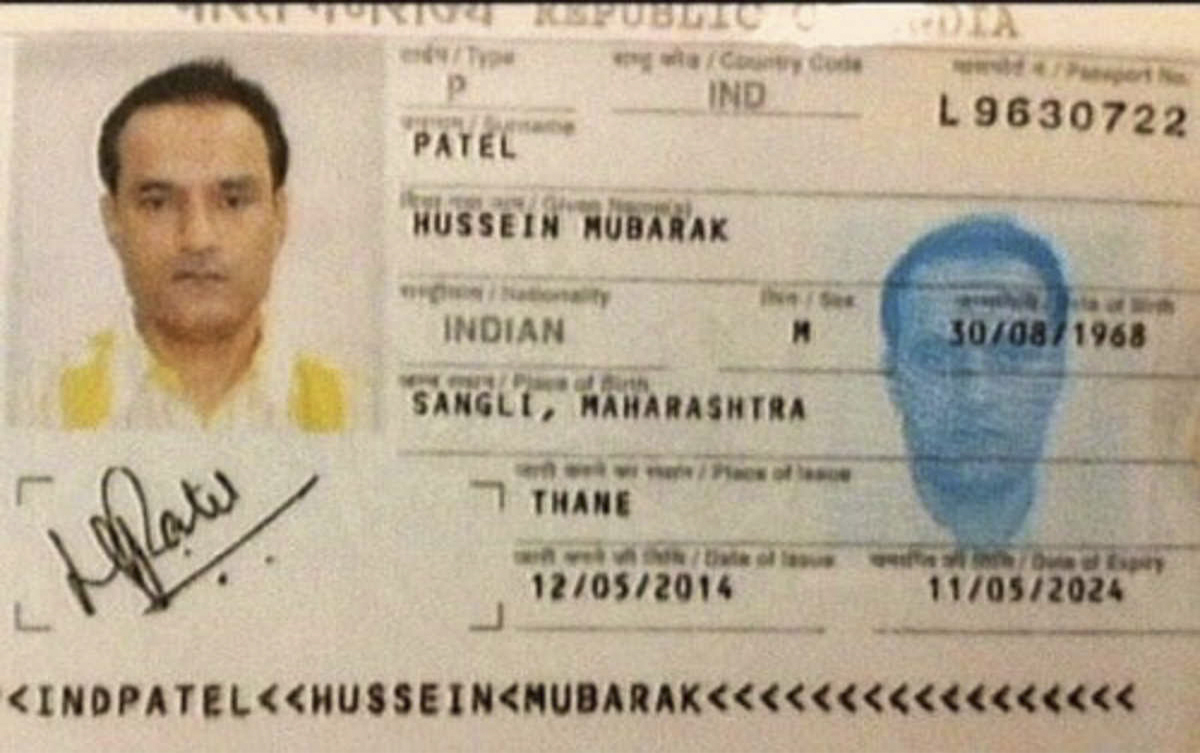
Kulbhushan Jadhev was allegedly taken into custody by Pakistani security officials back in 2016 near the Pakistan-Iran border in Mashkel, Balochistan. Apparently, he was running a spy network for the Research and Analysis Wing (RAW) from Chabahar, Iran, under a Muslim name “Mubarak Hussein Patel” and was involved in carrying out several terrorist activities in Balochistan and Karachi. Later, Pakistan’s Inter Services Public Relations (ISPR) released a confessional statement of the spy in which he admitted facilitating and working in collaboration with Baluch separatists and TTP operatives. In 2017, a military court awarded him a death sentence on charges of terrorism and espionage. India, in a rush, approached the ICJ and held Pakistan responsible for “grave violations” of international human rights stated in the Geneva Convention and sought the release of its prisoner. Concluding the case, the ICJ refused India’s demand for Jadhev’s release and asked Pakistan to run his trial again in a civil court and grant him consular access.
Validating the need for enacting the Ordinance, Law Minister Farogh Naseem snubbed the criticism hurled at the Government by opposition benches in the parliament and reiterated that Pakistan had neither forgiven criminal activities of Kulbhsuhan nor given him an NRO. He said, “India wanted that Pakistan not follow the ICJ judgement so that they could approach the UNSC for bringing all kinds of resolutions, sanctions and declare Pakistan a rogue state.” Islamabad-based international law expert Baber Ali Bhatti was of the view that paragraphs 144-148 of the ICJ verdict placed the obligation on Pakistan to grant consular access to Kulbhushan Jadhav and review and reconsider the case. Experts believe the legislation will also enable the government to evade the jurisdiction of the ICJ if a similar situation arises again.
India’s languid stance over the offer made by Pakistan is fathomable as explained by Farogh Naseem who said that India was planning to use Article 94 of the UNSC and Article 60 of the ICJ statute by moving against Pakistan in the United Nations Security Council (UNSC), had Pakistan not enacted the Ordinance.
Despite the reluctance shown by India so far, sagacity suggests India should take advantage of the generous offer made by Pakistan with regarding Kulbhsuhan’s consular access, especially in such times when both nations trade barbs regularly. This may also help both countries solve their other bilateral pending issues that directly affect the region’s peace.![]()
The writer is associated with the Research Team at Maritime Study Forum, a thinktank based in Islamabad. He can be reached at inam7118 |
|
Cover Story
|
|
Tribute
|
|
News Buzz
|
Leave a Reply Cancel reply |
Update |


Article seems to b Very informative with facts. International intermediaries should take steps on the basis of impartiality. Lastly Hafiz very well done.