


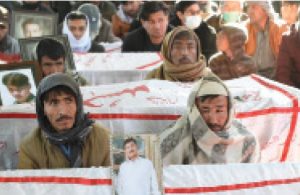
The unending turbulence and tides of Baloch nationalism, religious and jihadist activism, and ethnic conflict including sectarianism, has had major ramifications for domestic, regional, and global security in recent years. Since 2009, Balochistan has come under increased scrutiny, with the Americans alleging that Quetta and its surrounding areas are a safe haven for the Taliban leadership. The US strategy in Afghanistan has fallen short of neutralizing the insurgency that threatens the future stability of the region.
The Afghan First Vice President, Amrullah Saleh blamed Pakistan for setting up terrorist factories and agencies that provide explosives materials to the Taliban in order to create chaos in Afghanistan. Saleh also alleged that the Quetta Shura (Council) was nothing else but a title for the Pakistani military to implement their plans. Even the US State Department’s Terrorism Report 2019 declared that Pakistan is providing a safe haven for terrorist organizations.
The United States has continually argued that the Taliban insurgence in Afghanistan is helped by their support network across the border in Pakistan and the previously Federally Administered Tribal Areas (FATA) of northwest Pakistan have become a de facto operational theatre for the Afghan war. Contrarily, the insurgency leadership council (Quetta Shura) has effectively managed its influence through a shadow government and superior tactics in recruiting marginalized tribal leaders, creating a dubious outcome, once the Americans execute their withdrawal plan in September 2021.
The term Quetta Shura is used to define the strategic leadership of the Afghan Taliban based in Pakistan but the facts are misinterpreted without understanding. There is no evidence of active training camps, either run by the Taliban or through the tacit approval of the state, in Balochistan at this time. There is a historical context to this fact that the tribal Pashtuns and Afghans have been living in the border areas adjacent to Afghanistan, Pakistan and Iran along the Balochistan border.
 Maj. Gen. Ubaidullah Khan said that there might be a communication gap, but no extremist elements are present in the region. Pashtuns living in Balochistan are different from those in Khyber Pakhtunkhwa and are business-oriented. They have nothing to do with extremists. But even if people associated with the Taliban Movement have ties through intermarriages or have ethnic bonds, it does not necessarily mean that the locals support the Taliban ideology.

The writer is an M.Sc. in Defence and Strategic Studies from the Quaid e Azam University, and is working as a research officer at the Institute of Regional Studies in Islamabad. She can be reached at amnanisarabbasi@gmail.com |
|
Cover Story
|
|
News Buzz
|
Update |
Leave a Reply