

Region
Bitter Waters
Fishermen inadvertently crossing the unmarked maritime border between
Indian and Pakistani territories are not criminals or spies.

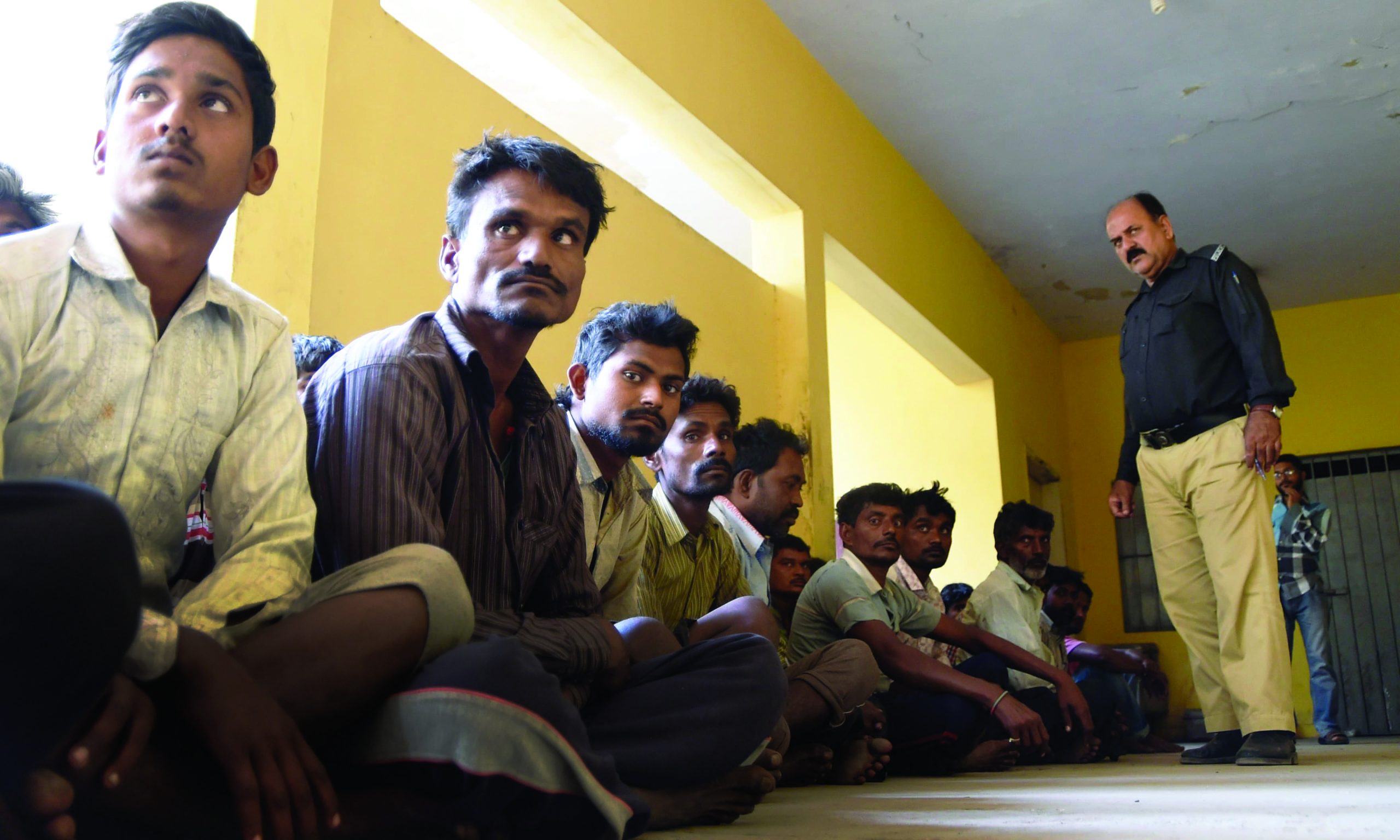
The relationship between the two nuclear-armed neighbours, India and Pakistan, has seen highs and lows over time. These fluctuations, however, have ramifications for the fishing communities residing on both sides of the border. Every year, hundreds of fishermen are arrested for crossing an unmarked maritime border. According to the Supreme Court of Pakistan, more than 327 Pakistanis, mostly fishermen, are languishing in Indian jails, whereas 418 Indians are imprisoned in Pakistan.
The pandemic has worsened the situation for fishing communities as communication has been severed and families can no longer reach out to their loved ones imprisoned across the border.
This development is not new; the detention of fishermen by India and Pakistan has been taking place for decades. Every year, during the fishing season, scores of fishermen venture out into Sir Creek, in the Arabian Sea, but all of them don’t manage to return. Sir Creek is a disputed territory and also one of the largest fishing grounds in Asia. Due to lack of navigational equipment, many fishermen accidentally trespass the maritime boundary and are consequentially arrested by authorities on the other side of the border.
The fishermen don’t consider it trespassing since there is no demarcation, which may prevent them from crossing over. Most of the time, they drift across the boundary while searching for fish due to a lack of proper equipment. The families of the arrested do not find out about their loved one’s plight until later as the authorities do not inform the opposite side if they’ve captured any fishermen. The level of trauma every family goes through is unimaginable. It is not only a loss of a family member but of the breadwinners of families. In many cases, children need to take up jobs when a father is captured at sea.
Initially, captured fishermen would be issued a warning and released by the authorities, but now they are being imprisoned. Once they serve their term, they make the arduous journey from the prison to their respective countries by crossing through the Wagah border. It is a nightmare for those families whose members die in cross-border custody as the bodies are no longer flown but are sent back through the Wagah border by bus or train.
Unfortunately, the number of arrests increases when relations between both countries are strained over issues, such as Kashmir. When tension between the countries dissipates, they both start releasing prisoners as well.
The two sides exchange lists of each other’s prisoners in custody twice a year under their bilateral Consular Access Agreement signed on May 21, 2008. The lists are exchanged on January 1 and July 1 every year, separately mentioning civilian prisoners and fishermen. The agreement does not cover those held on charges of espionage or other military-related offences.
The fishermen are charged for trespassing under the 1946 Foreigners Act for which they can be imprisoned for seven years. However, the majority of the fishermen are sentenced for six months but are held in custody for a long period until the trial begins. These arrests go against the United Nations Convention on the Law of the Sea, which has been signed by both India and Pakistan. The convention states that a six-month prison sentence is the maximum penalty that can be imposed.
The law states, “Arrested vessels and their crews shall be promptly released upon the posting of a reasonable bond or other security. Coastal State penalties for violations of fisheries laws and regulations in the exclusive economic zone may not include imprisonment, in the absence of agreements to the contrary by the States concerned, or any other form of corporal punishment.”
According to those working for the release and repatriation of fishermen, even if the fishermen are released, their boats, which serve as their source of livelihood, are whisked away by officials, never to be seen again.
Both sides have attempted to carve out a solution but have failed to achieve much. The Indo-Pak Joint Judicial Committee, comprising four judges from each country, was formed in 2007 to facilitate the release of civilians imprisoned on both sides of the border. The committee has recommended setting up a mechanism that would release not only fishermen but also their boats. The released fishermen could visit their captured vessels within three months and decide whether to sail them back home or sell them off in a foreign country. The committee also advised both countries to handle prisoners involved in minor offences with compassion. The committee has been dysfunctional since 2013 as ties between both countries have deteriorated rapidly.
Strained ties between Pakistan and India not only damage both the countries economically but also harm fishermen on humanitarian grounds. Fishing communities on both sides of the border cannot function if every single fishing trip is a gamble on their lives. Many fishermen leave their homes, hoping that they would return safely. It is therefore necessary to revive old forums and platforms to resolve this issue.
The first step should be to work on a clear demarcation boundary which would prevent fishermen from drifting into foreign waters. Secondly, both governments should work on a structure that equips the boats of fishermen with a navigation system allowing them to stay within their maritime boundary. Lastly, the foreign office on both sides should play a major role in diffusing tensions and in highlighting issues of utmost importance that must be addressed for the betterment of the fishing community in the entire region. ![]()
The writer is a Social Development and Policy graduate from Habib University. He can be reached at bilalmustikhan |
|
Cover Story
|
|
News Buzz
|
Update |


Leave a Reply