
Cover Story
War of Humiliation
Escalation in Ladakh, Indian military shortcomings and their meekness
against an aggressive China, has injured Modi politically.

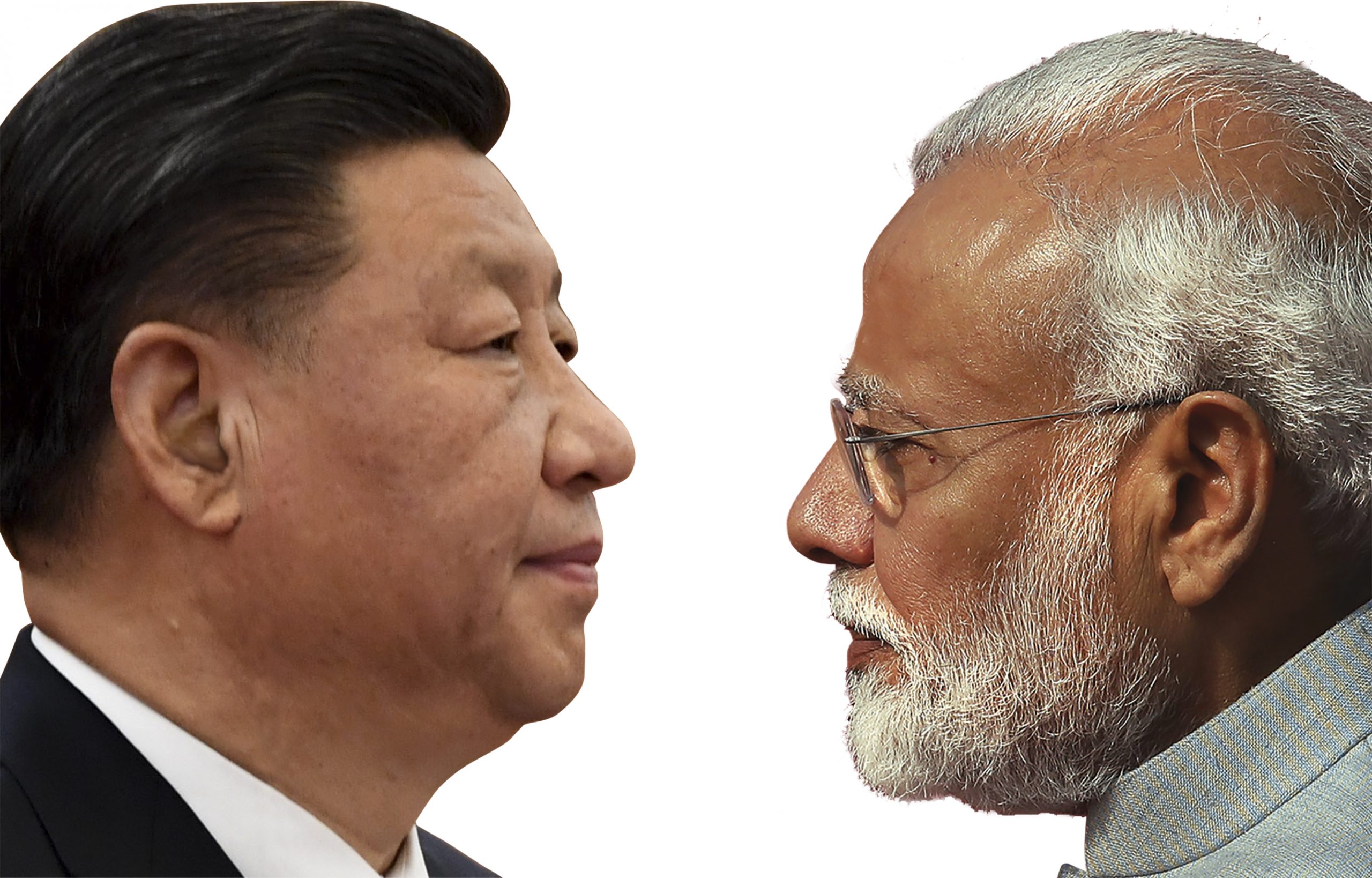
A lot has been written on the recent Sino-Indian border skirmishes in Ladakh area. The analyst community from Pakistan expects a possible conflagration of the conflict and India’s potential military embarrassment at the hands of a stronger China. Such expectation is too far-fetched as China and India would never – willingly or unwillingly – cross the Rubicon and walk into a full-blown war because that would be in nobody’s interest.
If anyone expects India to stand up to China - under US bidding - in a resurrected Great Game 2.0, then it amounts to not recognizing the India of Chanakiya Kautilya (375-283 BC). He also called Vishnugupta or the Indian Machiavelli and said, “Do not reveal what you have thought of doing, but by wise council, keep it secret, being determined to carry it into execution.”
Expecting India to go against its largest trading partner in an otherwise obscure border conflict is not understanding the geo-economics. Sino-Indian annual trade is just under US $100 billion. Hoping for India going to war - after the ravages of Coronavirus - with a neighbour that is destined to rise as a great super-power and who just became the largest economy in the world, on a changed global chessboard post-Covid-19, is naïve at best and delusional at worst.
India has historically conceded against formidable adversaries, from the Afghans to the Moghuls and from the Portuguese to the British. That historic constant – based on a deep study of all elements of Indian national power potential, enclosed by a deep identity crisis and complex - has not changed, Modi or no Modi. However, instead of outright hostility, this time around, the so-called ‘Shining India’ under Modi - the RSS and Hindutva brigade strongman - may change the mode of conflict with China, choosing from an array of tools out of the playbook of hybrid warfare. We see traces of it through blockage of Chinese apps, for example.
The root cause of this border conflict lies in an ill-defined, 3,440 km long border that both countries dispute. Traversed by rivers, lakes and snowcapped mountains, this difficult terrain in a harsh climate now brings soldiers face to face at many points. The Doklam crisis between June and August 2017 caused introspection by both states to re-orient their future relationship. Politically, both parties concluded it would have to be rivalry than cooperation and waning inclination towards a peaceful resolution. Militarily, Indian discussions converged around the view that China holds conventional and nuclear advantage over India.
Indian strategists also expect, somewhat meekly, for China to settle the dispute on Chinese terms. Recognizing the “conventional asymmetry”, India tries to catch up through infrastructural build-up, force modernization and new raisings. China, on the other hand, has a better military infrastructure, capabilities and logistics.
The Indian Army (IA) deployment to support ground operations facing China spans into its Northern, Central and Eastern commands. The total available Indian army strike forces in the theatre are assessed to be around 225,000 personnel, including a T-72 tank brigade (3,000 personnel) in Ladakh and a Brahmos cruise missile regiment in Arunachal Pradesh (1,000 personnel).
The Peoples’ Liberation Army (PLA), on the other hand, has an estimated 200,000 - 230,000 ground forces under the Western Theater Command and Tibet and Xinjiang Military Districts. China’s new joint Western Theatre Command holds an additional 90,000-120,000 troops under the 76th and 77th Group Armies. These Group Armies were headquartered in Chongqing and Baoji towards the interior of Western China. However, after the crisis, China has swiftly pushed forward its ground forces, logistics bases and support elements closer to the border, nullifying the Indian advantage of quick mobilization and response.
The Indian Air Force (IAF) supports ground forces with an estimated 270 fighters and 68 ground attack aircraft across its three China-facing (Western, Central and Eastern) Air Commands. The IAF has built an expanding network of Advanced Landing Grounds (ALGs) in forward locations. IA and IAF have been developing these permanent facilities over time, ostensibly to shorten the Indian mobilization time, limiting any Chinese cross-border advance.
The PLA Air Force has around 200 fighters and an extensive drone armoury, including an estimated 20 GJ-1/WD-1K precision strike UAVs, 12 WD-1 ground attack and reconnaissance UAVs, 12 WD-1 precision strike UAVs and 8 EA-03 reconnaissance and electronic warfare UAVs. Drones have been employed to devastating effect by Azeri forces against the Armenian forces in the recent conflict in Nagorno-Karabakh.
The Chinese have the ability to manufacture J-10, JF-17 and other aircraft; expand its network of airports and airfields and increase the size of its civilian air transport fleet. It has advantages in spares support, size of its industrial base and cockpit-to-pilot ratio, which gives it a decisive edge. China also has superior missile forces. Its missile barrages could hamper the operations of the IAF under the target-rich IAF environment, with IAF airfields and air bases located closer to the border.
In the nuclear domain, according to Indian analyses, 104 Chinese missiles can strike all of India, including 12 x DF-31A (11,000 km range), 6 DF-31 (7,000 km range) and 12 x DF-21 (2,150 km range) that can reach New Delhi. On the Indian side, only 10 Agni-III missiles cover mainland Chinese targets, as the 8 Agni-II launchers reach up to central China only.
There is, therefore, a debate within the Indian security establishment which pushes for greater survivability of Indian forces on the ground in the event of an uncontrolled escalation instead of investing in new weapons platforms, especially the nuclear platform.
The onset of winters complicates force postures and more so for India due to a longer and vulnerable supply line and its limited logistics stamina. Indian conventional forces, especially the IA, according to a 2016 official audit report, lacked sufficient reserves in up to 85 out of 170 critical ammunition categories for an intense 10-day war. That situation has marginally improved.
Experts believe daily sustenance of a 25,000-30,000 strong force along a 250-300 km front would cost India around Rs 100 crore per frontage. The Indian economy, already battered by coronavirus and Modinomics, would be more vulnerable during a protracted conflict than the Chinese economy, which just surpassed the US economy.
Diplomatically, India feels confident about its positions vis-à-vis China in most international fora, given the US support it enjoys during a time of downslide in Sino-US relations. This may not be enough to sail it through any potential war with China. Besides, fissures in Kashmir and elsewhere would continue to act as restraints.
In sum, escalation in Ladakh and Indian meekness against an aggressive China has politically injured Modi. It has rendered Indian media berserk and has sent it looking for hollow justification. It has also taken the wind out of the sails of its brand new CDS, Gen Bipin Rawat, who has no profitable response options. That could be the worst nightmare for a professional soldier. ![]()
The writer, a retired major general, covers global affairs and political sociology. He can be reached at tayyarinam |
|
Cover Story
|
|
News Buzz
|
Leave a Reply Cancel reply |
Update |


Good up-to-date assessment of Sino-Indian relations
A professional and all encompassing assessment of the Sino-Indian embroglio.
Very realistically analyzed. Both are wise to co-exist with China being the bigger partner. India has given China the space it required. However China has decided to capitalize and gain all the advantage it can. India has much to give up.